
Market Crashes and Long-Term Investment Resilience: Navigating Volatility Through Enduring Fundamentals
Market crashes are inevitable, but their long-term implications for investors depend on distinguishing short-term volatility from enduring economic fundamentals. Recent history offers stark contrasts: the 2020 pandemic crash saw a rapid rebound fueled by stimulus, while the 2021 downturn lingered due to structural challenges like inflation and trade tensions. Understanding these dynamics is critical for investors seeking resilience in an era of persistent uncertainty.
Short-Term Volatility: The 2020 and 2021 Crashes
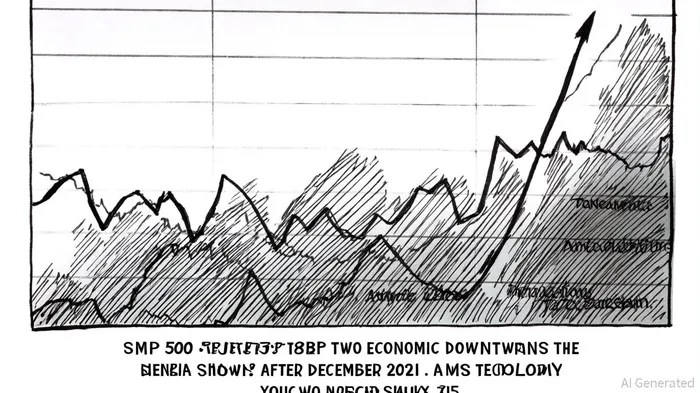
The March 2020 market crash, triggered by pandemic-induced lockdowns, exemplifies how swift policy interventions can mitigate short-term shocks. The S&P 500 fell 34% from peak to trough but rebounded in just four months, aided by $3.1 trillion in U.S. fiscal stimulus and aggressive Federal Reserve rate cuts, as shown by research on innovation and organizational resilience. In contrast, the December 2021 downturn-driven by the Russia-Ukraine war, inflation spikes, and supply chain bottlenecks-led to a 28.5% decline over nine months. Recovery took 18 months, reflecting deeper structural issues, according to OECD productivity data.
These divergent timelines highlight a key lesson: the nature of the shock and policy response shape recovery speed. The 2020 crash was a liquidity crisis, solvable with monetary and fiscal tools. The 2021 downturn, however, involved supply-side disruptions and inflationary pressures that required more complex, time-consuming adjustments, as discussed in a U.S. recovery comparison.
Enduring Fundamentals: Productivity, Innovation, and Structural Reforms
While short-term volatility is inevitable, long-term resilience hinges on structural factors. OECD data reveals that productivity growth-a core driver of economic expansion-has remained uneven post-pandemic. In 2023, U.S. productivity rose 1.6% (GDP per hour worked), outpacing the 0.6% OECD average, while the euro area saw a 0.9% decline. Multifactor productivity (MFP), which measures efficiency beyond labor and capital, stagnated or fell in most OECD nations, with Luxembourg and Austria recording 2% declines.
Academic research underscores innovation and organizational resilience as critical long-term capabilities. A 2024 study found that firms leveraging digital tools and external networks outperformed peers during crises, emphasizing the role of dynamic capabilities in adapting to volatility. Similarly, OECD analyses highlight the importance of structural reforms-such as labor market flexibility, infrastructure investment, and climate-resilient policies-in fostering sustainable growth, as detailed in Resilience in uncertain times.
Policy and Structural Reforms: Building Resilience
The IMF and OECD advocate for coordinated monetary, fiscal, and structural policies to address long-term risks. For instance, trade openness and exchange rate flexibility have historically bolstered emerging markets' resilience during crises, a point emphasized in research on innovation and organizational resilience. Meanwhile, the U.S. faces its own challenges under protectionist policies, with rising tariffs and reduced federal intervention creating uncertainty for investors, as noted in Five Years After Covid-19 Crash.
Structural reforms, such as up-skilling labor forces and promoting gender/youth participation, are equally vital. The OECD notes that economies investing in education and migration policies to address labor shortages will see stronger long-term growth. Additionally, integrating climate risk into macroeconomic planning-through resilient infrastructure and fiscal buffers-is essential for future-proofing economies, a theme explored in the Brookings analysis of the U.S. recovery.
Conclusion: Prioritizing Long-Term Resilience
Investors must avoid conflating short-term volatility with long-term fundamentals. While market crashes like the 2021 downturn test resilience, enduring growth depends on structural factors: productivity, innovation, and policy frameworks. The U.S. recovery from the 2020 crash demonstrated the power of timely stimulus, but sustained resilience requires deeper reforms. As global trade tensions and climate risks persist, economies and investors that prioritize adaptability-through innovation, diversification, and structural upgrades-will outperform in the long run.







Comentarios
Aún no hay comentarios