
Maritime Security and Defense Tech: A Lucrative Frontier Amid Rising Drone Threats
The global shipping industry, the lifeblood of international trade, is facing an unprecedented crisis as drone-related threats escalate. From explosive attacks to surveillance-enabled piracy, the maritime domain has become a battleground for asymmetric warfare. For investors, this crisis represents not just a risk but a golden opportunity in maritime security and defense technology.
The Escalating Threat Landscape
Recent years have witnessed a dramatic surge in drone-driven maritime attacks. In July 2023, Houthi rebels launched an explosive drone strike on a commercial vessel in the Red Sea, causing hull damage and operational delays, according to a Sentrycs analysis. By 2024, even high-profile military assets were not spared: a drone attack near the British aircraft carrier HMS Queen Elizabeth off Germany's coast underscored the vulnerability of strategic maritime zones.
Non-lethal drone activities are equally disruptive. In the Gulf of Guinea, pirates now use drones to map vessel movements, enabling more precise raids. Piracy incidents there surged by 30% in 2025. Meanwhile, Ukraine's use of containerized drone launch systems to attack Russian airbases has raised alarms about the potential for similar tactics in maritime contexts. These threats are not hypothetical-they are reshaping global trade dynamics.
The economic toll is staggering. Rerouting vessels to avoid conflict zones has increased transit times by 30%, while global container shipping capacity has dropped by 9%. Ocean freight rates from Asia to Europe have quintupled, and rates to U.S. coasts have risen by 120–140%. These disruptions are fueling inflation and straining supply chains, creating urgency for robust security solutions.
Market Growth and Investment Opportunities
The maritime defense technology market is responding to these challenges with rapid innovation and growth. By 2025, the global maritime security market was valued at USD 25.57 billion and is projected to reach USD 40.62 billion by 2030, growing at a compound annual growth rate (CAGR) of 9.70%, according to a Global Growth Insights report. North America dominates with a 35% market share in 2023, driven by its extensive coastline and naval operations. The Asia-Pacific region, meanwhile, is the fastest-growing market, with a CAGR of 9.2%, as nations bolster defenses against rising piracy and geopolitical tensions.
Key drivers include advancements in counter-drone technologies. Companies like Sentrycs have developed passive detection systems that neutralize rogue drones without disrupting vessel operations. Meanwhile, D-Fend Solutions introduced the EnforceAir2 Maritime, a specialized counter-drone system using RF cyber-based technology to take control of hostile drones. This system, compliant with MIL-STD 810H standards, integrates seamlessly with existing naval infrastructure, offering scalability for ports and critical maritime assets.
The U.S. Department of Defense is also prioritizing innovation. High-speed drone interceptors, developed by firms like Anduril and Zone 5 Technologies, aim to achieve a 90% probability of kill against ship-threatening drones, according to a DefenseScoop article. These systems address the cost asymmetry of drone warfare, where a USD 1,000 drone can threaten multimillion-dollar vessels.
Technological Innovations and Geopolitical Collaboration
Investors should also note the rise of autonomous systems. Tele-operated and AI-driven marine drones are being deployed for surveillance and environmental monitoring, with the global maritime drone market expected to grow at a CAGR of 16.2% through 2033. Nations are collaborating to address these multidimensional threats: Southeast Asia has formed defense pacts, while the Black Sea region is establishing regional security hubs.
Government spending is another tailwind. The U.S. reintroduced the SHIPS for America Act, while New Zealand allocated NZ$2 billion to upgrade maritime helicopter capabilities. These investments signal a long-term commitment to securing global trade routes.
Conclusion
The convergence of rising drone threats and technological innovation is creating a fertile ground for investment in maritime security. As geopolitical tensions and piracy persist, demand for counter-drone systems, AI-driven surveillance, and autonomous defense platforms will only intensify. For investors, this sector offers both defensive value-protecting global trade-and offensive potential, with markets expanding at double-digit rates. The question is no longer if to invest, but how to position for the next wave of maritime security innovation.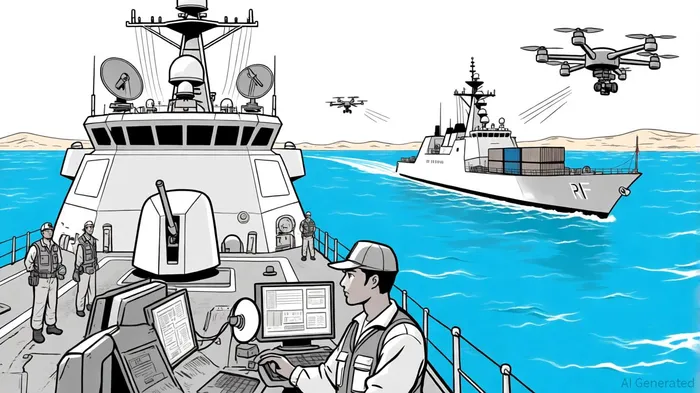







Comentarios
Aún no hay comentarios