
Marathon Petroleum's Q4 2025 Earnings: A Pivotal Test for Downstream Energy Resilience
As Marathon Petroleum Corp.MPC-- (MPC) prepares to unveil its fourth-quarter 2025 financial results on February 3, 2026, the energy sector is bracing for a critical inflection point. The company's ability to navigate refining margin pressures, geopolitical volatility, and evolving market dynamics will test the resilience of its downstream operations-and offer a barometer for the broader industry. With Q3 2025 refining and marketing (R&M) margins hitting $17.60 per barrel, up from $14.63 in the same period of 2024, investors are keenly aware that Q4 performance could either solidify Marathon's position as a refining leader or expose vulnerabilities in its business model.
Operational Performance: A Mixed Bag of Strength and Challenges
Marathon's Q3 2025 results underscored its operational prowess, with 95% crude capacity utilization and a throughput of 3.0 million barrels per day. These figures reflect the company's ability to optimize its status as the largest refining system in the U.S. However, the Q3 earnings per share (EPS) of $3.01 fell short of estimates ($3.14), signaling potential headwinds. The gap between operational efficiency and financial outcomes raises questions about whether Q4 will see improved alignment.
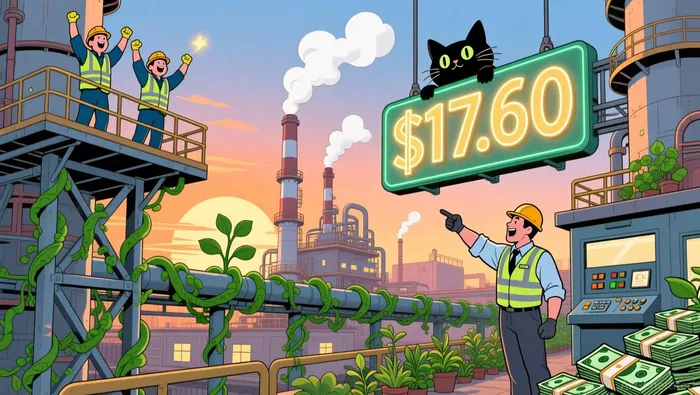 Refining margins, a key metric for downstream players, remain a focal point. While Q3 margins benefited from elevated crack spreads and strong Midcontinent performance, Q4 results will hinge on global crude prices and regional demand. Marathon's R&M segment generated $1.8 billion in adjusted EBITDA during Q3, but maintaining this level amid seasonal softness in U.S. fuel demand could prove challenging.
Investor Sentiment: Shareholder Returns vs. Earnings Volatility
Despite the Q3 EPS miss, Marathon has demonstrated a commitment to shareholder returns. The company repurchased shares and distributed $926 million to investors, including a 10% increase in its quarterly dividend. Such actions have historically bolstered investor confidence, even during periods of earnings volatility. However, the market's reaction to Q4 results will likely depend on whether Marathon can demonstrate that its cash flow generation is sustainable beyond one-off tailwinds.
Analysts remain cautiously optimistic. Marathon's CEO, Maryann Mannen, has emphasized the company's ability to "generate cash through varying market conditions", a claim that will be scrutinized when Q4 figures are released. The broader energy sector is also watching to see if Marathon can replicate its Q3 success in a quarter traditionally marked by weaker refining margins.
Geopolitical Tailwinds and Refining Margin Dynamics
Global refining margins reached multi-year highs in November 2025, driven by a confluence of factors: geopolitical tensions (e.g., conflicts in Ukraine), supply constraints from refinery outages, and policy-driven closures in California. These dynamics created a favorable environment for refiners, but they also highlight the fragility of current margins. If geopolitical tensions ease or global inventories normalize in Q4, Marathon's margins could face downward pressure.
Conversely, Marathon's strategic focus on midstream logistics and retail operations provides a buffer. Its integrated business model-spanning refining, marketing, and logistics-allows it to capitalize on regional arbitrage opportunities, a critical advantage in a fragmented U.S. fuel market.
The Road Ahead: A Pivotal Earnings Report
Marathon's Q4 2025 earnings report will serve as a litmus test for its long-term strategy. Investors will scrutinize whether the company can sustain Q3's margin strength while addressing operational inefficiencies, such as its Q3 EPS shortfall. The conference call on February 3, 2026, will be pivotal in clarifying management's outlook for 2026, particularly regarding capital allocation and responses to potential margin compression.
In a sector increasingly shaped by geopolitical and macroeconomic forces, Marathon's ability to adapt will define its trajectory. For now, the market remains split: some view the company as a bellwether of downstream resilience, while others fear overexposure to volatile refining margins. The coming weeks will determine which narrative prevails.







Comentarios
Aún no hay comentarios