
Marathon Petroleum's Q1 2025 Loss: A Strategic Hurdle or a Seasonal Speedbump?
Marathon Petroleum Corporation (NYSE: MPC), a top U.S. refiner, reported a net loss of $74 million for Q1 2025—a stark contrast to its $937 million profit in the same quarter a year earlier. While the loss has drawn investor scrutiny, a deeper dive into the numbers reveals a complex interplay of one-time costs, seasonal pressures, and structural shifts in the energy sector.
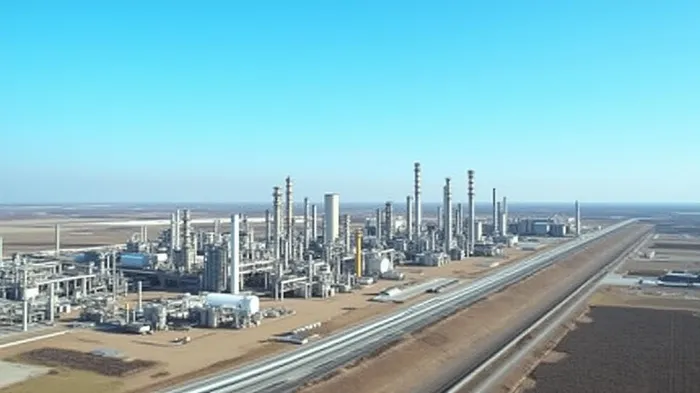
Key Financials: A Mixed Performance
The company’s adjusted EBITDA rose to $1.975 billion, driven by its midstream segment, which delivered $1.72 billion—up 8% year-over-year. Despite this, the refining business faced headwinds:
- Refining & Marketing (R&M) EBITDA dropped to $489 million from $2.0 billion in Q1 2024, primarily due to $454 million in planned maintenance costs (turnarounds) and a 41% year-over-year decline in refining margins to $13.38 per barrel.
- Cash flow from operations totaled $1.01 billion, enabling MPC to return $1.3 billion to shareholders via buybacks ($1.057 billion) and dividends ($285 million).
- Debt-to-capital ratio remained stable at 57%, with $3.8 billion in cash, signaling financial resilience.
Segment Analysis: Winners and Losers
Midstream: The Bright Spot
Marathon’s midstream division, led by its subsidiary MPLX, continued its strong performance. Strategic moves like acquiring full ownership of BANGL (a key crude pipeline) and finalizing the Traverse natural gas pipeline boosted cash flow. MPLX’s distributions now fully cover MPC’s dividends and standalone capital needs, creating a self-sustaining cash engine.
Refining: Margins Under Pressure
The refining segment’s struggles were multifaceted:
1. Lower Crack Spreads: The margin between crude oil and refined products (gasoline, diesel) narrowed significantly, with R&M margins dropping to $13.38 per barrel—$6 less than Q1 2024.
2. Regional Disparities: While West Coast margins held up ($17.94 per barrel), Gulf Coast and Mid-Continent margins fell by $7.06 and $5.72 per barrel, respectively, due to oversupply and logistical challenges.
3. Planned Turnarounds: The $454 million in maintenance costs—part of routine upkeep—compressed near-term profits but set the stage for smoother operations in upcoming quarters.
Renewable Diesel: Growing Pains
Marathon’s renewable diesel division reported a $42 million adjusted EBITDA loss, though this marked an improvement from Q4 2024’s $28 million deficit. Challenges included:
- Operational hiccups: Utilization dropped to 70% due to unplanned downtime at facilities like Dickinson Renewable Diesel.
- Regulatory uncertainty: The expiration of the Biofuel Tax Credit (BTC) and delays in recognizing new credits (e.g., Section 45Z) hampered profitability.
Challenges Ahead: Refining’s Structural Shifts
The refining sector faces broader headwinds beyond Marathon’s control:
1. Global Overcapacity: New refining capacity in Asia and the Middle East is flooding markets with cheap fuel, compressing margins for U.S. refiners.
2. Transition to Renewables: The push for low-carbon fuels (e.g., renewable diesel) requires massive capital investments but comes with regulatory and feedstock volatility risks.
Outlook: Q2 2025 and Beyond
Management remains optimistic, citing:
- Improved utilization: Crude throughput is expected to hit 2.775 million barrels per day in Q2, with utilization rising to 94%—up from 89% in Q1.
- Cost discipline: Operating costs per barrel are projected to remain stable at $5.30, despite $265 million in planned turnarounds.
- Long-term growth: Investments in midstream infrastructure (e.g., the Traverse pipeline) and renewables (e.g., the Martinez Renewable Fuels Facility) aim to diversify revenue streams and reduce carbon intensity.
Conclusion: A Cyclical Dip or Structural Concern?
Marathon’s Q1 loss was primarily cyclical, driven by one-time maintenance costs and seasonal refining weakness. The midstream segment’s strength, robust cash flow, and shareholder-friendly capital allocation suggest the company is navigating these challenges effectively. However, the refining sector’s long-term health hinges on:
1. Global demand stability: Strong summer driving seasons and industrial activity could lift crack spreads.
2. Regulatory clarity: A resolution on tax credits for renewable fuels would alleviate uncertainty for projects like Dickinson and Martinez.
3. Execution of growth projects: The Traverse pipeline and MPLX’s expansion could solidify Marathon’s midstream dominance.
Final Take: Marathon’s Q1 loss is a speedbump, not a derailment. With a fortress balance sheet, diversified operations, and strategic investments in renewables and midstream, the company is positioned to rebound. Investors should focus on the 94% utilization target for Q2 and midstream cash flow stability as key metrics for recovery. For now, Marathon remains a hold—waiting for refining margins to normalize and renewables to turn profitable.
Data as of May 6, 2025. All figures in USD unless stated otherwise.





Comentarios
Aún no hay comentarios