
Mapping the AI Infrastructure S-Curve: TSMC and Corning as Foundational Rails
The AI boom is moving past its initial hype phase. The frenzy for the latest GPU chips has settled into a more deliberate, capital-intensive build-out. This shift marks a clear inflection point on the adoption S-curve. The central bottleneck has pivoted from chip supply to something more fundamental: power and connectivity. As Matthew Sallee of Tortoise Capital notes, "A couple of years ago, it was all about the chips being the gating factor. That has pivoted, and now it's really about getting electricity." This isn't a minor adjustment; it's a paradigm shift that redefines the investment landscape.
The scale of this new build-out is staggering. Tech giants are committing to multi-year capital expenditure plans to scale their AI infrastructure, creating a powerful tailwind for foundational providers. While NVIDIA's data center revenue growth is a headline metric, it is the underlying capital commitment that matters most. "The AI frenzy is set to continue throughout 2026, driven in large part by significant CapEx for the underlying infrastructure." This isn't a one-time spending spree but a sustained investment cycle, ensuring demand for the physical rails that will support AI for years.
This transition creates a new S-curve for infrastructure. As the software layer churns with new "buzzword AI" narratives, the physical requirements for running models remain durable. The need for advanced packaging, high-speed interconnects, and, critically, power delivery and cooling is a long-term, exponential demand. Companies like CorningGLW--, whose fiber optics are surging in demand, are positioned at the heart of this new curve. The market is beginning to recognize that the most resilient long-term plays are not the fleeting application-layer winners, but the builders of the infrastructure that makes the entire paradigm possible.
TSMC: The Unstoppable Foundry on the S-Curve
TSMC is the undisputed manufacturing layer for the AI compute stack, and its Q4 results show the model is working. The company posted revenue of $33.1 billion, a 20% year-over-year jump that beat analyst estimates. This isn't a one-off pop; it's the sustained demand signal of a foundational player. The dual demand driver is key to its resilience. On one side, insatiable need for advanced AI accelerators, primarily from clients like NVIDIANVDA--, continues to fuel growth. On the other, the typical seasonal cycle for consumer electronics has been bolstered by strong sales of the iPhone 17 launched in September. This mix creates a revenue stream that is less vulnerable to swings in any single market.
The market is responding to this visibility. Multiple brokerages have raised their price targets, citing expectations for strong revenue growth and improving profitability as TSMCTSM-- scales its advanced nodes. This isn't just about volume; it's about the premium pricing and higher margins associated with manufacturing the most complex chips. The company's own capital expenditure plans reinforce this long-term view, with $40 billion to $42 billion earmarked for expansion and upgrades in 2025. The upcoming full earnings report will provide the 2026 capex forecast, a critical input for assessing the next phase of the infrastructure build-out.
For an investor, TSMC represents a bet on the exponential adoption of AI. The company is not chasing the latest application layer; it is the essential factory floor where the paradigm shift is physically realized. Its position on the S-curve is secure, with the dual engines of AI and consumer tech providing the fuel for a long, steady climb.
Corning: The Fiber Optic Conduit for the AI Data Flood
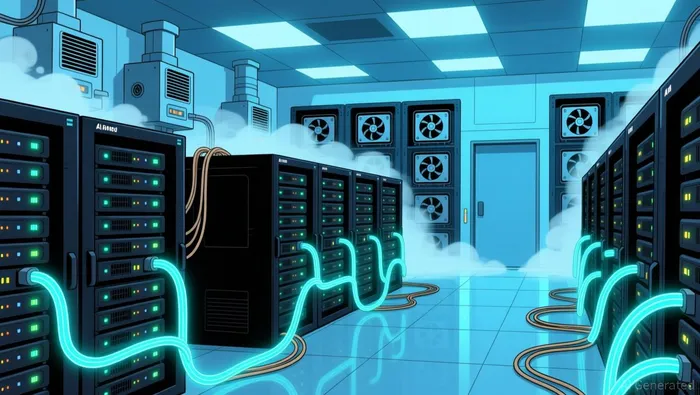
While TSMC manufactures the AI chips, Corning provides the essential nervous system that connects them. The company's fiber optic solutions are a direct beneficiary of the AI paradigm, as data centers require connections that copper simply cannot match. Optical networks are more efficient and most existing networks are copper-based, the demand for optical solutions is strong. In practice, this means replacing miles of copper with fiber to move data between GPUs and other components at the speeds required for AI workloads. A single advanced node can contain around 2 miles of copper cable; the shift to fiber is not optional, it is a fundamental upgrade to the infrastructure layer.
This transition is driving a massive expansion in Corning's addressable market. The need for high-speed interconnects is growing exponentially, fueled by the sheer volume of data generated for AI training and the physical scaling of data center nodes. Corning CEO Wendell Weeks believes the optical fiber market for data centers could double or even triple in size from here. This isn't just about new construction; it's about upgrading existing infrastructure to handle the data flood. The company's portfolio of fiber, cables, and connectors positions it to capture this growth across the entire data center stack.
The market has already priced in this demand. Corning's stock rocketed higher by 84% last year, a performance that reflects the surge in its optical communications segment. That segment saw revenue surge by 33% to $1.65 billion in the third quarter, accelerating from the prior year. The growth is expected to be organic as data center build-outs accelerate, with the company reporting core revenue expected to come in at $4.35 billion for the final quarter of 2025. For an investor, Corning represents a bet on the physical bandwidth required to realize the AI promise. It is a foundational play on the interconnect layer, where the exponential demand for data movement is just beginning to crest.
Why These Two? The S-Curve Advantage
TSMC and Corning represent the two fundamental rails of the AI industrial revolution. One manufactures the compute engines, the other moves the data between them. Their positions on the adoption S-curve are distinct but complementary, creating a powerful infrastructure play.
TSMC is on a steeper exponential growth phase as the single most critical manufacturing layer for advanced AI chips. There is no viable near-term substitute for its leading-edge fabrication capacity. As one analysis notes, "Taiwan Semiconductor may quietly be the better long-term opportunity" among the trillion-dollar chip leaders. This isn't just about volume; it's about being the essential factory floor where the paradigm shift is physically realized. The company's Q4 revenue of $33.1 billion reflects this irreplaceable role, with demand from AI accelerators and consumer electronics providing a dual engine for growth.
Corning, meanwhile, is positioned at the inflection point of the connectivity S-curve. Its fiber optic market is expanding as data center build-outs accelerate. The need for high-speed interconnects is growing exponentially, fueled by the sheer volume of data generated for AI training. As the industry expects more than 100 new hyperscale data centers to be built annually, the demand for optical solutions to connect them is becoming a fundamental upgrade. Corning's portfolio of fiber, cables, and connectors is designed to capture this growth across the entire data center stack.
Together, they represent the two essential layers of the new paradigm. TSMC builds the silicon brains, while Corning provides the nervous system. As the software layer churns with new "buzzword AI" narratives, the physical requirements for running models remain durable. This watchlist skips the fleeting application-layer winners and focuses on the data center itself. These are the AI infrastructure stocks building the physical floor of the new economy.
Catalysts, Risks, and What to Watch
The thesis for TSMC and Corning as foundational infrastructure plays hinges on near-term validation. The coming weeks will test whether the exponential demand for AI compute and connectivity is sustainable or if it faces a hard landing.
The first major catalyst is TSMC's full quarterly earnings report, scheduled for Jan. 15. Investors will scrutinize two key inputs. First, they need confirmation that the 20% year-over-year revenue growth seen in Q4 is not a seasonal blip but a sign of sustained AI chip demand. Second, and more critical, is the update on its capital-spending plans for 2026. The company allocated $40 billion to $42 billion for expansion in 2025. Any significant change to that capex forecast will signal whether the massive underlying data center build-out is accelerating or stalling. Multiple brokerages have already raised price targets, citing expectations for strong revenue growth and improving profitability. The January report will either confirm or challenge that optimism.
For Corning, the watchlist shifts to fiber optic shipments and guidance. The company's growth is tied directly to the physical ramp of data center construction. A key near-term dynamic is the flow of federal broadband funding (BEAD), which is pushing carriers to build new interconnects. Analysts expect more than 100 new hyperscale data centers to be built annually. Corning's ability to meet this surge in demand will be tested. Signs of capacity constraints in its optical communications segment would be a bullish signal, confirming that the market is outstripping supply. Conversely, any guidance that suggests a slowdown in data center build-outs would directly threaten the exponential adoption curve for its core products.
The primary risk to both plays is a broad slowdown in AI infrastructure spending. The market is already pricing in a massive $1 trillion collective commitment from tech giants to data center projects. If this spending falters, it would impact both chip manufacturing at TSMC and interconnect demand at Corning. The circular nature of these investments, where spending feeds on itself, creates a potential vulnerability. However, current visibility suggests resilience. The dual demand drivers for TSMC-AI accelerators and consumer electronics-and the fundamental need for fiber to connect AI workloads provide a buffer. The coming earnings reports will be the first real-world test of that resilience.







Comentarios
Aún no hay comentarios