
Maple Leaf Foods' Strategic Split and Q2 2025 Outperformance: A High-Conviction Case for Unlocking Shareholder Value
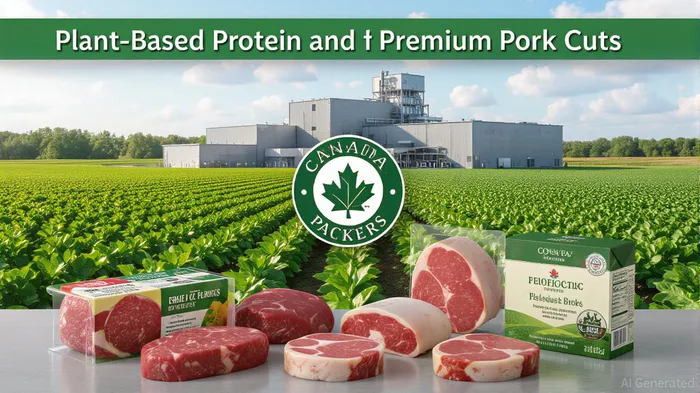
The strategic split of Maple Leaf Foods into two distinct entities—Maple Leaf Foods (focused on consumer-packaged goods) and Canada Packers (a standalone pork producer)—represents a masterstroke in capital allocation and value creation. As the Q2 2025 earnings report underscores, the company's operational and financial momentum has accelerated, validating the rationale for the spinoff and positioning both entities to capitalize on divergent growth trajectories. For investors, this is a rare opportunity to analyze a well-structured corporate transformation that aligns with long-term trends in the global protein market.
The Strategic Rationale: Specialization Over Conglomerate Complexity
Maple Leaf Foods' decision to spin off its pork operations into Canada Packers Inc. was driven by a clear imperative: to unlock value by separating two distinct business models. The pork segment, while profitable, required a different operational and capital allocation strategy than the high-margin prepared foods and plant-based protein divisions. By creating Canada Packers as an independent entity, Maple Leaf Foods can now focus on its core strengths—brand-led innovation, premium pricing, and sustainability—while Canada Packers gains the flexibility to optimize its supply chain, expand into global markets, and invest in pork-specific efficiencies.
The spinoff, structured as a tax-free “butterfly reorganization,” was approved by 99.94% of shareholders in June 2025, reflecting overwhelming confidence in the strategy. The transaction is expected to close by late 2025, with Maple Leaf retaining a 16% stake in Canada Packers. This ownership structure ensures alignment of interests while allowing both companies to pursue independent capital strategies.
Capital Allocation Post-Spinoff: Discipline and Flexibility
Maple Leaf Foods' Q2 2025 results highlight the company's disciplined approach to capital allocation. The firm reported $1.36 billion in revenue, a 29% year-over-year increase in adjusted EBITDA to $182 million, and $216 million in free cash flow. These figures underscore the effectiveness of its capital allocation strategy, which prioritizes:
- Maintenance Capital Expenditures:
CapEx for 2025 is projected at $160–180 million, a reduction from previous guidance, reflecting optimized project timing. This focus on maintenance capital ensures operational resilience without overextending the balance sheet.
Shareholder Returns:
- A 9% increase in quarterly dividends to $0.24 per share (payable September 29, 2025) signals confidence in sustained cash flow. The elimination of the DRIP discount further enhances shareholder value by aligning reinvestment terms with market prices.
Deleveraging:
- Net debt was reduced to $1.34 billion, with a net debt-to-EBITDA ratio of 2.1x, well below the 3.0xZRX-- threshold for investment-grade leverage. This provides flexibility for future M&A or strategic investments.
For Canada Packers, the spinoff unlocks a $1.3 billion standalone balance sheet (based on 2024 pork segment EBITDA of $250 million). The company can now allocate capital to:
- Expand global pork exports, particularly in Asia and the U.S., where demand for premium, antibiotic-free pork is rising.
- Invest in automation and sustainability, such as regenerative agriculture partnerships and carbon-neutral production.
- Optimize its supply chain through vertical integration or strategic partnerships, leveraging its evergreen supply agreement with Maple Leaf.
Growth Potential: Dual Engines of Value Creation
The post-spinoff era positions both companies to exploit their unique growth levers.
Maple Leaf Foods is doubling down on its consumer-packaged goods (CPG) strategy, with brands like Greenfield and Schneiders driving double-digit growth in plant-based and natural meats. The company's 2025 adjusted EBITDA guidance of $680–700 million reflects confidence in margin expansion from higher-margin prepared foods and cost discipline.
Canada Packers, meanwhile, is poised to capitalize on the global pork market's structural tailwinds. With 70% of its pork sold internationally, the company can benefit from rising incomes in Asia and regulatory tailwinds in the U.S. (e.g., reduced imports from China). Its perpetual supply agreement with Maple Leaf ensures a stable revenue base, while its 16% stake in Canada Packers provides Maple Leaf with upside from the pork division's growth.
Market Reaction and Investor Sentiment
The Q2 2025 earnings report sent Maple Leaf's stock surging 8.25% to $29.46, closing near its 52-week high of $32.05. This outperformance reflects investor optimism about the spinoff's execution and the company's ability to sustain margin expansion.
Analysts highlight the 10–15% valuation uplift expected post-spinoff, as the conglomerate discount is replaced by sector-specific multiples. For example, Canada Packers could trade at a 10x EBITDA multiple (vs. 8x pre-spinoff), while Maple Leaf's CPG business could command a 15x multiple, reflecting its premium brand portfolio.
Investment Thesis: A High-Conviction Case
For long-term investors, the strategic split offers a compelling case:
1. Diversified Exposure: Owning both entities provides access to two distinct protein segments (prepared foods and pork) with complementary growth drivers.
2. Sustainability Premium: Both companies are leaders in ESG initiatives, from carbon-neutral production to antibiotic reduction, aligning with regulatory and consumer trends.
3. Execution Risk Mitigated: The spinoff's shareholder approval and operational readiness (e.g., Canada Packers already operating as a subsidiary) reduce execution risk.
However, risks remain, including inflationary pressures on input costs and global trade dynamics (e.g., U.S.-China pork tariffs). Investors should monitor Q3 2025 guidance for signs of margin resilience and capital allocation discipline.
Conclusion: A Strategic Milestone with Long-Term Payoffs
Maple Leaf Foods' strategic split is more than a restructuring—it's a repositioning for sustained value creation. By separating into two focused entities, the company has unlocked the potential for higher margins, stronger shareholder returns, and scalable growth. For investors, the Q2 2025 results and the impending spinoff completion in late 2025 present a high-conviction opportunity to participate in a well-executed corporate transformation.






Comentarios
Aún no hay comentarios