
Is Maple Leaf Foods' Olympic Partnership a Sustainable Valuation Catalyst?
Maple Leaf Foods' recent partnership with Team Canada as the Official Protein Partner for the 2026 and 2028 Olympics, coupled with its "Victory. But First, Protein" campaign, has positioned the company at the intersection of brand-driven growth and strategic risk management. As the Canadian food giant navigates a post-spin-off landscape and a volatile pork market, investors are scrutinizing whether this high-profile Olympic alignment can serve as a sustainable catalyst for valuation growth.
Brand Equity and Consumer Engagement: A New Narrative
The Olympic partnership represents a calculated move to elevate Maple Leaf Foods' brand equity by associating its core protein offerings with the aspirational narratives of elite athletes. By aligning with high-profile figures like Laurent Dubreuil and Cassie Sharpe, the campaign underscores the importance of protein in both athletic and everyday performance according to the campaign announcement. This strategy is not merely symbolic; it is designed to deepen consumer engagement with health-focused products such as Maple Leaf Mighty Protein chicken sticks, which are explicitly tied to the Olympic sponsorship.
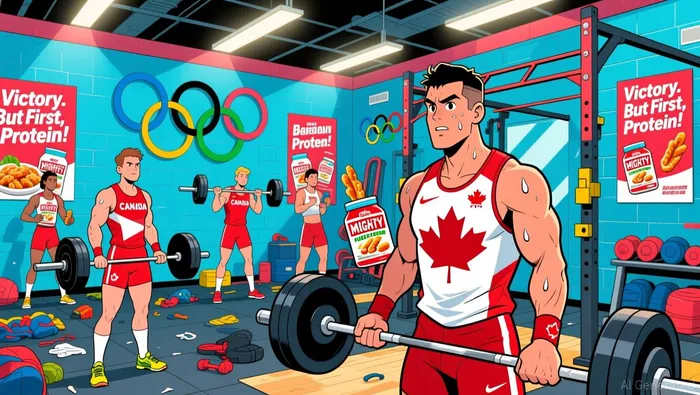 Data from Maple Leaf's third-quarter 2025 financial results suggests early validation of this approach. Total Company Sales grew by 8.0%, driven by the Prepared Foods, Poultry, and Pork segments, with the "Victory. But First, Protein" campaign likely contributing to heightened brand visibility. Analysts argue that the campaign's emphasis on "everyday performance" aligns with broader consumer trends toward functional nutrition, potentially expanding Maple Leaf's market share in the premium protein category according to market analysis.
Margin Expansion and Strategic Spin-Off Synergies
The spin-off of Canada Packers Inc. in October 2025 further amplifies Maple Leaf Foods' focus on higher-margin consumer packaged goods (CPG). By divesting its pork operations-accounting for 25% of total sales-Maple Leaf has reduced its exposure to pork market volatility while retaining a 16% stake in Canada Packers and a long-term supply agreement. This structural shift is expected to streamline operations and enhance profitability, as evidenced by Q3 2025 Adjusted EBITDA growth of 21.7%, with margins expanding from 11.2% to 12.6%.
The spin-off also enables Maple Leaf to prioritize innovation in premium protein products. For instance, the launch of Musafir and Mighty Protein lines has offset inflationary pressures in the Prepared Foods segment, demonstrating the company's ability to leverage brand equity for margin expansion according to financial results. With projected revenue of CA$5.6 billion and earnings of CA$467.3 million by 2028, the strategic pivot toward CPG appears well-aligned with long-term shareholder value creation according to analyst projections.
Risks: Pork Market Volatility and Execution Challenges
Despite these positives, risks remain. The pork segment, though now independent, still influences Maple Leaf's financials through supply agreements and residual cost structures. In Q3 2025, pork market strength drove input costs in the Prepared Foods segment, partially offsetting pricing gains. While the spin-off reduces direct exposure, sustained volatility in pork pricing could indirectly pressure margins, particularly if inflationary trends persist.
Additionally, the execution of the spin-off itself presents challenges. Both Maple Leaf and Canada Packers have acknowledged the complexity of managing inflationary pressures and operational execution in a dynamic market according to financial reports. For example, Canada Packers reported 14.7% sales growth in Q3 2025, driven by higher hog volumes and favorable pricing, but this success hinges on maintaining efficiency amid rising raw material costs. Investors must weigh whether the company's operational focus post-spin-off can consistently outpace these headwinds.
Conclusion: A Calculated Bet on Brand and Resilience
Maple Leaf Foods' Olympic partnership and "Victory. But First, Protein" campaign are undeniably ambitious, leveraging high-profile storytelling to reposition the brand as a leader in health-focused protein. The financial results of Q3 2025 and the strategic clarity provided by the Canada Packers spin-off suggest that this approach is already yielding tangible benefits in terms of revenue growth and margin expansion.
However, the sustainability of this valuation catalyst depends on Maple Leaf's ability to navigate pork market volatility and execute its CPG strategy without missteps. While the spin-off reduces direct exposure to pork price swings, the company's reliance on supply agreements and its need to maintain pricing power in a competitive market remain critical risks. For now, the Olympic partnership appears to be a well-calculated bet on brand equity and long-term shareholder value, but its success will ultimately hinge on the resilience of both its marketing narrative and operational execution.







Comentarios
Aún no hay comentarios