
Mantra’s OM Token Plummets 90% in Single Day
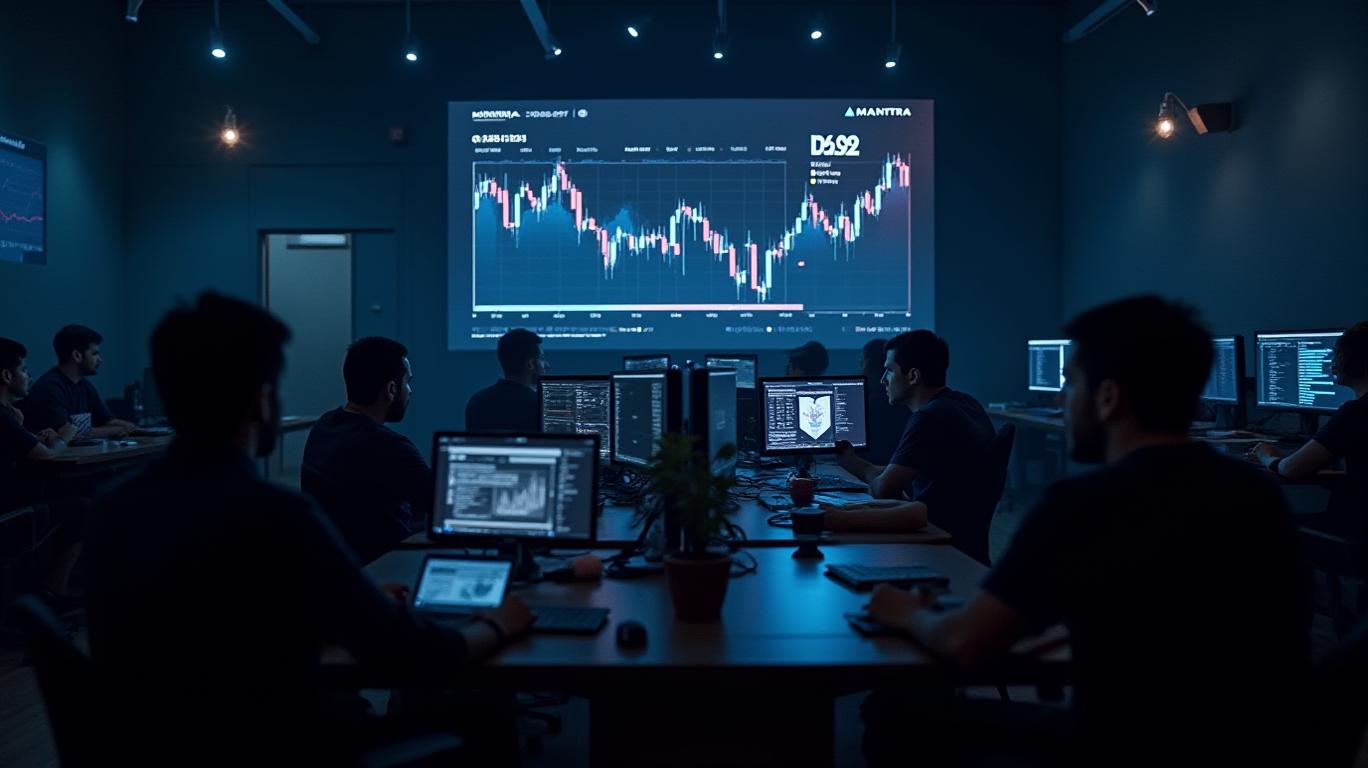
Mantra’s OMOM-- token experienced a dramatic collapse, losing over 90% of its value in a single day. On April 13, the token's price plummeted from over $6 to below $0.50, resulting in the loss of more than $5 billion in market capitalization and triggering widespread panic across the crypto industry. The sudden crash drew comparisons to the Terra’s LUNA implosion, with traders scrambling for answers. Unverified rumors of insider dumping, forced liquidations, mislabeled wallets, and exchange manipulation quickly spread, but Mantra insisted it was caught in the middle of the chaos.
Prior to the collapse, Mantra had established a strong position in the real-world asset tokenization narrative. The company had secured a $1-billion deal to tokenize Dubai-based Damac Group’s real estate and data centers, obtained a Virtual Assets Regulatory Authority (VARA) license in Dubai, and launched a $108-million ecosystem fund with support from heavyweights such as Laser Digital, Shorooq, Amber Group, and Brevan Howard Digital. In February 2025, the OM token hit an all-time high of nearly $9. However, on April 13, this momentum was violently interrupted, leading to a chaotic sequence of events.
Throughout the day on April 13, the OM token was trading sideways, dropping from $6.14 to $5.52 during a two-hour window. Suddenly, the token fell to $1.38 in the first hour and then to as low as $0.52 in the next, losing over 90% of its value in a single day. Social media erupted with theories, including a rug pull, insider dumping, forced liquidation, or exchange manipulation. Mantra shared its first statement on X, but the brief update was met with immediate backlash from the community. Co-founder and CEO John Patrick Mullin later posted a more detailed statement, claiming that OM’s market action was triggered by “reckless forced closures initiated by centralized exchanges on OM account holders.”
Mullin suggested that the timing and depth of the crash indicated a very sudden closure of account positions without sufficient warning or notice. He also pointed out that the crash occurred during low-liquidity hours on a Sunday evening UTC, which he described as a degree of negligence at best, or possibly intentional market positioning taken by centralized exchanges. In the days leading up to the crash, at least 17 wallets had deposited a total of 43.6 million OM (worth $227 million) into Binance and OKX. Two of these wallets were labeled as belonging to Laser Digital, a strategic Mantra investor, by blockchain data platform Arkham Intelligence. The label triggered further speculation and allegations against Laser Digital, although the accuracy of Arkham’s labels has not been confirmed.
Both Binance and OKX responded to the situation, with Binance stating that the developments were a result of cross-exchange liquidations. OKX CEO Star Xu posted on X, expressing the need for transparency and investigation. OKX also stated that it had identified major changes to the MANTRA token’s tokenomics model since October 2024 and uncovered coordinated large-scale deposits and withdrawals across various centralized exchanges since March 2025. Laser Digital denied ownership of the wallets tagged by Arkham and reported by Lookonchain, calling them mislabeled. Lookonchain also identified another wallet labeled as belonging to Shane Shin, a founding partner of Shorooq Partners, which had remained dormant for a year before becoming active just hours before the crash.
Mullin joined a show and denied reports that key Mantra investors dumped OM before the collapse. He dismissed allegations that the team controlled 90% of the supply and reassured users that OM token recovery was the team’s primary concern. More theories started emerging, with Onchain Bureau claiming market makers at FalconX were responsible for the price crash. They blamed it on the loan option model, a service allowing market makers to borrow tokens and execute guaranteed purchases at contract expiry. Onchain Bureau later followed up, saying FalconX had reached out and denied being Mantra’s market maker. Mullin also responded, stating that FalconX was not the project’s market maker but a trading partner. Crypto detective ZachXBT weighed in, claiming that individuals linked to Reef Finance had allegedly been seeking massive OM-backed loans in the days leading up to the crash.
Several theories have been thrown around, including initial fears of a rug pull to insider trading, which Mantra has denied. The team has responded to online comments and media inquiries to assure that they haven’t run away. Mantra has also denied that the price collapse was a result of an expiring deal with market maker FalconX. Some fingers were pointed toward Laser Digital, which said it is a result of mislabeling at Arkham Intelligence. Arkham Intelligence has not responded to requests to clarify its labels. However, the Laser Digital tags on Arkham are a low-confidence prediction made by an AI model, not a verified entity. In the days following the OM crash, Mullin stated that he would burn all of his team’s tokens. He later said that he would start by putting his own allocation on the line. Mullin announced that Mantra would publish a post-mortem and followed with a “statement of events” on April 16. The team reiterated that no project-led token sales occurred and that all team allocations remain locked. The statement doubled down on Mantra’s plan to introduce a token buyback and burn program but lacked new information on the cause of the crash. Mullin told that Mantra has tapped an unnamed blockchain analyst to investigate the underlying cause of the crash, though details remain confidential at this time.







Comentarios
Aún no hay comentarios