
The Mandarin Mandarin: How Sino-Russian Cultural Ties Are Shaping a New Era of Investment Opportunity
In 2024, Russian President Vladimir Putin revealed an unexpected cultural bridge between Moscow and Beijing: his granddaughter, under the tutelage of a Beijing-based teacher, speaks Mandarin Chinese fluently. This anecdote, tucked into a discussion on Sino-Russian relations at the St. Petersburg International Economic Forum, underscores a deeper truth. The rise of people-to-people diplomacy—driven by educationalEDUC-- exchanges, language adoption, and familial ties—is cementing long-term economic integration between the two nations. For investors, this is no metaphor: it's a call to reposition portfolios for a future where Sino-Russian collaboration defines regional and global markets.
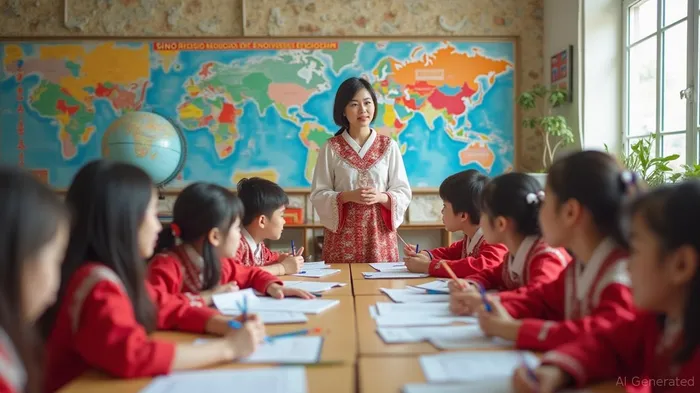
The Cultural Catalyst: Language as a Strategic Asset
Putin's granddaughter is emblematic of a broader trend. Over 50,000 Chinese students now study in Russia, while 21,000 Russians pursue degrees in China—a 30% increase since 2020. Mandarin has become the fastest-growing language in Russian schools, with Chinese textbooks now standard in 1,200 Russian classrooms. Meanwhile, the Confucius Institute's expansion into Siberia and the Far East has created hubs of linguistic and cultural exchange. This isn't just soft power; it's a pipeline for future business leaders, engineers, and policymakers fluent in both language and cultural nuance.
Sectors to Watch: Where Integration Meets Profit
Technology & Education
Cross-border tech partnerships are booming. Alibaba Cloud's collaboration with Russia's Mail.ru Group to develop AI solutions for e-learning platforms is just one example. Investors should eye firms like Yandex (YNDX), which is integrating Chinese language tools into its search engine, and China's New Oriental Education (EDU), now expanding into Russian vocational training.Infrastructure & Energy
The "Silk Road of the 21st Century" isn't just a metaphor. Russia's Trans-Siberian Railway is being upgraded to link with China's Belt and Road Initiative (BRI), while the Power of Siberia 2 gas pipeline to China is nearing completion. Infrastructure stocks like Gazprom (GAZP) and China Railway Construction (01800.HK) are poised to benefit from this logistical integration.Emerging Tech Synergies
Quantum computing and satellite tech are next frontiers. The Sino-Russian Satellite Navigation System (a joint GPS alternative) and Tinkoff Bank's AI-driven financial services for Chinese tourists highlight opportunities in fintech and space tech.
Risks and Reality Checks
Geopolitical volatility remains a wildcard. U.S.-led sanctions and regional tensions could disrupt trade flows. However, the "no limits" partnership between Putin and Xi has prioritized economic resilience over political noise. Investors must balance short-term risks with the long-term certainty of Sino-Russian interdependence.
Investment Playbook for 2025
- ETFs: Allocate to region-specific funds like Market Vectors Russia ETF (RSX) and iShares MSCI China ETF (MCHI).
- Stocks: Target Yandex, China Railway Construction, and Tinkoff Bank (TCS) for exposure to tech, infrastructure, and financial innovation.
- Bonds: Consider Russian ruble-denominated sovereign bonds (RUSS) for yield, paired with Chinese yuan exposure via CNY/USD ETFs.
Conclusion
The story of Putin's granddaughter isn't just about language—it's about the quiet, relentless build of a new economic order. As Sino-Russian ties evolve from political rhetoric to lived reality, investors who recognize this cultural and educational foundation will be best positioned to profit. The next decade will reward those who see beyond today's headlines and bet on the people-to-people connections shaping Eurasia's future.
Invest now in the bridges being built—and the languages spoken between them.







Comentarios
Aún no hay comentarios