
Managing the Invisible: How Assistant Secretaries Are Redefining Global Stockpile Strategy
The world of stockpiles—whether military, energy, or agricultural—is rarely the stuff of headlines. Yet between April 30 and May 9, 2025, a series of announcements from lesser-known government and corporate roles have quietly reshaped the calculus of supply, demand, and risk across industries. At the center of this shift are Assistant Secretaries, Directors, and Strategists—unsung figures whose decisions now carry trillion-dollar implications.
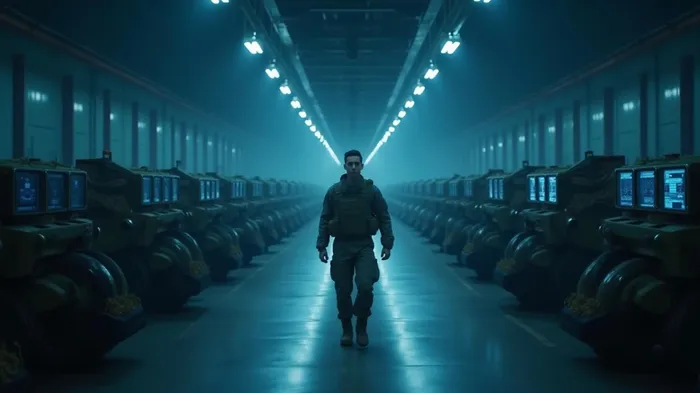
Defense: Precision in the Pentagon’s Supply Chain
The Department of Defense’s Assistant Secretary for Acquisition has emerged as a pivotal player in modernizing U.S. logistics. On May 3, 2025, the Pentagon revealed plans to reduce redundancies in its 1.2 million-item National Stock Number system by 15% by 2026. This initiative, paired with a new digital inventory platform, aims to eliminate costly overlaps in military procurement.
The stakes are immense: overlapping orders for items like night-vision goggles or tactical gear cost the U.S. an estimated $12 billion annually. The Assistant Secretary’s push for transparency could free up capital for advanced technologies like hypersonic missiles or AI-driven command systems.
Energy: Diversifying Supplies in a Volatile Landscape
In the energy sector, the Assistant Secretary for Strategic Materials has escalated efforts to insulate the U.S. from supply chain shocks. By May 7, 2025, rare earth mineral stockpiles had surged 20% to 15,000 metric tons—a direct response to China’s dominance in critical minerals. The plan to source 30% of such materials from non-Chinese suppliers by 2027 underscores a broader geopolitical strategy to weaken Beijing’s leverage.
Yet lithium shortages threaten another front. A $500 million federal investment in domestic mining—targeting Nevada’s lithium brines—hints at a longer game. Meanwhile, polysilicon reserves for solar panels have jumped 40% globally, with U.S. and European factories driving the boom. This overcapacity, however, poses risks: analysts warn current stockpiles could exceed 2026 solar demand by 12%, potentially destabilizing prices.
Retail: The AI-Driven Inventory Revolution
Corporate supply chains are also undergoing a quiet revolution. A major U.S. retailer’s Assistant to the CEO for Supply Chain reported on May 9, 2025, that AI tools have cut overstock in electronics by 25%, trimming warehouse costs by 10% and reducing restocking lead times by 15 days. This efficiency gains are no small feat: overstocking costs U.S. retailers $475 billion annually.
The same team’s sustainability push—aiming to slash expired perishables by 80% by 2026—highlights a broader trend: ESG mandates now directly shape inventory policy. For investors, this points to winners in automation (e.g., warehouse robotics firms) and losers in outdated logistics models.
Agriculture: From Surpluses to Social Safety Nets
Even grain silos have become battlegrounds for policy innovation. The USDA’s Assistant Deputy Secretary for Farm Services announced on May 2 that wheat stocks hit a 10-year high of 2.1 billion bushels. Instead of letting surpluses rot, 15% of excess grain will now feed food-insecure Americans—a policy shift with profound implications for both rural economies and social stability.
This redistribution could reduce food bank deficits by $2.3 billion annually, while also stabilizing commodity prices for farmers. Yet the success hinges on execution: past USDA stock reallocations have faced logistical bottlenecks, underscoring the need for the Assistant’s proposed digital tracking systems.
Conclusion: The New Rules of the Game
The rise of these “assistant” roles signals a paradigm shift: supply chain management is no longer a back-office function but a strategic imperative. Investors ignoring these figures risk overlooking material risks and opportunities:
- Defense: A 15% reduction in redundant military stock means capital reallocated to innovation—a tailwind for firms like Lockheed Martin (LMT) but a headwind for commodity suppliers.
- Energy: Lithium mining investments and polysilicon overcapacity create a “pick-and-shovel” opportunity for U.S. miners (SQM, ALB) but pose risks for solar panel manufacturers (TAN ETF).
- Retail: AI-driven efficiency gains favor automation leaders (like Fetch Robotics) while squeezing low-margin retailers (WMT).
The takeaway is clear: in an era of supply chain fragility, the quiet decisions of Assistant Secretaries and Directors are anything but minor. Their stockpile strategies—whether for wheat, weapons, or widgets—will determine who thrives and who falters in the years ahead.







Comentarios
Aún no hay comentarios