
Mamdani's Fiscal Tightrope: Can NYC's Economic Engine Fund a Progressive Agenda?
New York City's economy is running hot, yet its fiscal engine is heading toward a cliff. The city's job market hit an , with labor force participation also setting new records. This strength is underpinned by a diversification into high-growth sectors like tech and life sciences, creating a robust economic foundation. However, this momentum is showing cracks. The city is on track to add , and most of that growth is concentrated in low-wage sectors like home health care. This emerging slowdown, coupled with a cost-of-living crisis where the typical household spends over half its income on rent, defines the operating environment for incoming Mayor Zohran Mamdani.
The core tension is a structural mismatch between record revenues and a looming budgetary gap. While tax receipts are high, . Larger deficits are expected in subsequent years. This fiscal cliff is the defining constraint. Mamdani's ambitious affordability agenda-pledging a citywide rent freeze, building 200,000 new affordable homes, and providing universal free child care and transit-requires massive new funding. His plans hinge on state approval to raise taxes on the city's wealthiest residents and corporations, a political hurdle Governor Kathy Hochul has already signaled she will oppose. The city's financial health is strong today, but the legal requirement to close a multi-billion dollar hole in two years creates a stark deadline for difficult trade-offs.
The bottom line is that Mamdani inherits a powerful economic engine that is beginning to sputter, facing a fiscal cliff that demands immediate action. His progressive vision for affordability is constrained by a budget that must balance itself by law, forcing him to navigate a narrow path between political ambition and financial reality.
The Affordability Crisis: Demand vs. Supply
The core of New York City's crisis is simple: housing costs have outpaced incomes for a generation. The scale is staggering. , and the typical household spends more than half its income on rent. In Manhattan, . This isn't just a housing problem; it's a full-blown affordability emergency that spills into food insecurity and child care, .
The incoming mayor, , has pledged sweeping solutions, but they face a stark economic reality. His centerpiece is a rent freeze on nearly 1 million apartments, a move aimed at stabilizing costs for the city's largest rental stock. Yet the math is already strained. Since 2020, , . A freeze would lock in this widening gap, threatening the financial viability of the very buildings that house vulnerable tenants. Experts warn this could lead to deterioration as owners struggle to cover rising costs for utilities, insurance, and labor.
His second pillar is ambitious construction: a pledge to build 200,000 new affordable homes. But this faces a sector already in distress. The market for permanently subsidized affordable housing is under severe financial pressure, with some developers at risk of defaulting on loans. The economic sustainability of this pledge is therefore questionable. It requires a massive capital infusion and a functioning developer ecosystem that currently shows signs of strain.
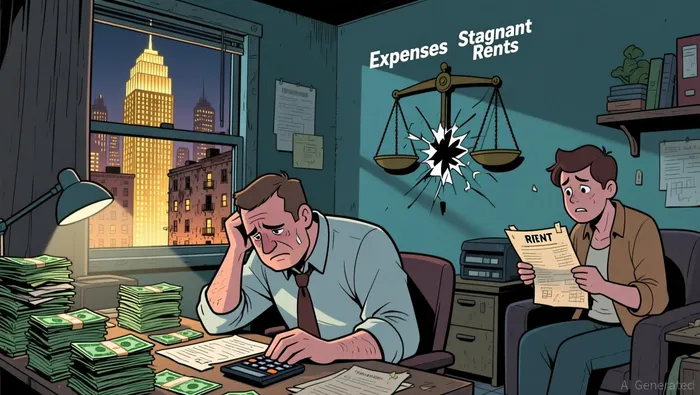
The bottom line is a policy dilemma. Mamdani's proposals directly confront the crisis's symptoms-skyrocketing rents and a housing shortage. But they risk destabilizing the existing rent-stabilized stock and overextending a construction sector already on shaky ground. The economic sustainability of his agenda hinges on his ability to mobilize new funding and navigate a fiscal landscape that is slowing, with a $6.5 billion budget gap looming in 2027. The crisis is structural, but the proposed solutions test the limits of what the city's financial and housing markets can bear.
The Supply-Side Imperative: Lessons from Austin
The path to affordability is not through price controls or austerity, but through a simple economic principle: increase supply. The most compelling proof comes from , Texas. In the wake of a pandemic-driven demand surge, the city faced soaring rents. Instead of imposing rent caps, Austin's leadership loosened zoning and land-use restrictions. The results were dramatic. In 2025 alone, the city built . Since peaking in summer 2023, . This is not a theoretical model; it is a working blueprint for lowering costs through construction.
The comparison to New York City is instructive. Despite having a population roughly eight times larger than Austin's, . The gap is not one of scale but of regulatory will. The city's affordability crisis is not a shortage of capital or developers, but a shortage of political courage to overcome the legal barriers to building. State law, for instance, mandates years-long, expensive environmental reviews for local zoning changes-a process that adds significant cost and uncertainty to projects that rarely produce novel environmental impacts.
For Mayor Zohran Mamdani, this presents a clear imperative. His campaign was built on affordability, yet he offered no model when asked. The Austin case shows that the most effective tool is a market-based solution: stimulate private-sector housing construction by removing regulatory friction. This requires a specific political strategy. It means mobilizing grassroots pressure to push Albany lawmakers to exempt residential rezonings from lengthy environmental reviews and to repeal other costly mandates like off-street parking requirements. As one analysis notes, these moves would create greater certainty and lower development costs, spurring the kind of supply growth that can drive rents down.
The bottom line is that political will is the scarce resource, not capital. Mamdani's success hinges on aligning political forces to implement a pro-supply agenda. Without it, his plans for a rent freeze and subsidized housing will face the same financial pressures that are already straining the city's existing affordable stock. The blueprint is proven; the execution is a test of political organizing.
Catalysts, Risks, and the Path Forward
The immediate catalyst for Mayor Zohran Mamdani's agenda is the state legislature's response to his tax proposals. His plans for a rent freeze, universal childcare, and a fare-free transit system require state approval to raise taxes on the city's wealthiest residents and corporations. Governor Kathy Hochul has already signaled resistance, particularly to the $1 billion fare elimination plan. A failure to secure this revenue would force a painful prioritization of spending, directly threatening the implementation of his core affordability pledges.
The key risk is a fiscal "doom loop" where strain leads to service cuts, which in turn could trigger economic flight and further revenue declines. This dynamic defined New York's 1970s crisis. However, the current buffer is substantial. The city's economy is strong, with employment and labor force participation at record highs, tax revenues at historic levels, and office leasing near pre-pandemic norms. This economic resilience provides a crucial runway, but it is not infinite. , and larger deficits expected thereafter, represent the ticking clock.
The ultimate determinant of long-term success is policy shifts that accelerate housing supply growth. Mamdani's rent freeze and affordable housing construction goals are laudable, but they face a structural headwind: the financial unsustainability of the existing rent-stabilized stock, where expenses have outpaced allowable rent increases by a wide margin. The path forward, as demonstrated by cities like Austin, lies in supply-side reforms. By loosening zoning restrictions, eliminating parking minimums, and streamlining environmental reviews for residential projects, New York could unlock private capital and construction to meet demand. The mayor's ability to mobilize his grassroots base to pressure Albany for these pro-supply changes will be the ultimate test. Without them, his agenda risks being a well-intentioned but ultimately supply-constrained battle against a relentless cost-of-living crisis.







Comentarios
Aún no hay comentarios