
Malibu Boats and GM: A Partnership Paddling Toward Dominance in Recreational Boating
The recreational boating industry is undergoing a quiet revolution, driven by synergistic partnerships that blend automotive innovation with marine engineering. At the forefront is Malibu BoatsMBUU-- (MBUU), which has deepened its collaboration with General Motors (GM) in 2025, leveraging GM's engine technology to fuel growth, cut costs, and reinforce its leadership in wakeboarding and watersports. This partnership exemplifies how strategic vertical integration and cross-brand synergies can create a moat against competitors, positioning MBUU as a compelling investment in an expanding market.
Synergistic Innovation: Monsoon Engines as a Game-Changer
Malibu's Monsoon engine line, developed using GM's engine blocks and marinized in-house, is the crown jewel of this partnership. The LT4 variant—a 6.2L supercharged V8 delivering 607 horsepower and 606 lb-ft of torque—powers the Wakesetter 24 MXZ, the star of Malibu's 2025 Just Ride Tour. This engine's marinization, which includes corrosion-resistant coatings, simplified maintenance, and advanced cooling systems, sets a new benchmark for reliability and performance.
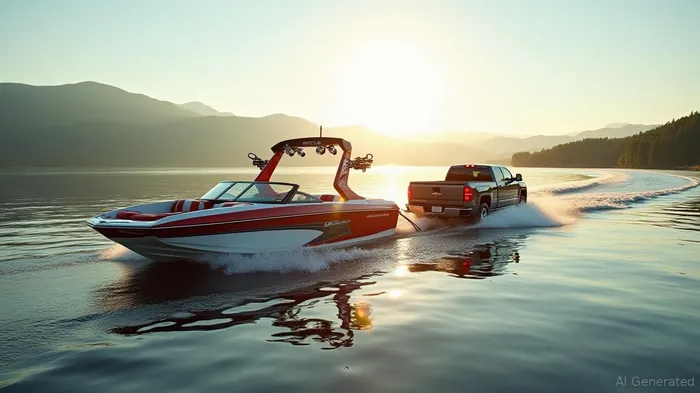
The vertical integration of engine production allows Malibu to tailor performance to boating-specific demands. For instance, the LT4's torque curve is optimized for low RPMs, ensuring smooth wakeboarding conditions while improving fuel efficiency. Direct-injection technology further reduces emissions, aligning with environmental trends. This innovation not only differentiates Malibu's products but also justifies premium pricing—critical in a market where 70% of buyers prioritize engine power and customization, according to industry surveys.
Cost Efficiency: Lowering Barriers to Ownership
The partnership's cost advantages are twofold. First, Malibu's in-house marinization reduces reliance on third-party suppliers, trimming production costs and enabling tighter quality control. The 5-year factory warranty for Monsoon engines—backed by rigorous durability testing—also minimizes long-term maintenance expenses for customers, a key selling point in an industry where maintenance costs often deter buyers.
Second, GM's engineering expertise lowers R&D spend for Malibu. By adapting proven automotive engines (like the Chevrolet Camaro ZL1's LT4) for marine use, Malibu avoids costly trial-and-error development. This efficiency is reflected in its margins: Malibu's gross margin of 22.5% in 2024 outpaces peers like Brunswick (BC) at 18%, a gap likely to widen as Monsoon engines scale.
Cross-Brand Synergy: Chevrolet's Role in Amplifying Reach
The designation of Chevrolet as Malibu's “Official Vehicle Brand” creates powerful cross-promotional opportunities. Chevrolet trucks, such as the Silverado 3500HD, are now the face of Malibu's Just Ride Tour—a nationwide event series that attracts 50,000+ attendees annually. This alignment leverages Chevrolet's reputation for reliability to build trust in Malibu's products.
Shared dealer networks further amplify scalability. Malibu's 800+ dealers now co-market Chevrolet vehicles, creating a bundled sales strategy: customers buying a Silverado for towing are introduced to Malibu boats, and vice versa. This synergy reduces customer acquisition costs and boosts retention—key metrics for long-term growth.
Market Leadership and Investment Thesis
Malibu's partnership with GM is a masterclass in leveraging synergies to dominate a niche. The recreational boating market is projected to grow at a 6.2% CAGR through 2030, driven by rising disposable incomes and outdoor recreation trends. Malibu's focus on premium, tech-driven products positions it to capture a disproportionate share of this growth.
Investors should note:
- Margin Expansion: Vertical integration and economies of scale could push Malibu's margins toward 25%+ by 2026.
- Scalability: The Monsoon engine platform supports multiple boat models, reducing per-unit R&D costs.
- Brand Resonance: Joint marketing with Chevrolet amplifies Malibu's reach, particularly among SUV/truck buyers—a core demographic for watersports enthusiasts.
Risks to Consider
- Economic Sensitivity: Recreational boating is discretionary; a recession could dent demand.
- Supply Chain Volatility: Relying on GM's engine supply introduces dependency risks, though vertical integration mitigates this.
Conclusion: MBUU as a Top Pick in Recreational Boating
Malibu Boats' strategic partnership with GM exemplifies how synergistic innovation and cross-brand collaboration can drive long-term growth. With Monsoon engines solidifying its product superiority, cost efficiencies boosting margins, and Chevrolet amplifying its reach, MBUU is poised to capitalize on industry tailwinds.
For investors, MBUU's current valuation—14x 2025E EPS—offers a compelling entry point. Consider adding a 5% allocation to a growth portfolio, with a 12-month price target of $95–$100, reflecting its leadership position and scalable moat.
In a market where differentiation and reliability reign, Malibu's partnership is more than strategic—it's a blueprint for dominance.





Comentarios
Aún no hay comentarios