
Malaysian Palm Oil Futures: Navigating Volatility in a Supply-Demand Crossroads
Malaysian palm oil futures have entered a period of heightened volatility, oscillating between MYR 3,889–3,947/tonne as market participants balance surging production, geopolitical crude oil dynamics, and shifting export demand. For investors, this presents both opportunities and risks. Here's a deep dive into the technical and fundamental drivers shaping the market—and how to position for it.
Technical Analysis: Rangebound Market with Critical Thresholds
The market has been locked in a narrow range since late May, with prices testing key technical levels.
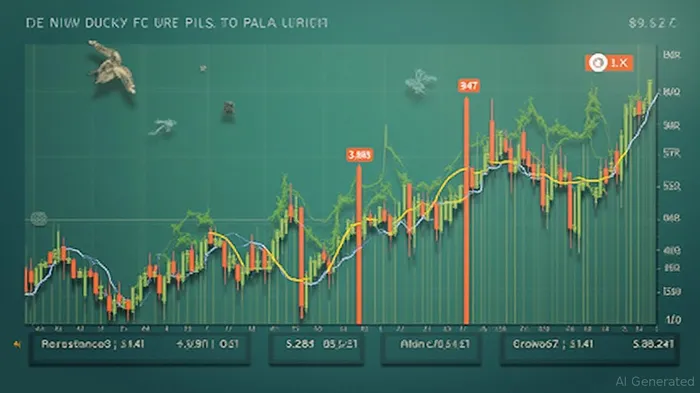
- Resistance Levels: A sustained breach of MYR 3,947/tonne could trigger a rally toward MYR 4,100/tonne, fueled by improved biodiesel demand or a weaker ringgit.
- Support Levels: A drop below MYR 3,900 (the 200-day moving average) risks a sharp decline toward MYR 3,565/tonne by year-end.
Recent Performance: Despite a 1.37% dip on June 18 (to MYR 3,878/tonne), the market maintained a 1.33% weekly gain, reflecting short-term resilience. Traders should monitor the three-day forecast range (MYR 4,030–4,110/tonne) for clues on momentum.
Fundamental Drivers: Supply Surplus vs. Demand Catalysts
1. Production Surge and Inventory Pressures
Malaysian production surged 13.5% year-on-year in May, reaching 1.75 million tonnes, pushing stocks toward 1.8 million tonnes—a psychologically significant level. Indonesian output for 2024/25 is projected at 48.2 million tonnes, further amplifying oversupply concerns.
2. Export Demand: India's Role in Shifting Dynamics
India's palm oil imports hit a six-month high of 592,888 tonnes in May (84% up from April), driven by a 10% import duty cut and palm oil's $50/tonne discount to soyoil. June imports are expected to exceed 750,000 tonnes, but substitution risks loom as Ukrainian sunflower oil exports recover.
3. Crude Oil and Biodiesel Mandates
- Crude Oil at $80/Barrel: Supports biodiesel demand, particularly under Indonesia's B40 mandate, which diverts 2 million tonnes/year from global markets.
- POGO Spread: Currently at $165/tonne, narrowing to $120/tonne (if crude hits $85/barrel) could boost palm oil's economic viability.
4. Currency Effects
The Malaysian ringgit's 0.68% decline against the USD in June has made palm oil 1.5% cheaper for Dalian buyers, supporting prices. Further weakening to 4.25 MYR/USD could lift prices toward MYR 3,909/tonne.
Risks and Challenges
Overproduction and Policy Uncertainty
- Malaysian Inventory Buildup: End-June stocks could hit 1.8 million tonnes, a level last seen in late 2022.
- Indian Policy Shifts: The Finance Ministry has hinted at reinstating import duties if global edible oil prices stabilize.
Sustainability Compliance
Only 86.5% of Malaysian plantations meet the EU's MSPO 2.0 certification, risking exclusion from EU markets (worth $500 million annually) if targets are missed by 2025.
Geopolitical Risks
- Iran-Israel Tensions: Could disrupt crude oil supply chains, indirectly boosting palm oil's biodiesel appeal.
- EU Deforestation Regulation (EUDR): Compliance failures could cut export revenue further.
Investment Strategies: Positioning for Volatility
Near-Term (1–3 Months)
- Buy the Dip: Enter long positions at MYR 3,800/tonne if the ringgit weakens to 4.25 MYR/USD, targeting MYR 4,000/tonne. Set a stop-loss below MYR 3,700/tonne.
- Monitor Indian Imports: Track June–July shipments toward 850,000 tonnes/month and Indonesia's B40 compliance rates.
Medium-Term (3–6 Months)
- Beware Overproduction: Watch for Sabah's output trends and Indonesian competition. A 21.5% production surge in April could foreshadow oversupply.
- POGO Spread Watch: A widening beyond $200/tonne would validate palm oil's role in biodiesel.
Long-Term (1–2 Years)
- Sustainability Plays: Invest in firms pursuing MSPO 2.0 certification to secure EU access.
- Geopolitical Diversification: Consider Indonesian CPO futures despite Jakarta's policy volatility.
Conclusion
Malaysian palm oil futures remain in a high-volatility range, with prices hinging on technical levels, export demand from India, and crude oil dynamics. While short-term resilience is supported by strong exports and biodiesel mandates, prolonged oversupply and policy risks pose downside threats.
Final Advice: Prioritize small position sizes, use stop-losses, and stay alert to export data releases and crude oil movements. For long-term investors, focus on sustainability compliance and market diversification to navigate this complex landscape.
Data as of June 19, 2025.







Comentarios
Aún no hay comentarios