
Malaysian Palm Oil and the EU Deforestation Regulation: A Strategic Inflection Point for Sustainable Agribusiness
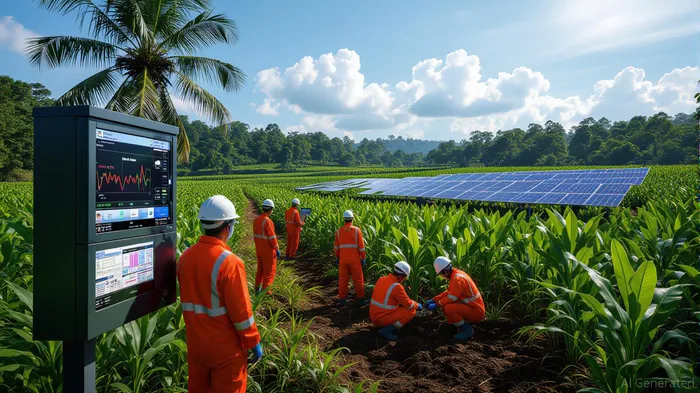
The European Union's recognition of Malaysia's Malaysian Sustainable Palm Oil (MSPO) certification as a credible standard under the EU Deforestation Regulation (EUDR) marks a pivotal moment for emerging market agribusiness. This alignment not only secures market access for Malaysia's palm oil industry but also redefines the investment landscape for sustainability-linked equities in Southeast Asia. For investors, the convergence of regulatory compliance, technological innovation, and global demand for deforestation-free commodities creates a compelling case for long-term exposure to MSPO-certified companies.
Regulatory Alignment: A Gateway to Premium Markets
The EUDR, set to take effect in December 2025, mandates that companies selling agricultural commodities like palm oil ensure their products are deforestation-free, legally sourced, and traceable. Malaysia's MSPO certification, now recognized by the EU, meets these criteria through a mandatory national traceability system, a digital tracking framework, and a 2019 cut-off date for deforestation. This recognition elevates Malaysia's status from “standard risk” to a path toward “low risk” under the EUDR, .
For investors, this regulatory alignment is a catalyst. Companies like IOI Corporation Berhad and FGV Holdings Berhad, which dominate Malaysia's palm oil sector and are undergoing rigorous MSPO surveillance assessments, are now better positioned to capture premium pricing in ESG-conscious markets. The EU's acknowledgment of MSPO also reduces compliance costs for these firms, as they no longer need to pursue dual certifications (e.g., RSPO) to meet European demand.
Market Access: From Commodity to Premium Product
The EU's phase-out of palm oil in biofuels has historically threatened Malaysia's export volumes. However, the MSPO-EUDR alignment transforms this narrative. By certifying palm oil as a sustainable alternative to soybean and rapeseed oil, Malaysia can now target markets where sustainability premiums outweigh biofuel bans. For example, India's growing demand for blended oils and Indonesia's B40 mandate have created a niche for MSPO-certified palm oil, .
Moreover, the EU's recognition of MSPO opens doors to corporate procurement contracts with multinational food and energy firms. Sime Darby Plantation Berhad, with 90% of its plantations certified, is already securing long-term supply agreements with European retailers and biofuel producers. These contracts, which lock in pricing and volume, provide a stable revenue stream for MSPO-certified firms, insulating them from short-term price swings in the global commodity market.
Long-Term Earnings Potential: Technology and Smallholder Integration
The MSPO certification is not just a regulatory checkbox—it's a driver of operational efficiency and innovation. The Malaysian government's integration of digital tools like (Satellite Imagery Monitoring System) and GeoSawit (geolocation mapping) ensures real-time compliance with EUDR requirements. These technologies reduce traceability costs by 30% and improve smallholder inclusion, a critical factor for long-term earnings growth.
Smallholders, , are now being integrated into the MSPO framework through centralized data systems. This not only enhances supply chain transparency but also expands the addressable market for MSPO-certified companies. For instance, Boustead Plantations Berhad , .
Investment Thesis: Balancing Risks and Rewards
While the MSPO-EUDR alignment presents opportunities, investors must navigate currency risks and production constraints. , but companies with hedging strategies (e.g., forward contracts) are mitigating this exposure. Additionally, aging plantations and replanting delays could limit supply growth, but MSPO-certified firms with robust replanting programs—like Keck Seng (Malaysia) Berhad—are outperforming peers.
The key to long-term success lies in circular bioeconomy innovations. Companies adopting waste-to-energy technologies, such as Jin Lee (Oil Mills) Sdn Bhd, are converting palm biomass into biofuels and high-value by-products, reducing greenhouse gas emissions by 60% and creating new revenue streams. These innovations align with the EU's climate goals and position MSPO-certified firms as leaders in the decarbonization of agriculture.
Conclusion: A Strategic Inflection Point
The EU's recognition of MSPO is more than a regulatory win—it's a strategic inflection pointIPCX-- for Southeast Asian agribusiness. For investors, this alignment offers a unique opportunity to capitalize on the intersection of sustainability, technology, and market access. MSPO-certified companies are not only compliant with global standards but are also redefining the economics of palm oil through digital traceability, smallholder integration, and circular economy practices. As the EUDR takes effect, these firms are poised to outperform in a market where ESG criteria increasingly dictate value creation.
In a world where deforestation-free commodities are becoming non-negotiable, Malaysia's palm oil industry stands as a model for sustainable agribusiness. For those who recognize the inflection point, the rewards are clear—and the timing, impeccable.







Comentarios
Aún no hay comentarios