
Malaysia's Royal Stablecoin Fuels Asia's Tokenized Money Surge
Malaysia's recent foray into tokenized money with a royal-backed stablecoin has sparked renewed interest in how Asia is reshaping its financial systems. The move reflects a broader shift as countries in the region explore digital assets to enhance cross-border trade, streamline supply chains, and reduce reliance on traditional correspondent banking. These initiatives are not isolated; they align with a growing trend where stablecoins and tokenized securities are becoming foundational tools in Asia's financial architecture.
The launch of $U by United Stables, a stablecoin built on BNBBNB-- Chain and EthereumETH--, highlights the increasing technical and strategic depth in Asia's digital finance ecosystem. Designed to unify liquidity across decentralized finance (DeFi), trading, and AI-driven systems, $U is backed by a combination of cash and audited stablecoins. Its integration with major DeFi protocols and support from leading wallet providers signal a push for seamless, programmable financial infrastructure.
Meanwhile, EDENA Capital Partners is leveraging a $100 million investment from GEM to expand its government-approved digital securities infrastructure in emerging markets. The firm is launching security token offering (STO) exchanges in Indonesia and Egypt, aiming to tokenize assets such as carbon credits and real estate. This underscores how Asia is not merely adopting stablecoins but also using tokenization to democratize access to capital and high-growth markets.
The Strategic Shift to Tokenized Money
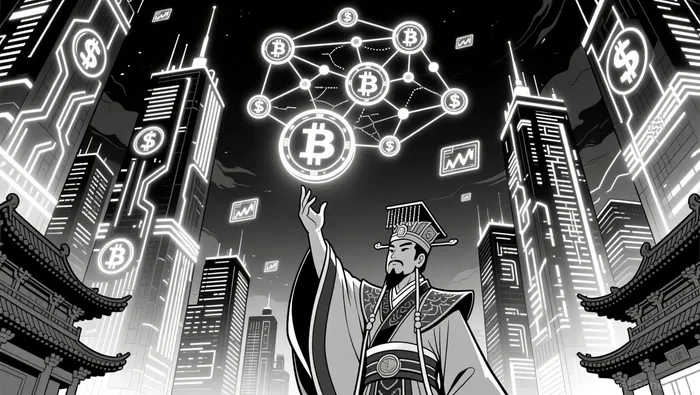
Asia's pivot toward tokenized money is driven by a mix of technological innovation and regulatory pragmatism. Governments are recognizing the potential of stablecoins to facilitate real-time settlements, reduce costs, and enhance financial inclusion. For example, Malaysia's royal-backed stablecoin aims to streamline domestic and international transactions, leveraging blockchain's programmable features to automate payments and reduce intermediation.
This shift is not without challenges. The ASEAN+3 Macroeconomic Research Office (AMRO) has emphasized the need for calibrated regulatory frameworks to manage risks associated with stablecoins. These include depegging from their underlying assets, liquidity crises, and potential threats to monetary sovereignty. AMRO advocates for a "narrow bank" model, where stablecoin issuers hold 100% reserves in high-quality, liquid assets to prevent destabilizing runs.
Implications for Markets and Policy
The rise of tokenized money in Asia has significant implications for both market participants and regulators. For investors, stablecoins like $U offer a gateway to decentralized finance, institutional settlements, and cross-border remittances. Their multi-chain deployment and integration with DeFi protocols make them versatile tools for liquidity management and yield generation. At the same time, the growing use of tokenized real-world assets, such as commercial bills and carbon credits, is expanding the scope of digital finance beyond speculative trading.
Policymakers, however, must balance innovation with stability. The AMRO report underscores the importance of ensuring that stablecoins remain convertible to central bank money at par and without delay. This approach preserves the "singleness of money," ensuring that a rupiah or baht maintains consistent value regardless of whether it exists as a central bank digital currency (CBDC), a commercial deposit, or a token. Without such clarity, the risk of fragmentation and systemic instability increases.
What This Means for Investors
For investors in Asia, the tokenization trend presents both opportunities and risks. On the one hand, it lowers barriers to entry in high-growth sectors like renewable energy, real estate, and infrastructure. Tokenized assets can be traded 24/7 across geographies, increasing market depth and reducing price volatility. On the other hand, the fast-moving nature of digital assets requires careful due diligence, especially around the regulatory compliance and transparency of stablecoin reserves.
In Malaysia and across the region, the growing adoption of stablecoins and tokenized securities signals a new era of financial innovation. As governments and private firms continue to experiment with these tools, the challenge will be to build a regulatory environment that supports innovation while safeguarding economic stability. The success of these initiatives will depend on their ability to deliver tangible benefits to the real economy and maintain public trust in digital finance.






Comentarios
Aún no hay comentarios