
Malaysia's 2026 Budget and Its Implications for Equity and Infrastructure Sectors
The Malaysian government's 2026 Budget, set to be tabled on October 10, 2025, marks a pivotal step in the nation's post-pandemic economic strategy. With a projected allocation of RM430 billion-a modest increase from RM421 billion in 2025-the budget emphasizes fiscal consolidation while prioritizing infrastructure development and equity-driven reforms under the Ekonomi MADANI framework, according to a Focus Malaysia report. For investors, this budget signals a strategic shift toward high-growth sectors such as semiconductor manufacturing, digital infrastructure, and clean energy, positioning Malaysia as a regional hub for innovation and sustainable development.
Fiscal Resilience and the MADANI Framework: A Foundation for Growth
The 2026 Budget aims to narrow the fiscal deficit to 3.6% of GDP, a critical step toward stabilizing public finances after years of pandemic-related spending, as highlighted by Focus Malaysia. This fiscal discipline is paired with a renewed focus on the three pillars of Ekonomi MADANI: raising the ceiling of national growth, raising the floor of living standards, and driving governance reforms, as set out in the Pre-Budget Statement. For instance, the Pre-Budget Statement increases social assistance allocations, including a one-off RM100 disbursement under the Sumbangan Asas Rahmah (SARA) program for all Malaysians aged 18 and above. Such measures aim to bolster domestic demand while addressing income inequality-a key challenge in a post-pandemic recovery.
Structural reforms, such as the proposed Government Procurement Act and Ombudsman Act, are expected to enhance transparency and investor confidence. These reforms align with RHB Research's projections of a 3.5% fiscal deficit for 2026 and 3.2% for 2027, underscoring the government's commitment to long-term fiscal sustainability, according to The Star.
Infrastructure as a Catalyst for Equity and Economic Inclusion
Infrastructure spending remains a cornerstone of the 2026 Budget, with RM80–86 billion allocated for development projects under the 13th Malaysia Plan (13MP), as noted by Focus Malaysia. Strategic initiatives like the East Coast Rail Link (ECRL), Sabah-Sarawak Link Road, and the Johor-Singapore Special Economic Zone (SEZ) are designed to bridge regional disparities and attract foreign direct investment (FDI), according to a Budget 2026 preview. The SEZ, for example, offers a 5% corporate tax rate for qualifying activities and a 15% personal tax rate for knowledge workers, making it a magnet for data centers and advanced manufacturing.
Public-private partnerships (PPPs) will play a critical role in scaling these projects. The government's emphasis on PPPs reflects a pragmatic approach to managing fiscal constraints while accelerating infrastructure delivery, as also highlighted by Focus Malaysia. For equity investors, this translates to opportunities in construction firms, engineering services, and logistics providers catering to these projects.
Equity Sector Opportunities: Semiconductor, Digital Infrastructure, and Clean Energy
The 2026 Budget's focus on technology-driven growth positions Malaysia to capitalize on global trends in semiconductor manufacturing, digitalization, and clean energy.
Semiconductor Industry: The National Semiconductor Strategy (NSS) aims to secure RM500 billion in cumulative investments by 2030, supported by RM25 billion in public funding, according to the Budget 2026 preview. With over RM63 billion in semiconductor investments already secured by March 2025, the sector is on track to become a key driver of Malaysia's GDP, as reported by Focus Malaysia. The Malaysia Semiconductor Industry Association (MSIA) has called for targeted tax incentives, talent development programs, and streamlined regulatory processes to sustain this momentum. Investors should monitor developments in firms identified as "national champions" by the government, which are projected to grow by over 25% annually.
Digital Infrastructure: The budget emphasizes digital transformation through initiatives like the Johor-Singapore SEZ and cloud infrastructure expansion by global providers in Greater Kuala Lumpur and Selangor, per the Budget 2026 preview. A 43 billion ringgit grid upgrade is also underway to support rising industrial and data center demands. These investments align with RHB Research's forecast of productivity gains from automation and technical-vocational education training (TVET), as reported by The Star.
Clean Energy Transition: Malaysia's ambition to become ASEAN's energy hub is reflected in the 2026 Budget's support for grid modernization, battery energy storage systems (BESS), and renewable energy schemes like the Corporate Renewable Energy Supply Scheme (CRESS), noted by Focus Malaysia. These measures are expected to accelerate the adoption of solar PV, green hydrogen, and carbon capture technologies, creating opportunities for firms in energy storage, grid management, and sustainable manufacturing.
Strategic Positioning for High-Growth Opportunities
For investors, the 2026 Budget offers a clear roadmap to capitalize on Malaysia's strategic priorities. The semiconductor and clean energy sectors, in particular, present high-growth potential due to their alignment with global supply chain shifts and decarbonization trends. Additionally, the government's focus on digital infrastructure and automation positions Malaysia to compete in high-value industries, reducing reliance on traditional manufacturing.
However, risks remain, including the need to expand the tax base without a Goods and Services Tax (GST) and the challenge of balancing fiscal consolidation with growth-oriented spending, as highlighted by The Star. Investors should prioritize companies with strong ties to government-led initiatives and those leveraging Malaysia's strategic location as a gateway to ASEAN markets.
Conclusion
Malaysia's 2026 Budget is a strategic pivot toward a more resilient, inclusive, and innovation-driven economy. By prioritizing infrastructure, digital transformation, and clean energy, the government is laying the groundwork for sustained growth in a post-pandemic world. For equity investors, the key lies in aligning with sectors that benefit from these structural reforms-particularly those that address global megatrends while supporting Malaysia's domestic economic agenda. As the budget unfolds, close attention to policy implementation and sector-specific incentives will be critical for maximizing returns in this dynamic market.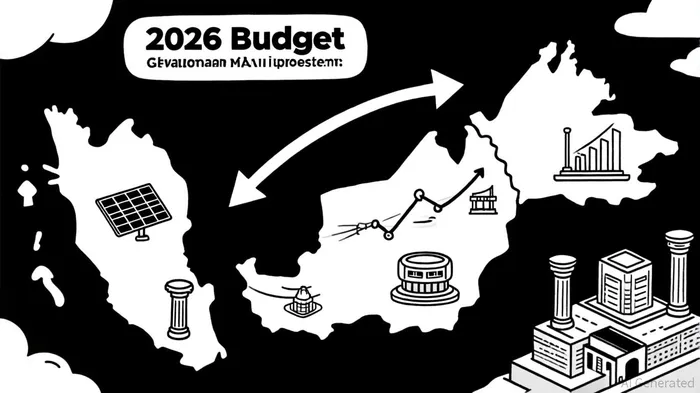







Comentarios
Aún no hay comentarios