
Mainfreight's Insider Buying Signals Growth Confidence
In the world of investing, insider transactions often serve as a critical barometer of corporate health and future potential. For Mainfreight Limited (MFT.NZ), the fourth quarter of 2025 has delivered a compelling case study in how insider buying can act as both a leading indicator of undervaluation and a signal of strategic momentum. With six insiders collectively purchasing NZ$1.1 million worth of shares during the period and no insider selling recorded, the company's leadership appears to be betting heavily on its long-term trajectory. This activity, coupled with a strategic investment plan and a nuanced view of market challenges, paints a picture of cautious optimism that warrants closer scrutiny.
Insider Confidence and Share Ownership Alignment
The most immediate takeaway from Q4 2025 is the sheer volume of insider purchases. According to a report by SimplyWall St, Mainfreight insiders-including Group MD & Director Donald Braid, who alone invested NZ$581,000 at NZ$58.15 per share-have demonstrated unwavering confidence in the stock. These transactions occurred at prices close to the current market value of NZ$60.79, suggesting that insiders view the stock as attractively priced despite recent earnings volatility.
This confidence is further reinforced by the fact that insiders collectively own 20% of the company, valued at approximately NZ$1.2 billion. Such a high degree of ownership aligns management's interests with shareholders, reducing the risk of misaligned incentives. When executives and board members hold significant stakes, their purchasing decisions often reflect a deeper understanding of the company's operational and strategic positioning than external analysts can provide.
Strategic Momentum and Capital Allocation
Mainfreight's insider optimism is not occurring in a vacuum. The company has outlined an aggressive expansion plan, committing NZ$330 million over the next two years to enhance its global logistics network. This investment will target infrastructure upgrades in key markets, including hazardous goods warehouses, refrigerated storage, and AI-driven robotics to boost efficiency. These initiatives directly address long-standing challenges in the logistics sector, such as rising labor costs and the need for sustainable, scalable operations. 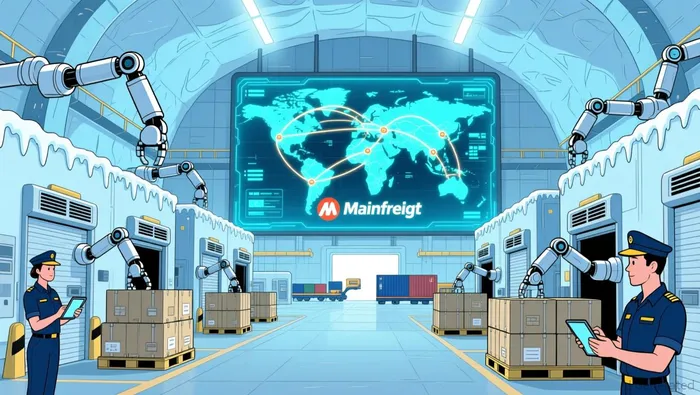
The strategic focus on infrastructure also aligns with Mainfreight's recent emphasis on "profitable growth." As stated in its July 2025 newsletter, the company is prioritizing cost management and productivity improvements while expanding its footprint. This dual approach-investing in growth while tightening operational margins-positions Mainfreight to capitalize on emerging trade corridors, particularly as global supply chains continue to diversify.
Navigating Earnings Volatility and Market Uncertainty
Despite the bullish insider activity, Mainfreight's Q4 2025 financial results revealed a mixed picture. For the six months ended 30 September 2025, profit before tax (PBT) fell 18.3% to NZ$131.72 million, while net profit dropped 18.5% to NZ$93.38 million. Revenue, however, rose 2.1% to NZ$2.61 billion, indicating that the company is maintaining its topline growth in a challenging macroeconomic environment.
This divergence between revenue and profit metrics can be partly attributed to external factors, such as tariff uncertainty on the Transpacific trade route. As noted in a May 2025 trading update, Mainfreight faced reduced forward sea freight bookings due to customers delaying decisions until tariff negotiations concluded. Yet, the company's global network-spanning 27 countries-has allowed it to pivot to other trade corridors, mitigating some of the near-term risks.
Undervaluation Signals and Long-Term Potential
The key question for investors is whether Mainfreight's stock is undervalued given these dynamics. The insider buying spree suggests a resounding "yes." When executives with deep industry expertise and significant skin in the game are purchasing shares at current prices, it often signals that the market is underappreciating the company's strategic moves or long-term potential.
Moreover, the NZ$330 million investment plan implies that Mainfreight is positioning itself for a future where logistics demand will be driven by e-commerce, sustainability mandates, and geopolitical shifts. By modernizing its infrastructure and expanding into high-growth regions, the company is laying the groundwork for a step-up in earnings power that may not yet be reflected in its stock price.
Conclusion: A Case for Cautious Optimism
Mainfreight's Q4 2025 insider buying activity, combined with its strategic investments and insider ownership structure, presents a compelling case for investors seeking undervalued opportunities in the logistics sector. While near-term profitability remains a concern, the company's focus on infrastructure, operational efficiency, and global diversification addresses key industry pain points. For those willing to look beyond short-term volatility, Mainfreight's insider confidence may prove to be a reliable leading indicator of future outperformance.
As always, investors should conduct their due diligence, but the alignment of insider actions with strategic momentum suggests that Mainfreight is well-positioned to navigate its current challenges and emerge stronger in the years ahead.







Comentarios
Aún no hay comentarios