
Magnum Ice Cream Company: Can Global Scale and Strategic Agility Justify Long-Term Outperformance?
The demerger of MagnumMICC-- Ice Cream Company (TMICC) from Unilever on December 6, 2025, marked a pivotal moment for the global ice cream sector. As the world's largest standalone ice cream business, TMICC now commands a €7.8 billion market capitalization and operates under a portfolio of iconic brands, including Magnum, Ben & Jerry's, and Wall's. However, the muted initial market response-driven by investor concerns over the impact of GLP-1 drugs on indulgent consumption-has raised questions about its long-term growth potential. This analysis evaluates whether TMICC's operational independence, brand equity, and strategic expansion justify its positioning as a long-term outperformer against industry benchmarks.
Operational Independence and EBITDA Efficiency
TMICC's post-spin-off operational performance underscores its potential to outperform peers. In 2025, the company reported an EBITDA margin of 16.4%, slightly above the industry average of 16–17% as reported by financial analysts. This margin is supported by a €500 million productivity program targeting supply chain optimization and overhead reduction, which analysts project will deliver annual margin improvements of 35–60 basis points through 2029. For context, Sammontana, a key competitor, reported a 16.1% EBITDA margin in H1 2025, highlighting TMICC's competitive edge in cost management.
The company's focus on operational agility-unshackled from Unilever's broader portfolio-positions it to respond more nimbly to market shifts. For instance, TMICC's reinvestment in innovation, such as Hydro:ICE (a non-dairy adult refreshment product), aligns with growing consumer demand for health-conscious indulgence. This adaptability, combined with its scale, could drive margin resilience even amid structural headwinds like declining per capita consumption in mature markets as noted in market commentary.
Brand Equity and Premiumization Strategy
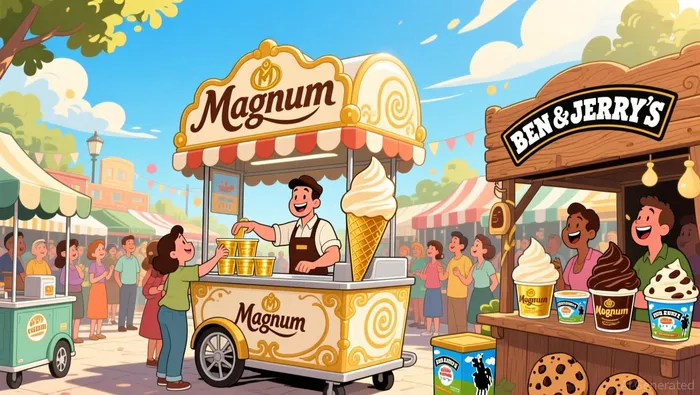
TMICC's brand portfolio is a cornerstone of its value proposition. It owns four of the five largest global ice cream brands, with Magnum and Ben & Jerry's commanding premium price points and strong emotional equity. The company's 21% global retail market share reflects its dominance in categories where brand loyalty is high.
The post-spin-off strategy emphasizes premiumization and innovation. For example, the introduction of Magnum Utopia in Europe and Yasso Poppables in the U.S. demonstrates TMICC's ability to cater to evolving consumer preferences for premium, portion-controlled products. This approach not only mitigates price sensitivity but also aligns with broader trends in the food industry, such as the shift toward "healthier indulgence." Analysts note that TMICC's reinvestment in advertising and digital-led demand creation could further solidify its brand leadership.
Regional Expansion and Market Diversification
TMICC's geographic footprint provides a significant growth tailwind. In H1 2025, the company achieved 7.1% sales growth, driven by strong performance in Europe and North America. Its expansion into Asia, including products like Wall's Bites, underscores its focus on emerging markets, where the global ice cream sector is projected to grow at a 4.3% CAGR through 2035.
The company's localized product strategies-such as adapting formats to regional tastes-enhance its competitive positioning. For instance, the U.S. market is expected to grow at 2.81% CAGR through 2030, benefiting from TMICC's premium offerings like Ben & Jerry's, which cater to artisanal and organic consumer segments. This diversification reduces reliance on any single market and positions TMICC to capitalize on regional growth cycles.
Challenges and Mitigation Strategies
Despite its strengths, TMICC faces headwinds. The rise of GLP-1 drugs, which suppress appetite, has sparked concerns about reduced demand for indulgent products. However, the company's pivot toward health-conscious formats-such as low-sugar variants and non-dairy options-mitigates this risk. Additionally, TMICC's focus on portion control (e.g., Wall's Bites) aligns with consumer trends toward moderation, potentially offsetting declines in traditional consumption.
Competition from private-label products also poses a threat, but TMICC's premium brand positioning and innovation pipeline provide a buffer. Its ability to maintain pricing power in premium segments, coupled with cost discipline, should enable it to navigate these challenges.
Conclusion: A Compelling Case for Long-Term Outperformance
TMICC's post-spin-off trajectory suggests that its global scale, brand strength, and operational agility position it to outperform industry benchmarks. With a target of 3–5% annual organic sales growth and EBITDA margin expansion, the company is well-placed to capitalize on the $150.4 billion global ice cream market by 2035. While near-term uncertainties persist, TMICC's strategic focus on innovation, regional diversification, and cost efficiency provides a robust foundation for long-term shareholder value creation.







Comentarios
Aún no hay comentarios