
Macron's Stance on Gaza and Its Implications for European Defense and Energy Markets
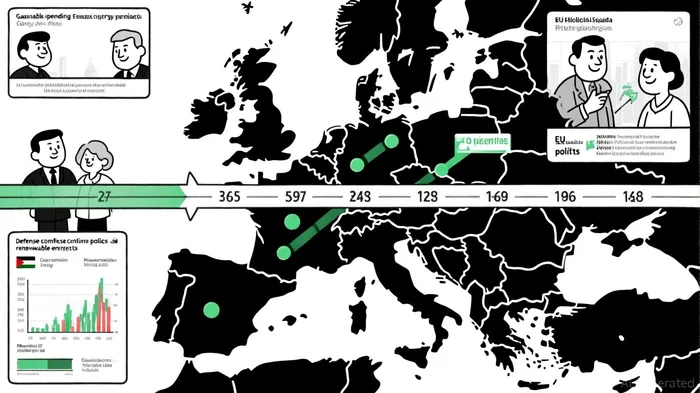
The Gaza conflict has become a flashpoint for global geopolitical tensions, and nowhere is this more evident than in Europe. French President Emmanuel Macron's aggressive diplomatic and policy moves in response to the crisis are reshaping the continent's defense and energy landscapes. For investors, this means recalibrating portfolios to account for a new era of volatility-and opportunity.
Macron's Gaza Gambit: A Call for Stabilization and Sanctions
Macron has positioned France as a vocal critic of Israel's military escalation in Gaza, labeling it a "disaster of unprecedented gravity" and a "headlong rush into a war without end," as noted in a Yira column on EU energy. His push for a UN-backed stabilization mission in Gaza, discussed in a CFA Institute blog, and threats of sanctions against Israeli settlers, exemplified by Macron's sanctions threat, signal a departure from traditional Western solidarity. This stance isn't just moral posturing-it's a calculated move to leverage France's influence in shaping a post-conflict order. By advocating for a two-state solution and Palestinian statehood, as he said in an RFI interview, Macron aims to isolate Hamas diplomatically while pressuring Israel to avoid actions that could destabilize the region further.
But here's the rub: Macron's approach risks alienating key allies, including the U.S., and could backfire if Israel's military actions intensify. For investors, this means heightened uncertainty in European markets, particularly in sectors tied to regional stability.
Defense Spending: A New Arms Race in Europe?
The Gaza conflict has accelerated Europe's defense spending surge. France's recent pledge of €6.5 billion in additional military funding by 2027-bringing total defense spending to 3% of GDP-reflects a broader trend. The EU's ReArm initiative, targeting €800 billion in defense investments this decade, underscores a shift toward strategic autonomy. Germany and Poland are following suit, with Germany allocating €100 billion for military modernization.
This spending spree isn't just about geopolitics-it's a tailwind for defense contractors. Companies specializing in air and missile defense, cyber capabilities, and drones are prime beneficiaries. However, investors must watch for fiscal headwinds. France's budget cuts in pensions and healthcare to fund defense highlight the trade-offs governments are making, which could dampen broader economic growth.
Energy Markets: Renewables as a Shield Against Chaos
The Gaza conflict has compounded Europe's energy vulnerabilities. Disruptions to Israel's Tamar gas field and Ashkelon oil terminal have exacerbated regional energy insecurity, particularly for Lebanon. Meanwhile, the EU's REPowerEU Plan-aimed at phasing out Russian fossil fuels by 2027-has gained urgency. Renewables now account for 29% of EU electricity generation (wind at 22%, solar at 7%), with a target of 45% by 2030.
Macron's energy ambitions, however, face hurdles. His push for nuclear energy and market reforms, as discussed in a Le Monde analysis, clashes with Germany's green agenda, revealing fractures in EU unity. Yet, the long-term trend is clear: renewables are no longer a niche play. Geopolitical risks in fossil fuel supplier nations are making clean energy a safer bet. Investors should favor solar, wind, and grid infrastructure firms, as well as companies supplying critical minerals for green tech.
The Investment Playbook: Balancing Risk and Resilience
For the average investor, Macron's Gaza strategy-and Europe's response-demands a dual focus:
1. Defense and Tech Stocks: Prioritize firms like Airbus (military aircraft), Leonardo (electronics), and Northrop Grumman (cyber defense).
2. Renewables and Energy Storage: Double down on NextEra Energy, Vestas Wind Systems, and battery innovators like Northvolt.
But don't ignore the risks. A prolonged Gaza conflict could trigger a global recession, dragging down equity markets. Diversification is key-consider hedging with gold or defensive sectors like utilities.
Conclusion: Navigating a Fractured World
Macron's Gaza stance is a microcosm of Europe's broader struggle to balance idealism with pragmatism. For investors, the message is clear: geopolitical risks are no longer abstract-they're reshaping markets in real time. By aligning portfolios with the twin pillars of defense and renewables, you can weather the storm-and maybe even profit from it.







Comentarios
Aún no hay comentarios