
Macron Seeks Xi at G-7 as Europe Reels Over China Trade Tensions
Emmanuel Macron is preparing a bold move to reshape the G-7 by considering an invitation for Chinese President Xi Jinping to next year's summit in France. The idea has been quietly discussed with European allies, though it remains uncertain whether other G-7 members would support the gesture. Macron is looking to reposition France as a global diplomatic leader in a shifting geopolitical landscape.
The G-7 has increasingly struggled with relevance as emerging powers like China and India challenge the traditional economic order. The group's focus on supply chain security, trade policy, and China's role in supporting Russia's war in Ukraine has left it grappling with complex and often divisive issues. Macron's proposal to invite Xi would mark a significant shift in the G-7's approach to China.
Tensions between China and G-7 nations have intensified this year, particularly with Donald Trump's aggressive tariff policies and Beijing's retaliatory measures, including export restrictions on rare earth materials. Germany, for instance, has seen its trade relations with China deteriorate, prompting a possible expert committee to reassess strategic trade ties. Chancellor Friedrich Merz has also advocated for limits on Chinese steel exports, signaling broader European concerns over economic dependencies.
A Diplomatic Gamble
Macron's plan to invite Xi to the G-7 is a calculated risk. By doing so, he aims to position France as a bridge between the West and China, a role that could elevate its global standing. France has already begun discreet discussions with Germany, and initial reactions from Berlin are supportive, though no formal agreement has been reached. The French leader has also hinted at a possible visit to China in December to advance the proposal according to reports.
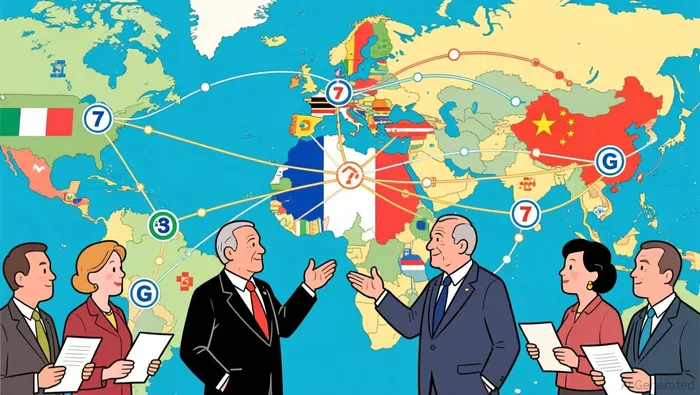
The G-7 format itself, rooted in Cold War-era diplomacy, is being challenged by the rise of multipolar power dynamics. China's growing influence in global trade and its support for Russia's war in Ukraine have forced the G-7 to rethink its approach to economic and security issues. Macron sees an opportunity to transform the G-7 into a more inclusive forum that acknowledges China's role in the global economy rather than confronting it outright.
European Trade and Strategic Concerns
Europe's reliance on China for rare earth materials, semiconductors, and supply chain stability has sparked a reevaluation of trade policies. Recent disputes, such as the one involving Nexperia and the Dutch government, have highlighted the vulnerabilities in Europe's supply chains. The European Commission is now pushing for more self-reliance, including the development of its own rare earth mining capabilities and the use of the anti-coercion instrument to counter Chinese trade pressures.
Germany, a key European trade partner with China, is in the process of setting up an expert committee to reassess its trade relationship with the Asian giant. The committee is expected to propose stricter limits on trade, especially in sectors deemed critical for national security. Chancellor Merz has also called for restrictions on Chinese steel exports, a move that could face strong resistance from European industries dependent on China's low-cost materials.
Market Reactions and Geopolitical Implications
The potential shift in Europe's trade strategy toward China has already begun to influence markets. Alibaba.com's recent launch of AI Mode has highlighted the growing demand for smart, transparent sourcing solutions in Europe, with European SMEs increasingly turning to AI to navigate complex trade landscapes. The platform reported a 57% surge in European orders, indicating a growing appetite for tech-driven trade solutions.
At the same time, the U.S.-China trade war has entered a new phase, with both sides adjusting tariffs and export controls in response to each other's policies. China recently announced a pause on some retaliatory measures, including tariffs on U.S. imports, and has begun reinstating export licenses for certain materials. These moves suggest a cautious attempt at de-escalation, though tensions remain high.
Risks and Uncertainties
Despite Macron's diplomatic ambitions, several risks remain. The G-7 may struggle to reach a consensus on including China in the summit, particularly given the U.S.'s current stance under Trump. Washington has prioritized a hardline approach toward Beijing, which could complicate Macron's efforts to build broader support for his proposal. Additionally, it is unclear whether Xi would accept an invitation, especially given the ongoing trade tensions.
On the domestic front, Macron's political authority is eroded, limiting his ability to push through high-stakes international initiatives. His focus on global statesmanship comes at a time when France is grappling with political instability and economic challenges. The success of his G-7 strategy will depend on his ability to rally support from both European allies and global stakeholders.
What This Means for Investors
Investors are closely watching how these developments will affect global trade and geopolitical stability. A more open dialogue between the G-7 and China could lead to more predictable trade policies and reduce market volatility. However, if tensions escalate, it could trigger renewed uncertainty, particularly in markets reliant on Chinese exports, such as Germany's automotive industry according to analysis.
For now, the focus remains on whether Macron can pull off his diplomatic maneuver. If he succeeds, it could mark a significant shift in the G-7's approach to China, reflecting the evolving global power dynamics and the need for a more nuanced strategy in an increasingly multipolar world.







Comentarios
Aún no hay comentarios