
Macquarie's Strategic Expansion into Physical LNG Trading: A Catalyst for Energy Transition Profits?
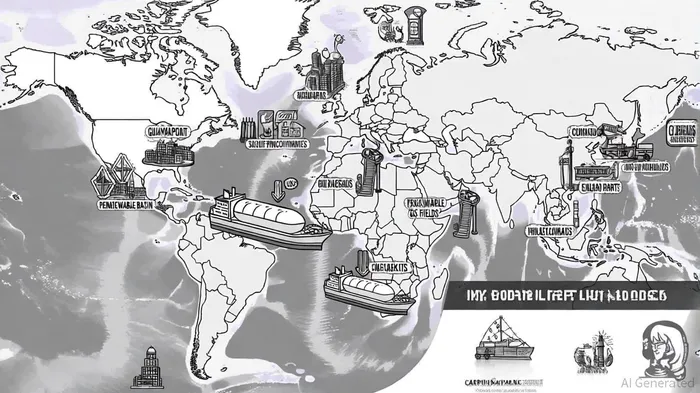
The global energy transition is reshaping the landscape of fossil fuel investments, with liquefied natural gas (LNG) emerging as a contentious yet pivotal player. For Macquarie Group, a financial services giant with deep roots in energy markets, the recent expansion into physical LNG trading represents both a strategic bet and a test of its climate commitments. As the firm navigates the dual pressures of decarbonization and profitability, its 15-year partnership with AMIGO LNG and broader infrastructure investments offer a lens through which to assess the long-term viability of its LNG exposure.
Strategic Positioning in a Shifting Market
Macquarie's Commodities and Global Markets (CGM) division has secured a 0.6 million tonnes per annum (MTPA) LNG supply agreement with AMIGO LNG, a Mexican joint venture, under a 15-year Sale and Purchase Agreement (SPA) set to begin in 2028[1]. This partnership leverages AMIGO LNG's strategic location in Guaymas, Mexico, which offers faster transit times to Asia-Pacific and Latin American markets compared to traditional hubs like the U.S. Gulf Coast[1]. The move aligns with global LNG demand trends, as Europe's reduced reliance on Russian pipeline gas has spurred a 60% projected growth in global LNG capacity by 2030[4]. However, this expansion is not without risks. By 2026, an oversupply of nearly 50 bcm is expected, with prices in Asia and Europe likely to decline, squeezing margins for producers[4].
Macquarie's hiring of Samuele Ravelli, a former Equinor executive, to lead its global LNG trading business underscores its ambition to capitalize on this volatility[5]. Ravelli's expertise in physical trading and risk management could position Macquarie to navigate the fragmented LNG market, where spot prices and long-term contracts coexist. Yet, the firm's recent struggles in its markets-facing businesses—such as CGM's Q3 2025 net profit decline due to timing issues in North American gas contracts[2]—highlight the fragility of its LNG strategy amid fluctuating demand.
Energy Transition Alignment: Progress and Contradictions
Macquarie's LNG investments are framed as part of a broader energy transition strategy. The firm's WaveCrest Energy platform, for instance, has supported LNG infrastructure projects like Germany's Deutsche Ostsee terminal, which aims to replace coal with cleaner-burning gas[6]. Additionally, Macquarie's Green Energy Transition Solutions (MGETS) fund, now closed with $3 billion in commitments, targets decarbonization technologies such as battery storage and sustainable aviation fuels[7]. These initiatives align with the firm's public pledge to support the 1.5°C warming pathway.
However, critics argue that Macquarie's LNG expansion conflicts with its climate goals. The firm has invested nearly A$5 billion in high-growth oil and gas companies, including Southwestern Energy and Empire Energy, which are projected to produce gigatonnes of emissions[6]. These investments, coupled with its recent reversal of a coal financing ban[8], raise questions about the sincerity of its net-zero commitments. While Macquarie emphasizes LNG's role as a “transition fuel” to bridge the gap between coal and renewables[6], the scale of its fossil fuel financing suggests a reliance on short-term profitability over long-term decarbonization.
Regulatory and Technological Risks
Regulatory scrutiny further complicates Macquarie's LNG strategy. In 2025, the Australian Securities and Investments Commission (ASIC) imposed additional licensing conditions on Macquarie, citing weak compliance and risk management practices[9]. While these issues have not yet directly impacted LNG operations, they signal broader governance risks that could erode investor confidence. Meanwhile, technological advancements in methane detection and carbon capture may mitigate some environmental concerns, but their adoption remains uneven across jurisdictions[10].
The shipping industry's growing adoption of LNG as a low-carbon fuel—evidenced by 1,381 LNG-capable vessels in operation as of late 2024[10]—offers a potential growth avenue. However, the sector's long-term viability depends on addressing methane slip and transitioning to biomethane or synthetic e-LNG, which Macquarie has yet to fully integrate into its strategy.
Financial Viability Amid Market Volatility
Macquarie's Q3 2025 trading update reveals a mixed financial outlook. While its annuity-style businesses (e.g., Macquarie Asset Management) reported robust performance fees and investment income[2], the CGM division faced headwinds from subdued commodity markets. This divergence underscores the firm's reliance on long-term contracts in LNG, which could buffer against short-term volatility but may struggle to adapt to a rapidly decarbonizing energy mix.
The firm's capital surplus of $A8.5 billion[2] provides a financial cushion, but its exposure to LNG's oversupply risks—particularly in the U.S., where domestic gas demand from AI-driven data centers could compete with exports[4]—poses a challenge. Political pressures to prioritize domestic energy security over LNG exports may further complicate Macquarie's ability to monetize its AMIGO LNG partnership.
Conclusion: A Calculated Bet with Uncertain Returns
Macquarie's expansion into physical LNG trading reflects a calculated attempt to balance energy transition goals with financial returns. While its strategic partnerships and infrastructure investments position it to benefit from near-term LNG demand, the firm's continued reliance on oil and gas financing and regulatory vulnerabilities cast doubt on its long-term alignment with decarbonization targets. For investors, the key question is whether Macquarie can pivot from a fossil fuel-centric model to one that prioritizes scalable, low-carbon solutions—a transition that will require not only capital but a reevaluation of its core business priorities.







Comentarios
Aún no hay comentarios