
Lyft's Strategic Positioning in the Evolving Ride-Share Landscape: Can Partnerships Sustain Growth in a Post-Driver Future?
Strategic Partnerships: Building a Post-Driver Ecosystem
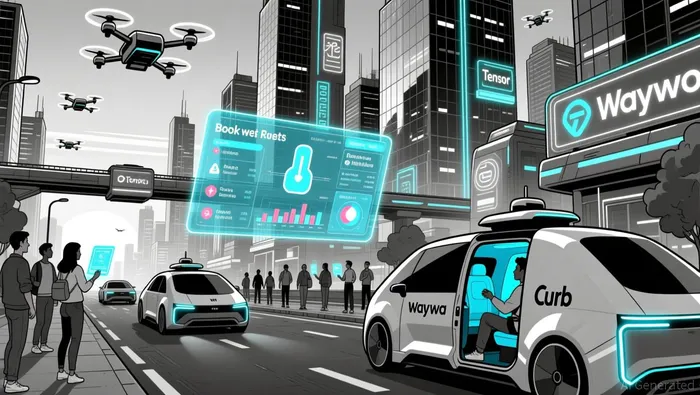
Lyft's 2025 partnerships reflect a dual focus on technological integration and service diversification. The company's collaboration with Waymo in Nashville to develop an "integrated supply management" system for autonomous vehicles marks a critical step toward scaling self-driving fleets. Simultaneously, its partnership with Tensor and NVIDIA to create consumer-owned "Lyft-ready" autonomous vehicles underscores a bold bet on democratizing ownership in the autonomous space. These moves position Lyft not just as a ride provider but as a platform for next-generation mobility solutions.
The Curb Flow integration, which aggregates taxi demand into a single network via an open API, has already demonstrated tangible benefits. In Los Angeles, driver earnings increased by over 20% year-over-year, while riders gained access to a broader range of transportation options according to analysts. This partnership, described by analysts as a "game-changer for urban mobility," aligns with Lyft's broader goal of expanding its addressable market through seamless service integration.
Financial Performance: Mixed Signals Amid Strategic Momentum
Lyft's Q3 2025 financial results reveal a mixed picture. Revenue rose 11% year-over-year to $1.69 billion, and gross bookings hit $4.8 billion, exceeding expectations. However, the company missed earnings per share (EPS) estimates, reporting $0.11 against a projected $0.28 according to reports. Analysts at Cantor Fitzgerald have cautiously raised their price target for LYFT to $25 from $19, citing "steady progress on strategic priorities" but maintaining a "Neutral" rating.
Mizuho's analysis adds nuance, highlighting a 14.9% year-over-the-last-twelve-months revenue growth and projecting a 14% re-acceleration in core gross bookings by 2026. The acquisition of Freenow, expected to add 6 million annual riders, further bolsters Lyft's financial outlook. Yet, the direct financial impact of partnerships like Curb Flow remains opaque, with no specific Q3 2025 revenue contributions disclosed.
Competitive Landscape: Divergent Paths to Dominance
Lyft's partnership-driven strategy contrasts sharply with Uber's platform-centric approach. While Uber tightens integration between ride-hailing and delivery services to create a unified ecosystem, Lyft is expanding geographically and diversifying offerings. The acquisition of TBR Global Chauffeuring, a luxury chauffeuring firm, and its partnership with Oak View Group to enhance fan experiences at 75+ venues illustrates Lyft's focus on premium and event-based markets.
Uber's reluctance to prioritize autonomous vehicles as a core strategy gives Lyft a potential edge. The company's Apollo Go robotaxi deployments in Europe by 2026 signal a long-term vision that aligns with the industry's shift toward automation. However, scaling these initiatives will require overcoming technical and regulatory hurdles, which could strain resources.
Sustainability of Growth: A Balancing Act
The sustainability of Lyft's partnership-driven model hinges on two factors: scalability and adaptability. The Curb Flow integration has already proven its ability to boost driver earnings and rider access, but scaling this to other markets will require robust infrastructure and regulatory support. Meanwhile, the consumer-owned autonomous vehicle concept with TensorTNSR-- and NVIDIA is ambitious but untested at scale.
Third-party analyses remain cautiously optimistic. Mizuho's 3% contribution projection from the FreeNow acquisition suggests partnerships can drive incremental growth, but they may not be sufficient to offset broader industry headwinds, such as rising operational costs or shifting consumer preferences.
Conclusion: Partnerships as a Bridge, Not a Destination
Lyft's partnerships in 2025 have undeniably strengthened its position in the post-driver transition. The Curb Flow integration, Waymo collaboration, and luxury service expansions demonstrate a strategic agility that rivals like Uber lack. However, these alliances are best viewed as bridges rather than end states. For Lyft to thrive in the long term, it must balance short-term gains from partnerships with investments in proprietary technology and regulatory advocacy.
As Cantor Fitzgerald's raised price target indicates, the market is watching closely. If Lyft can maintain its momentum while addressing financial underperformance and scaling autonomous initiatives, its partnerships may yet prove to be the linchpin of a sustainable post-driver future.







Comentarios
Aún no hay comentarios