
Lyft Ditches Humans, Unveils Plans for Fully Autonomous Electric Shuttles in 2026
PorAinvest
domingo, 3 de agosto de 2025, 8:23 am ET2 min de lectura
LYFT--
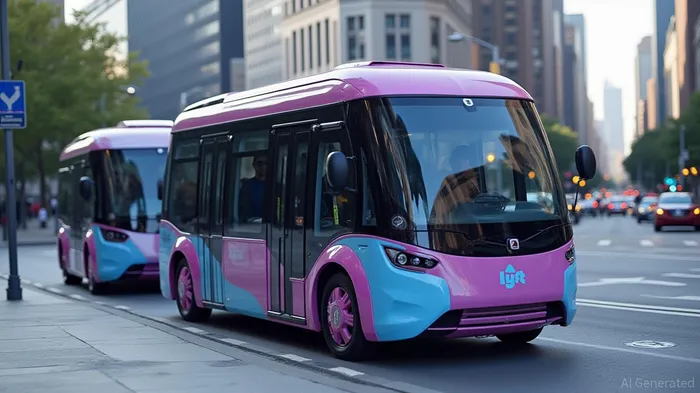
Lyft’s decision to embrace full autonomy comes amidst growing competition in the robotaxi market. Companies like Uber, Waymo, and Tesla are rapidly expanding their autonomous vehicle services. Lyft aims to challenge these giants by leveraging its partnership with Holon and other autonomous technology providers. The electric, driverless Holon Urban shuttles will be fully integrated into the Lyft app, offering riders the choice to ride in autonomous vehicles for short urban trips, particularly in airports, downtown corridors, and transit hubs [1].
The Holon Urban shuttles, designed by Italian auto legend Pininfarina, will carry up to 15 passengers and operate on fixed routes in cities. These all-electric vehicles prioritize accessibility, low emissions, and urban efficiency, aligning with Lyft’s vision of safer, cleaner mobility. The partnership with Marubeni, a Japanese company, will support fleet management, while Lyft focuses on the app, routing, and rider experience [1].
Lyft’s pivot to full autonomy is a strategic move to avoid the high costs associated with building and operating autonomous vehicle fleets. By outsourcing vehicle development and fleet management, Lyft adopts an "asset-light" strategy, allowing it to scale faster and compete in the robotaxi market. This shift is particularly notable given Lyft's previous focus on human drivers, which it publicly committed to in 2021 after selling its in-house autonomous vehicle division to Toyota’s Woven Planet [1].
Lyft’s move comes as Uber rapidly expands its robotaxi network through Waymo, now available in cities like Phoenix, Austin, Los Angeles, San Francisco, and Miami. Waymo, owned by Alphabet (Google’s parent company), is considered the current industry leader, running over 250,000 rides weekly and scaling fast. Meanwhile, Tesla is pushing its own robotaxi service in Austin, using its Full Self-Driving (FSD) software, with plans to launch dedicated robotaxi vehicles in 2026 [1].
The bottom line: Lyft’s entry into the robotaxi market is both strategic and timely. By partnering with global technology leaders and focusing on short urban trips, Lyft could emerge as a flexible, app-based platform for multiple autonomous providers. Its 2026 launch of Holon electric shuttles is a critical step in this direction, signaling a major new chapter in the robotaxi race [1].
References:
[1] https://economictimes.indiatimes.com/news/international/us/lyft-ditches-humans-self-driving-shuttles-to-battle-uber-waymo-by-2026/articleshow/123062681.cms
TM--
TSLA--
Lyft is launching fully autonomous electric shuttles in 2026, partnering with Holon to challenge Uber and Waymo in the self-driving transportation market. The electric, driverless Holon Urban shuttles will be integrated into the Lyft app for short urban trips, especially in airports, downtown corridors, and transit hubs. With Mobileye's Level 4 autonomy technology and Marubeni's support, Lyft is betting big on a driverless future.
Lyft, a leading ride-sharing company, has announced plans to launch fully autonomous electric shuttles in 2026, marking a significant shift from its previous "human-only" ride strategy. The company is partnering with Holon, a cutting-edge mobility company spun out of Benteler Group, to bring self-driving electric shuttles to U.S. cities. These shuttles, powered by Mobileye’s Level 4 autonomy technology, are set to hit roads in late 2026, beginning in Dallas and Atlanta [1].Lyft’s decision to embrace full autonomy comes amidst growing competition in the robotaxi market. Companies like Uber, Waymo, and Tesla are rapidly expanding their autonomous vehicle services. Lyft aims to challenge these giants by leveraging its partnership with Holon and other autonomous technology providers. The electric, driverless Holon Urban shuttles will be fully integrated into the Lyft app, offering riders the choice to ride in autonomous vehicles for short urban trips, particularly in airports, downtown corridors, and transit hubs [1].
The Holon Urban shuttles, designed by Italian auto legend Pininfarina, will carry up to 15 passengers and operate on fixed routes in cities. These all-electric vehicles prioritize accessibility, low emissions, and urban efficiency, aligning with Lyft’s vision of safer, cleaner mobility. The partnership with Marubeni, a Japanese company, will support fleet management, while Lyft focuses on the app, routing, and rider experience [1].
Lyft’s pivot to full autonomy is a strategic move to avoid the high costs associated with building and operating autonomous vehicle fleets. By outsourcing vehicle development and fleet management, Lyft adopts an "asset-light" strategy, allowing it to scale faster and compete in the robotaxi market. This shift is particularly notable given Lyft's previous focus on human drivers, which it publicly committed to in 2021 after selling its in-house autonomous vehicle division to Toyota’s Woven Planet [1].
Lyft’s move comes as Uber rapidly expands its robotaxi network through Waymo, now available in cities like Phoenix, Austin, Los Angeles, San Francisco, and Miami. Waymo, owned by Alphabet (Google’s parent company), is considered the current industry leader, running over 250,000 rides weekly and scaling fast. Meanwhile, Tesla is pushing its own robotaxi service in Austin, using its Full Self-Driving (FSD) software, with plans to launch dedicated robotaxi vehicles in 2026 [1].
The bottom line: Lyft’s entry into the robotaxi market is both strategic and timely. By partnering with global technology leaders and focusing on short urban trips, Lyft could emerge as a flexible, app-based platform for multiple autonomous providers. Its 2026 launch of Holon electric shuttles is a critical step in this direction, signaling a major new chapter in the robotaxi race [1].
References:
[1] https://economictimes.indiatimes.com/news/international/us/lyft-ditches-humans-self-driving-shuttles-to-battle-uber-waymo-by-2026/articleshow/123062681.cms
Divulgación editorial y transparencia de la IA: Ainvest News utiliza tecnología avanzada de Modelos de Lenguaje Largo (LLM) para sintetizar y analizar datos de mercado en tiempo real. Para garantizar los más altos estándares de integridad, cada artículo se somete a un riguroso proceso de verificación con participación humana.
Mientras la IA asiste en el procesamiento de datos y la redacción inicial, un miembro editorial profesional de Ainvest revisa, verifica y aprueba de forma independiente todo el contenido para garantizar su precisión y cumplimiento con los estándares editoriales de Ainvest Fintech Inc. Esta supervisión humana está diseñada para mitigar las alucinaciones de la IA y garantizar el contexto financiero.
Advertencia sobre inversiones: Este contenido se proporciona únicamente con fines informativos y no constituye asesoramiento profesional de inversión, legal o financiero. Los mercados conllevan riesgos inherentes. Se recomienda a los usuarios que realicen una investigación independiente o consulten a un asesor financiero certificado antes de tomar cualquier decisión. Ainvest Fintech Inc. se exime de toda responsabilidad por las acciones tomadas con base en esta información. ¿Encontró un error? Reportar un problema


SOBRE NOSOTROS
Nuestra historiaAutores de noticiasBase de conocimientosPolítica de privacidadTérmino de usoDescargo de responsabilidad de corretaje de tercerosTérminos de uso de AIMEDivulgaciones de riesgos de AInvest AICarrerasCONTÁCTENOS
Email: support@ainvest.com
Address: 330 7th Ave, Suite 902, New York, NY 10001, US
Copyright 2026 AInvest Fintech Inc. All rights reserved.


Comentarios
Aún no hay comentarios