
Luxury Real Estate as a Hedge: The $28.5M Dallas Estate and the New Wealth Guard Strategy
In an era of geopolitical tensions, inflationary pressures, and volatile financial markets, high-net-worth individuals (HNWIs) are increasingly turning to luxury real estate as a strategic tool for wealth preservation. . This Neo-Georgian mansion, with its blend of classic architecture and modern amenities, is not just a symbol of opulence but a calculated investment in stability. For HNWIs, such properties represent a tangible, illiquid asset that can weather economic storms while offering privacy, utility, and long-term appreciation.
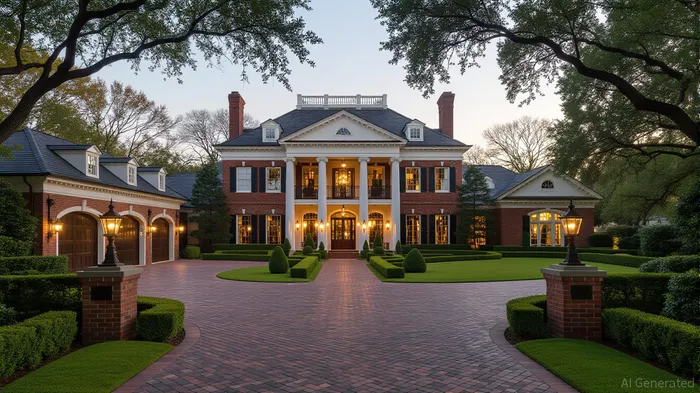
The Dallas Estate: A Case Study in Strategic Preservation
The 4606 Park Lane estate, originally built for oil tycoon Cary Maguire, has been meticulously updated to meet the demands of today's discerning buyers. , spa-like bathrooms, and a private gym—features that cater to both lifestyle and wellness trends. However, its true value lies in its location within Dallas's Preston Hollow, a neighborhood synonymous with exclusivity and strong property equity.
This estate reflects a broader shift in luxury real estate: the prioritization of . Buyers are no longer swayed solely by grandeur; they seek properties that align with wealth preservation strategies. For instance, , driven by transplants from high-cost coastal cities and a growing emphasis on privacy. The estate's all-cash transaction—common in the luxury segment—eliminates mortgage risk, a critical consideration in a high-interest-rate environment.
Why Luxury Real Estate? The Anti-Fragile Asset
Real estate, particularly in prime U.S. markets, is increasingly viewed as an asset—one that gains strength during economic downturns. According to the Coldwell Banker 2025 Mid-Year Report, over two-thirds of surveyed agents reported that affluent clients are maintaining or increasing their real estate exposure, contrasting with the shift to equities seen in previous cycles. This is partly due to real estate's dual role as both a (providing a lifestyle) and an investment (generating rental income or appreciation).
The Dallas estate's historical value and limited supply of comparable properties further enhance its appeal. In markets like Dallas, , scarcity drives demand. Additionally, real estate's tangibility offers a psychological edge over or crypto, which can lose value overnight.
Implications for Investors and Asset Allocators
For real estate investors and asset allocators, the Dallas estate underscores the importance of location, liquidity, and . Prime U.S. markets—such as Manhattan, Miami, and Dallas—are seeing a surge in ultra-luxury transactions, with buyers prioritizing properties that offer both functional utility and emotional value. Here's how to navigate this landscape:
Target Prime Markets with Resilient Demand:
Dallas, with its , business-friendly environment, and growing , is a prime example. The city's luxury market has attracted transplants from California and New York, who bring higher expectations for design and technology. Investors should focus on neighborhoods with strong school districts, , and infrastructure growth (e.g., Frisco's The Preserve).Leverage All-Cash Transactions:
, investors with liquidity can bypass . This strategy is particularly effective in a high-rate environment, where mortgage costs are prohibitive for many.Embrace Smart Luxury Trends:
Properties with (saunas, cold plunge pools), , and detached living quarters are in high demand. These features cater to and enhance a property's long-term value.Diversify into Real Estate as a Portfolio Hedge:
, which historically has a low correlation with equities. For example, , , demonstrating resilience.
The Role of Economic Uncertainty and Policy
The current economic climate—marked by , election-year uncertainty, and potential recessions—has amplified the appeal of real estate as a hedge. Unlike stocks, which can be liquidated quickly, luxury properties require long-term commitment, deterring speculative behavior. Additionally, in Texas, such as House Bill 24, are streamlining development and boosting supply in key markets, further supporting appreciation.
For investors, monitoring is critical. , will remain dominant in the luxury segment.
Conclusion: A New Era of Wealth Guarding
. As HNWIs seek assets that offer both stability and lifestyle, luxury real estate in prime U.S. markets will continue to serve as a cornerstone of their portfolios. For investors, the key lies in identifying properties that combine location, design, and strategic utility, while aligning with .
In a world of uncertainty, the message is clear: luxury real estate is not just a luxury—it's a lifeline for preserving and growing wealth.







Comentarios
Aún no hay comentarios