
Luxury Fashion's Retail Revolution: How Celebrity Brands Like Victoria Beckham Are Capturing Aspirational Markets
The luxury fashion industry is undergoing a seismic shift, driven by celebrity-driven brands that are redefining how aspirational consumers engage with high-end fashion and beauty. At the forefront of this transformation is Victoria Beckham, whose strategic recalibration of her eponymous brand has delivered double-digit growth for four consecutive years, including a 26% revenue surge to £112.4 million ($151.8 million) in 2024, according to The Industry. This success story offers a blueprint for how celebrity labels can navigate macroeconomic headwinds while capturing the hearts-and wallets-of a new generation of consumers.
The Power of "Accessible Luxury"
Victoria Beckham's pivot to "accessible luxury" is a masterstroke in an era where aspirational buyers demand both exclusivity and value. By merging her main and diffusion lines and lowering price points for key categories like denim and leather goods, the brand has broadened its appeal without diluting its premium image, according to a BoF report. This strategy mirrors broader industry trends, as luxury brands like Gucci and Burberry reintroduce lower-priced entry points for items such as belts and fragrances to attract middle-income consumers, a CNN analysis finds (see CNN). The result? A 62% contribution to total sales from direct-to-consumer channels, including the Mayfair flagship and online store, which now serve as critical touchpoints for customer retention, as reported by The Industry.
The beauty division exemplifies this approach. The Satin Kajal Liner, a bestseller selling one unit every 30 seconds, has become a gateway product for the brand, while the upcoming 2025 foundation line is projected to contribute over 20% of total sales, per The Industry. Strategic partnerships with dermatological brands like Augustinus Bader and Bioderma further enhance credibility, aligning with aspirational consumers' growing emphasis on science-backed skincare, The Industry notes.
Digital Engagement and AI-Driven Personalization
In an age where digital-first strategies are non-negotiable, Victoria Beckham has leveraged AI-powered personalization to achieve a 30x return on investment in targeted campaigns, according to an Attentive case study. By segmenting audiences through SMS and email marketing, the brand maintains exclusivity while fostering hyper-personalized interactions-a tactic that resonates with younger, tech-savvy buyers. This approach aligns with industry-wide shifts toward data-driven engagement, as luxury brands increasingly rely on technology to decode consumer preferences and optimize client retention, as discussed in the BoF report.
Global Expansion and Strategic Leadership
Under CEO Sybille Darricarrère Lunel-a veteran of Dior and Galeries Lafayette-the brand is on track to expand to 200 retail points globally by 2025, The Industry reports. This aggressive rollout targets key markets like France, Italy, and the UK, where the brand's operating losses in 2024 are expected to reverse as economies of scale take hold. The broader luxury market, projected to grow at a 6.16% CAGR through 2033, is being fueled by emerging markets in Asia-Pacific and the Middle East, where rising disposable incomes and urbanization are creating fertile ground for aspirational consumption, according to a Global Growth Insights forecast (see Global Growth Insights).
Risks and Rewards
While Victoria Beckham's 2024 operating loss of £2 million raises eyebrows, the brand's focus on profitability through scalable digital channels and strategic pricing adjustments positions it well for long-term gains. Analysts note that the brand's emphasis on leather goods and jewelry-segments projected to grow at 4–6% annually-further insulates it from market volatility, as the BoF report suggests. For investors, the key takeaway is clear: celebrity-driven brands that balance cultural relevance with financial discipline are poised to dominate the aspirational luxury landscape.
Conclusion
Victoria Beckham's success underscores a broader truth: the future of luxury lies in brands that can democratize access without compromising on craftsmanship or identity. As aspirational consumers increasingly prioritize sustainability, personalization, and digital engagement, celebrity labels that adapt-like Beckham's-will not only survive but thrive. For investors, this represents a compelling opportunity to capitalize on a market that is as much about storytelling as it is about sales.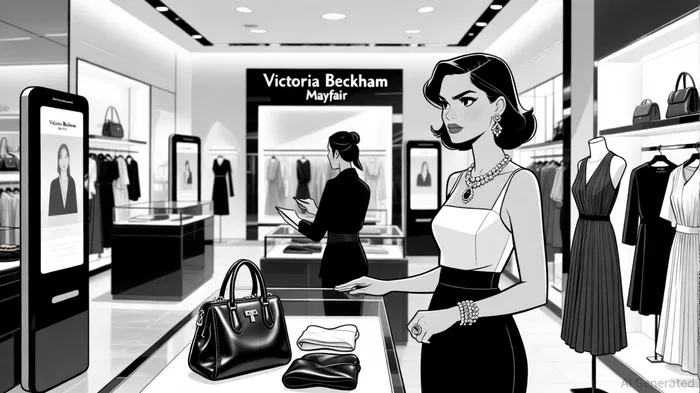







Comentarios
Aún no hay comentarios