
The Luxury EV Dilemma: Navigating Consumer Shifts and Brand Value Erosion in the Electric Transition
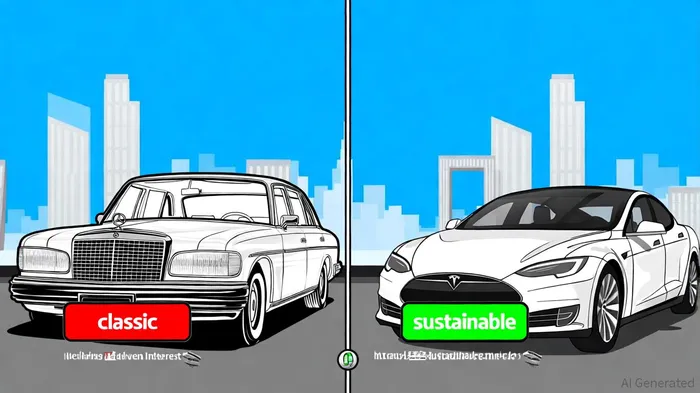
The transition to electric vehicles (EVs) has upended the luxury automotive sector, forcing established brands to reconcile their storied legacies with the demands of a rapidly evolving market. While TeslaTSLA-- has emerged as a dominant force, traditional luxury automakers like BMW and Mercedes-Benz face a dual challenge: retaining their core customer base while appealing to a new generation prioritizing sustainability and technological innovation. This tension is exacerbating brand value erosion, as consumers increasingly question whether heritage alone can justify premium pricing in an era defined by environmental consciousness and digital disruption.
Brand Identity in Flux
Luxury automakers have long built their empires on attributes like performance, craftsmanship, and exclusivity. However, these pillars are being re-evaluated in the EV era. A report by the American Marketing Association (AMA) notes that consumers now weigh sustainability and innovation as heavily as traditional metrics[1]. For brands like Mercedes-Benz and BMW, this shift demands a recalibration of their messaging. While these companies have invested heavily in electrification, their efforts risk diluting the emotional resonance of their heritage. As one industry analyst observes, “The romance of a 500-horsepower V12 engine is hard to replace with a battery pack, no matter how advanced it is.”[2]
Tesla, by contrast, has leveraged its brand identity around innovation and environmental stewardship, creating a loyal following among early adopters and eco-conscious buyers. This has allowed the company to command premium pricing without relying on decades of history—a strategy that traditional automakers struggle to replicate.
Emotional Connections and Consumer Sentiment
Emotional attachment remains a cornerstone of brand loyalty in luxury markets. However, the AMA highlights that consumers are now aligning with brands that reflect their personal values, particularly sustainability[2]. Tesla's success in this arena is evident: its vehicles are not just products but symbols of a broader movement toward decarbonization. Traditional automakers, meanwhile, face skepticism about their commitment to sustainability. For example, a 2025 survey found that 68% of luxury EV buyers viewed Tesla as “more authentic” in its environmental mission compared to legacy brands.
This sentiment is compounded by the rise of AI-driven marketing, which allows brands to hyper-personalize messaging. Luxury automakers must now craft narratives that resonate with both their historical identity and modern expectations—a balancing act that risks alienating either side of their customer base[3].
Brand Trust and the Cost of Transition
Maintaining trust during technological transitions is critical. The AMA emphasizes that consumers expect EVs to deliver the same reliability and quality they associate with traditional luxury vehicles[2]. Yet, early EV models from legacy brands have faced criticism for underwhelming performance and inconsistent software updates, eroding confidence. For instance, BMW's iX series initially struggled to match the seamless user experience of Tesla's over-the-air updates, prompting complaints about “unreliable tech for the price”.
Meanwhile, Tesla's rapid iteration cycle has reinforced perceptions of innovation, even as it occasionally stumbles. This dynamic underscores a paradox: consumers are willing to forgive imperfections in brands that embody progress, but hold traditional automakers to higher standards of consistency.
The Path Forward
To mitigate brand value erosion, luxury automakers must adopt a dual strategy. First, they need to reframe their heritage as a strength in the EV era—emphasizing how their engineering expertise accelerates sustainable innovation. Second, they must invest in digital ecosystems that rival Tesla's, leveraging AI and data analytics to deepen customer engagement[3].
However, the window for action is narrowing. As the AMA notes, “The next five years will determine whether legacy brands can coexist with disruptors like Tesla—or become relics of a bygone era”[1]. For investors, this uncertainty highlights the importance of monitoring sales trends, customer loyalty metrics, and brand equity shifts in real time.







Comentarios
Aún no hay comentarios