
Luxury Cruising: A High-Margin Haven in the Post-Pandemic Cruise Industry
A Sector Rebounding with Premium Momentum
The luxury cruise market is outpacing broader industry recovery. Valued at $7.7 billion in 2024, it is projected to surge to $24.29 billion by 2033, growing at a compound annual rate of 13.61%, according to a Luxury cruise report. This acceleration is fueled by rising disposable incomes, a shift toward experiential travel, and a demographic pivot toward younger, affluent travelers. For instance, Millennials and Gen Z now account for over a third of cruise passengers, with an average age of 46 in 2024, as reported by the World Luxury Chamber. Luxury lines are capitalizing on this trend by offering wellness-focused voyages, private island access (e.g., Royal Caribbean's Perfect Day at CocoCay), and eco-conscious itineraries, per J.P. Morgan Research.
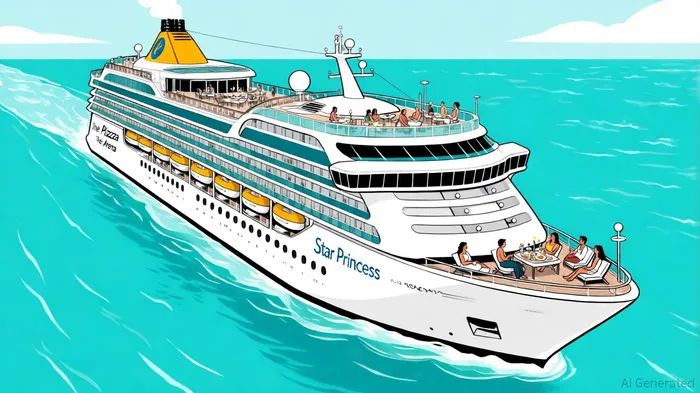
The Star Princess exemplifies this strategy. Its LNG propulsion system aligns with sustainability goals, while its 30+ dining venues and Spellbound by Magic Castle entertainment cater to travelers seeking exclusivity, a detail highlighted by Cruise Industry News. Such innovations differentiate luxury cruising from mass-market competitors, which face margin pressures from price-sensitive consumers and operational costs.
High Margins, High Resilience
Luxury cruising's financial model is inherently robust. While mass-market operators like Carnival CorporationCCL-- and Norwegian CruiseNCLH-- Line prioritize volume-reporting occupancy rates exceeding 100% in 2023, according to the Royal Caribbean Blog-luxury lines leverage premium pricing and lower operational complexity. For example, data from Macrotrends show Royal Caribbean CruisesRCL-- reporting a net profit margin of 20.97% as of June 30, 2025, while Investing.com reports Norwegian Cruise Line HoldingsNCLH-- achieved an adjusted EBITDA margin of 36.3% in Q2 2025. These figures outpace the industry-wide operating margin of 20.83% in Q2 2025, as shown by CSIMarket, reflecting the luxury segment's ability to command higher prices for specialized services.
Mass-market operators, though profitable, face challenges. Carnival's stock dipped in late 2025 despite strong booking volumes, as investors prioritized profit-taking over growth, according to Investopedia. In contrast, luxury lines benefit from less volatile demand, with affluent travelers less sensitive to economic cycles. The Star Princess's near-full capacity during its sea trials further illustrates this stability, as reported by Cruise Industry News.
Sustainability as a Strategic Advantage
Environmental initiatives are reshaping the luxury segment's appeal. The Star Princess's LNG technology reduces emissions by up to 90% compared to traditional fuels, a point highlighted by Cruise Industry News, aligning with the preferences of eco-conscious travelers. This contrasts with mass-market lines, which are only beginning to adopt cleaner fuels at scale. Analysts note that sustainability is no longer a differentiator but a necessity, with 78% of luxury cruise passengers prioritizing eco-friendly practices in 2025, found by ConsA Insights.
Investment Outlook: A Dual-Track Strategy
For investors, the cruise industry presents a dual opportunity:
1. Luxury Cruising: High-margin, innovation-driven growth with long-term demographic tailwinds.
2. Mass-Market Cruising: Scalable but cyclical, with margin compression risks amid rising fuel and labor costs.
The Star Princess's success signals a broader trend: luxury cruising is no longer a niche but a cornerstone of the industry's future. As J.P. Morgan Research notes, the cruise sector is projected to capture 3.8% of the $1.9 trillion global vacation market by 2028, with luxury lines positioned to outperform.
Conclusion
The Star Princess is more than a ship-it is a symbol of the luxury cruise industry's evolution. By combining sustainability, exclusivity, and financial discipline, this segment is redefining travel for a new generation of affluent consumers. For investors, the case for luxury cruising is compelling: it offers high margins, resilient demand, and a clear path to long-term growth.







Comentarios
Aún no hay comentarios