
Luxury Cruise Market Expansion: Norwegian Cruise Line's Strategic Bet on Regent Seven Seas
Norwegian Cruise Line Holdings (NCLH) has positioned itself at the forefront of this expansion through strategic capital allocation and a focus on ultra-luxury offerings. While the company did not acquire Regent Seven Seas Cruises outright, it has secured a long-term charter agreement for the Seven Seas Navigator, a vessel previously operated by Regent. This move, coupled with NCLH's investment in newbuilds for Regent's Prestige-Class ships, underscores a calculated bet on the high-margin luxury segment.
Strategic Capital Allocation: Building for the Future
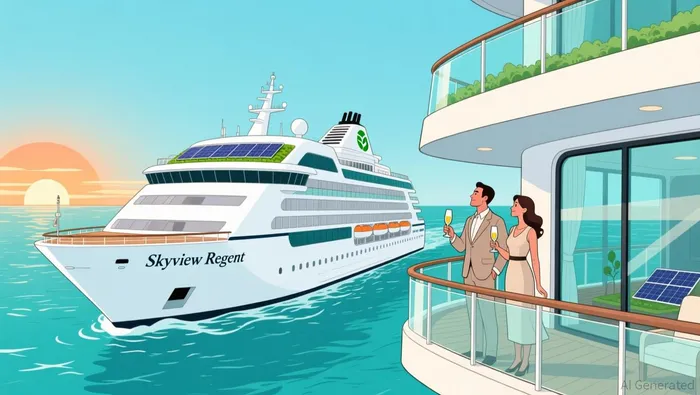
NCLH's recent order for a third Prestige-Class ship, to be delivered in 2033 by Fincantieri, exemplifies its commitment to scaling luxury offerings, GlobeNewswire report. The newbuild is 40% larger in tonnage than Regent's previous ships but increases guest capacity by only 10%, prioritizing spaciousness and exclusivity. This design philosophy aligns with consumer demand for personalized, immersive experiences. The ship features 12 distinct suite categories, including the Skyview Regent Suite-the largest all-inclusive ultra-luxury suite in cruise history, GlobeNewswire report.
Such investments reflect a strategic shift toward capital efficiency. By focusing on smaller, high-end vessels, NCLHNCLH-- can capture premium pricing while avoiding the operational complexities of mass-market cruising. The company's partnership with Fincantieri, a leader in shipbuilding, further reinforces its ability to innovate and meet evolving customer expectations, TradingView report.
Financial Performance and Long-Term Value Creation
Despite a 2.9% revenue decline in Q1 2025 and a quarterly loss of $40.3 million, Reuters report, NCLH has maintained its full-year profitability guidance, signaling confidence in its long-term strategy. The company's financial flexibility is bolstered by refinancing initiatives, such as replacing 2025 Exchangeable Notes with 2030 counterparts, which extend debt maturities and reduce short-term liquidity risks, TradingView report.
The Regent Seven Seas charter agreement also illustrates NCLH's ability to adapt to market dynamics. Russell Galbut's Crescent Seas has secured a $230 million, 10-year lease for the Seven Seas Navigator, with plans to convert it into a residential cruise ship featuring 210 condo units, TravelWeekly report. This innovative use of assets-transforming traditional cruise ships into hybrid residential and travel experiences-highlights NCLH's willingness to experiment with high-margin, niche markets.
Sustainability and Consumer Trends: A Dual-Track Strategy
The luxury cruise sector's growth is not solely driven by economic factors but also by evolving consumer behavior. A 2025 industry report notes that the average passenger age has dropped to 46, with Gen X, Millennials, and Gen Z increasingly prioritizing sustainability and unique itineraries, World Luxury Chamber report. NCLH's investments in eco-friendly technologies, such as Onshore Power Supply (OPS) and alternative fuels, align with these trends, World Luxury Chamber report. The company's collaboration with governments to achieve net-zero carbon emissions by 2050 further strengthens its appeal to environmentally conscious travelers, World Luxury Chamber report.
Conclusion: A High-Margin Bet with Long-Term Payoffs
Norwegian Cruise Line's strategic focus on the luxury segment-through newbuilds, charter agreements, and sustainability initiatives-positions it to capitalize on a market growing at twice the rate of the broader cruise industry. While short-term financial challenges persist, the company's emphasis on capital-efficient, high-margin ventures suggests a robust long-term value creation strategy. As the luxury cruise sector expands, NCLH's ability to innovate and adapt will be critical to sustaining its competitive edge.





Comentarios
Aún no hay comentarios