
Luxury Asset Lending as a New Frontier in Wealth Management: The Strategic Value of Classic Cars in Diversified Portfolios
In an era where traditional asset classes face unprecedented volatility, investors are increasingly turning to alternative investments to hedge risk and capture unique returns. Among these, classic cars have emerged as a compelling asset class, blending emotional appeal with financial potential. According to a report by Hagerty, the global classic car market was valued at USD 39.7 billion in 2024 and is projected to grow to USD 77.8 billion by 2032, driven by a surge in demand from collectors and investors seeking diversification. This growth is not merely speculative; it reflects a structural shift in how wealth is managed and deployed.
The Diversification Edge of Classic Cars
Classic cars offer a rare advantage in modern portfolios: low correlation with traditional markets. Unlike stocks or bonds, their value is influenced by factors such as rarity, historical significance, and cultural trends. For example, the 1955 Mercedes-Benz 300 SLR Uhlenhaut Coupe sold for $149 million in 2023, a record that underscores the asset's capacity for outsized returns. Even less rare models, such as those from the 1980s to 2000s, have seen valuation increases due to generational shifts in preferences and the emotional resonance of "modern classics" according to Hagerty's market analysis.
This uncorrelated performance makes classic cars an effective hedge against macroeconomic shocks. During periods of stock market turbulence, demand for tangible assets like vintage vehicles often rises, as investors seek stability in physical, irreplaceable goods. 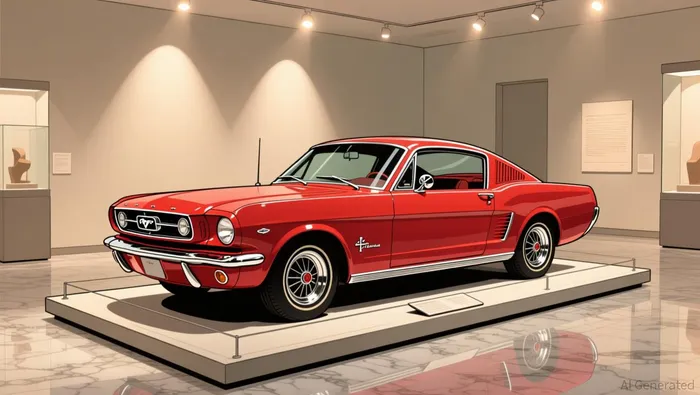 . Hagerty's 2025 Bull Market List further highlights this trend, identifying 11 collector cars poised for value appreciation, signaling institutional confidence in the sector.
Luxury Asset Lending: Unlocking Liquidity Without Liquidation
One of the most innovative developments in this space is luxury asset lending, where collectors use high-value cars as collateral to access liquidity. This approach allows investors to retain ownership while leveraging their assets for capital. For instance, Sotheby's Financial Services (SFS), in partnership with RM Sotheby's, offers loans ranging from $5 million to $250 million based on appraised car values, catering to ultra-high-net-worth individuals. A Los Angeles-based collector, for example, secured a loan using his 1966 Ford Mustang-appraised at over six figures-to fund real estate ventures without selling his prized possession.
The mechanics of such loans are designed to minimize risk for both borrower and lender. Vehicles are stored securely, maintained in pristine condition, and appraised by experts, ensuring the collateral retains its value. SFS emphasizes discretion, underwriting based on the asset's market value rather than the borrower's personal financial history. This model appeals to collectors who want to preserve their portfolios while accessing capital for new opportunities.
Institutional Adoption and the Road Ahead
The rise of luxury asset lending has not gone unnoticed by traditional financial institutions. Banks like Ireland Bank and Denali Bank have entered the collectible car lending market, recognizing the appeal of high-credit-score borrowers and the potential for collateral appreciation. This institutional validation signals a maturation of the sector, as banks develop specialized underwriting frameworks to assess the unique risks of valuing movable, subjective assets.
However, challenges remain. Classic cars require significant maintenance, specialized storage, and tailored insurance, all of which can erode returns if not managed carefully. Additionally, the market's volatility-driven by shifting collector tastes and limited supply-means values can fluctuate rapidly. Investors must conduct thorough due diligence and adopt a long-term perspective to mitigate these risks.
Conclusion: A Strategic Asset for the Modern Portfolio
Classic cars are no longer just relics of the past; they are strategic tools for diversification and liquidity in a complex financial landscape. Their ability to decouple from traditional markets, combined with the innovation of luxury asset lending, positions them as a cornerstone of modern wealth management. As the sector evolves, investors who balance emotional attachment with rigorous financial planning will be best positioned to capitalize on this new frontier.







Comentarios
Aún no hay comentarios