
Luxembourg's Sovereign Fund: A Catalyst for Bitcoin's Institutional Breakthrough in the Eurozone
The Eurozone's institutional adoption of BitcoinBTC-- has long been a tale of cautious optimism, constrained by regulatory fragmentation and conservative investment mandates. However, a seismic shift occurred in October 2025 when Luxembourg's Intergenerational Sovereign Wealth Fund (FSIL) became the first Eurozone nation to allocate 1% of its assets to Bitcoin ETFs, according to a Coindesk report. This move, framed as a strategic bet on Bitcoin's long-term potential, has since catalyzed a broader reevaluation of digital assets across the region. By analyzing Luxembourg's approach, its regulatory innovations, and the ripple effects across the Eurozone, we uncover how this small nation is reshaping the institutional landscape for Bitcoin.
Luxembourg's Strategic Move: Balancing Innovation and Caution
Luxembourg's FSIL, established in 2014 with $730 million in assets, has traditionally prioritized high-quality bonds. Its 2025 allocation to Bitcoin ETFs reflects a revised investment policy allowing up to 15% of assets in alternative investments, including crypto, as noted in the Coindesk report. By opting for ETFs over direct Bitcoin holdings, the fund mitigates operational risks while signaling institutional confidence in the asset class. This decision aligns with global trends: over 2,600 institutions now hold more than 3 million BTC, and BlackRock's Bitcoin ETF (IBIT) alone holds $87.7 billion in assets, according to a CCN analysis.
Luxembourg's regulatory environment has been pivotal. The country's alignment with the EU's Markets in Crypto-Assets (MiCA) regulation, coupled with initiatives like the Luxembourg House of Financial Technology (LHoFT), has created a fertile ground for crypto innovation, according to a DLA Piper analysis. The 2025 Law of 6 February further strengthened oversight, granting the Commission de Surveillance du Secteur Financier (CSSF) enhanced powers to supervise crypto-asset service providers and enforce compliance, as outlined in a Goodwin Law briefing. These measures have attracted firms like Ripple and Coinbase to seek MiCA compliance in Luxembourg, reinforcing its role as a crypto hub, as reported by Ecoinimist.
The Eurozone's Fragmented Landscape and Institutional Hesitation
Despite Luxembourg's bold step, Bitcoin adoption across the Eurozone remains uneven. A fragmented regulatory environment and conservative institutional policies have slowed progress. For instance, European pension funds and asset managers have been slower to adopt Bitcoin compared to the U.S., where regulatory clarity and innovation have driven significant institutional investment, as noted in an Invezz article. The European Banking Authority (EBA) and European Securities and Markets Authority (ESMA) have highlighted the niche status of DeFi in the EU and the risks associated with crypto lending and staking, though they have not identified immediate financial stability risks, according to EBA and ESMA.
However, the tide is shifting. A 2025 EY survey found that 83% of institutional investors plan to increase their digital asset allocations. This enthusiasm is tempered by regulatory uncertainty, but Luxembourg's example provides a blueprint. For example, Norway's sovereign wealth fund has indirectly increased its Bitcoin exposure by 192% year-over-year through investments in companies like MicroStrategy and Marathon Digital, according to a Bitbo report. Similarly, countries like Germany and Switzerland are exploring Bitcoin as a hedge against fiat risks and government debt, as argued by Hartmann Capital.
Regulatory Ripple Effects and Market Dynamics
Luxembourg's actions have triggered regulatory and market ripple effects. The EU's MiCA framework, which Luxembourg has fully implemented, is now attracting crypto firms seeking a regulated environment. This has led to a rise in authorized crypto-asset service providers, with Ripple and Coinbase among the first to secure licenses, according to Ecoinimist. Meanwhile, Bitcoin ETFs have become a cornerstone of institutional adoption. U.S. spot Bitcoin ETFs hold 1.296 million BTC, with cumulative inflows exceeding $50 billion by mid-2025, per an Analytics Insight report. These inflows have improved liquidity in both spot and futures markets, enabling institutions to manage positions more efficiently, as shown in a ScienceDirect study.
The market impact of ETFs is profound. Studies show that ETF flows significantly influence Bitcoin's volatility and returns. For example, the launch of the ProShares Bitcoin Strategy ETF (BITO) in 2021 altered investor composition in Bitcoin futures markets, with ETF managers dominating long positions, according to a Kenson Investments update. While initial disruptions occurred, markets normalized quickly, underscoring Bitcoin's maturation as an asset class.
The Path Forward: From Pioneers to Mainstream
Luxembourg's catalytic role is evident in its ability to balance innovation with regulatory rigor. By allocating to Bitcoin ETFs, the FSIL has demonstrated that digital assets can coexist with traditional portfolios. This approach is likely to inspire other Eurozone institutions, particularly as the EU's financial stability review highlights growing interconnectedness between crypto and traditional finance, according to the ECB's review.
However, challenges remain. The Eurozone's financial stability review warns of potential contagion risks, emphasizing the need for enhanced monitoring (see the ECB review). Luxembourg's model-combining MiCA compliance, ETF-based exposure, and proactive regulation-offers a template for mitigating these risks while fostering innovation.
Conclusion
Luxembourg's sovereign fund has emerged as a linchpin in the Eurozone's Bitcoin adoption narrative. By allocating to Bitcoin ETFs and leveraging its regulatory expertise, the country has bridged the gap between skepticism and strategic investment. While broader adoption hinges on regulatory harmonization and market maturity, Luxembourg's example proves that Bitcoin is no longer a fringe asset but a legitimate component of institutional portfolios. As the Eurozone grapples with the implications of a digital future, Luxembourg's boldness may well define the next chapter of institutional finance.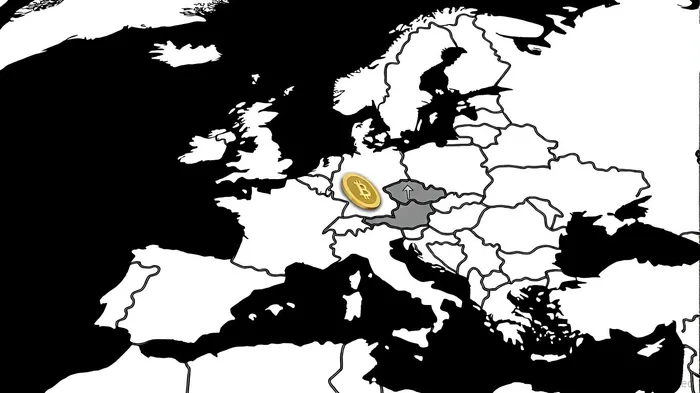





Comentarios
Aún no hay comentarios