
Lundin Mining's Legal and Operational Challenges Post-2022 Alcaparrosa Sinkhole: Assessing Long-Term Financial and Reputational Risk to Shareholder Value
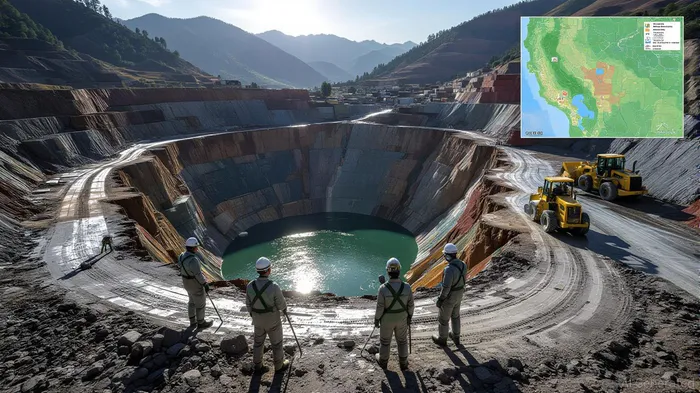
In July 2022, a catastrophic sinkhole measuring over 60 meters deep formed near Lundin Mining’s Alcaparrosa mine in Chile, triggering an immediate operational shutdown and a cascade of regulatory, financial, and reputational challenges for the company. The incident, attributed to unauthorized mining activities near the Copiapo River aquifer, has since evolved into a case study of systemic risk for mining firms operating in environmentally sensitive regions. For shareholders, the Alcaparrosa sinkhole underscores the intersection of operational missteps, regulatory enforcement, and long-term value erosion—a combination that demands rigorous scrutiny.
Operational and Regulatory Fallout
The sinkhole led to the permanent closure of the Alcaparrosa mine by Chile’s environmental regulator, the Superintendencia del Medio Ambiente (SMA), which imposed a $3.3 million fine for four violations, including over-extraction of minerals and unauthorized infrastructure modifications [1]. Operations at the site have remained suspended since the incident, with the mine’s mineral reserves excluded from future production forecasts [2]. This operational loss is compounded by remediation mandates from the Chilean State Defense Council (CDE), requiring backfilling of the sinkhole, aquifer recharging, and water infrastructure improvements in surrounding communities [3]. These requirements, while environmentally necessary, represent a significant capital outlay and operational distraction for Lundin.
The regulatory response reflects a broader trend of tightening environmental oversight in Chile, a country that has increasingly prioritized ecological accountability in its mining sector. As stated by a report from Energy News, the incident has set a precedent for stricter compliance standards, with potential implications for other mining operations in the region [4].
Financial Implications and Market Reaction
The immediate financial impact of the sinkhole was stark. Lundin’s shares fell 6.1% in Toronto following the incident, outpacing declines among copper-mining peers [5]. Analysts at BMO Capital Markets revised production estimates for the company’s Candelaria mine downward, citing uncertainty over the broader operational and reputational fallout [5]. While the Candelaria operation remains unaffected and is projected to produce 140,000–150,000 tonnes of copper in 2025 [1], the loss of Alcaparrosa’s reserves—a key contributor to the company’s production profile—has created a structural gap in its output.
Long-term financial risks include potential increases in site restoration costs, regulatory compliance expenses, and the possibility of additional fines. Notably, no information on insurance coverage for the sinkhole has been disclosed in the provided sources, leaving a critical gap in assessing the company’s ability to mitigate these liabilities [6]. Without clarity on insurance terms, investors face uncertainty about whether the financial burden of remediation will be fully borne by Lundin or partially offset by third-party coverage.
Reputational Damage and Community Impact
The reputational toll of the Alcaparrosa incident is equally concerning. The sinkhole, which occurred near the Tierra Amarilla urban area, has drawn sharp criticism from local communities and environmental groups. The CDE’s civil claim mandates not only technical remediation but also community-focused initiatives, such as rural water and wastewater infrastructure projects [3]. While these efforts may help rebuild trust, they also highlight the company’s prior failure to prevent environmental harm.
Reputational damage extends beyond local concerns. A detailed analysis by Discovery Alert notes that the incident has eroded investor confidence, with the company’s social license to operate now under scrutiny [7]. This reputational risk is particularly acute in an era where ESG (Environmental, Social, and Governance) criteria increasingly dictate capital allocation. For Lundin, the Alcaparrosa sinkhole has become a symbol of operational negligence, potentially deterring future partnerships and investment.
Regulatory Trends and Shareholder Risks
The SMA’s enforcement actions signal a shift in Chile’s regulatory landscape. The $3.3 million fine and permanent closure of Alcaparrosa demonstrate a willingness to impose severe penalties for environmental violations—a trend that could escalate in the future [1]. For shareholders, this raises concerns about the scalability of such risks: if regulatory scrutiny intensifies, similar incidents at other operations could lead to production stoppages, fines, or reputational damage.
Moreover, the incident has exposed vulnerabilities in Lundin’s operational risk management. The company’s admission that it will “review the ruling to determine next steps” [3] suggests a reactive rather than proactive approach to compliance. In a sector where environmental oversight is tightening globally, such postures could prove costly.
Conclusion: Balancing Resilience and Risk
Lundin Mining’s Alcaparrosa sinkhole is a cautionary tale for investors. While the company’s Candelaria operation provides a buffer against immediate revenue declines, the long-term risks—financial, regulatory, and reputational—are substantial. The absence of insurance details, the scale of remediation costs, and the evolving regulatory environment in Chile all point to a heightened exposure for shareholders.
For investors, the key question is whether Lundin can transform this crisis into a catalyst for systemic change. If the company invests in robust environmental safeguards, transparent stakeholder engagement, and proactive compliance, it may mitigate some of the damage. However, as the Alcaparrosa case illustrates, the cost of failure in this sector is no longer measured solely in fines—it is measured in lost value, eroded trust, and the irreversible depletion of natural resources.
Source:
[1] Lundin Mining Reports on Civil Claim Pertaining to the 2022 Sinkhole at the Alcaparrosa Mine,
https://lundinmining.com/news/lundin-mining-reports-on-civil-claim-pertaining-to-123212/
[2] Lundin Mining Fourth Quarter and Full Year 2022 Results,
http://lundinmining.com/news/lundin-mining-fourth-quarter-and-full-year-2022-re-123105/
[3] Chile orders Lundin copper mine to close after massive sinkhole,
https://energynews.oedigital.com/climate-change/2025/01/30/chile-orders-lundin-copper-mine-to-close-after-massive-sinkhole
[4] Energy News analysis,
https://energynews.oedigital.com/climate-change/2025/01/30/chile-orders-lundin-copper-mine-to-close-after-massive-sinkhole
[5] Sinkhole Drags Down Lundin Shares as Analysts Weigh Mine ...,
https://financialpost.com/pmn/business-pmn/chile-probes-giant-sinkhole-at-lundin-underground-copper-mine
[6] Lundin Mining Reports on Legal Notice Pertaining to the 2022 Sinkhole at the Alcaparrosa Mine,
http://lundinmining.com/news/lundin-mining-reports-on-legal-notice-pertaining-t-123183/
[7] Chile's Alcaparrosa Mine Closure,
https://discoveryalert.com.au/news/chile-s-alcaparrosa-mine-closure-unveiling-environmental-regulatory-impact/







Comentarios
Aún no hay comentarios