
LUNA Confronts Institutional-Driven Crypto Repricing
- The 2025 crypto bear market was a repricing event driven by institutional investors entering the market.
- Altcoin sectors including DeFi and smart contract platforms saw average declines of 67% and 66% respectively.
- Institutional capital is increasingly focusing on protocols with organic usage and revenue.
Terra (LUNA) navigated significant headwinds during 2025's crypto market repricing. The broader altcoin market experienced substantial valuation resets amid shifting institutional priorities. LUNALUNA-- faced pressure as investors concentrated capital on networks demonstrating fundamental utility. This institutional pivot created distinct challenges for blockchain projects lacking proven usage metrics.
What drove the 2025 crypto bear market?
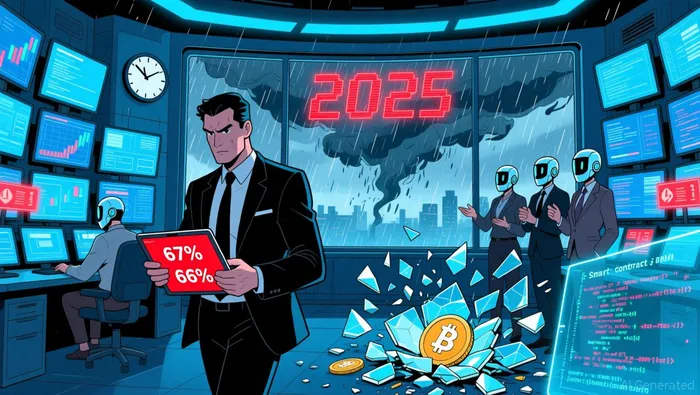
The steep cryptocurrency decline resulted from institutional investors reassessing blockchain network viability. These investors initiated a multiyear entry strategy prioritizing fundamental value over speculation. Their capital allocation filtered out tokens without organic usage or revenue generation. This repricing event represented maturation rather than broad market failure.
Jamie Coutts characterized the downturn as essential market repricing amid institutional adoption. Smart contract platforms and DeFi tokens delivered negative average returns of 66% and 67% respectively. The shift reflects growing emphasis on sustainable tokenomics over hype-driven valuations. Capital concentration reveals new institutional selection criteria for blockchain investments.
How did the repricing impact altcoins like TerraLUNA-- (LUNA)?
Altcoins faced severe pressure during the institutional repricing event. Terra (LUNA) operated within the heavily impacted smart contract platform category. Projects without clear revenue mechanisms encountered investor skepticism and capital outflows. The restructuring created survival challenges for protocols lacking organic adoption.
Market dynamics favored tokens demonstrating tangible economic activity. LUNA's positioning required navigating heightened institutional scrutiny of fundamental metrics. The repricing accelerated natural selection among blockchain networks. This environment forced projects to validate their utility claims or face continued valuation pressure.
What does the institutional shift mean for the future of crypto?
Institutional involvement establishes new valuation frameworks for cryptocurrencies. Their focus on usage and revenue signals market maturation beyond speculative trading. This transition favors protocols with verifiable user adoption and sustainable tokenomics. Projects must now demonstrate economic viability to attract serious capital.
The repricing establishes higher entry barriers for emerging blockchain networks. Institutional capital flows toward ecosystems with proven organic activity. This dynamic could consolidate market share among established players. Terra (LUNA) must showcase fundamental strength to compete effectively. The institutional pivot ultimately rewards substance over speculation in crypto markets.







Comentarios
Aún no hay comentarios