
Lululemon and Macy's Q4 Sales Updates: A Tale of Two Retailers
Generado por agente de IAWesley Park
lunes, 13 de enero de 2025, 10:39 am ET2 min de lectura
LULU--
As the holiday season comes to a close, two prominent retailers, Lululemon Athletica (LULU) and Macy's, Inc. (M), have provided updates on their fourth-quarter sales performance. While both companies have reported positive trends, their strategies and market positioning differ significantly, offering valuable insights into the evolving retail landscape.
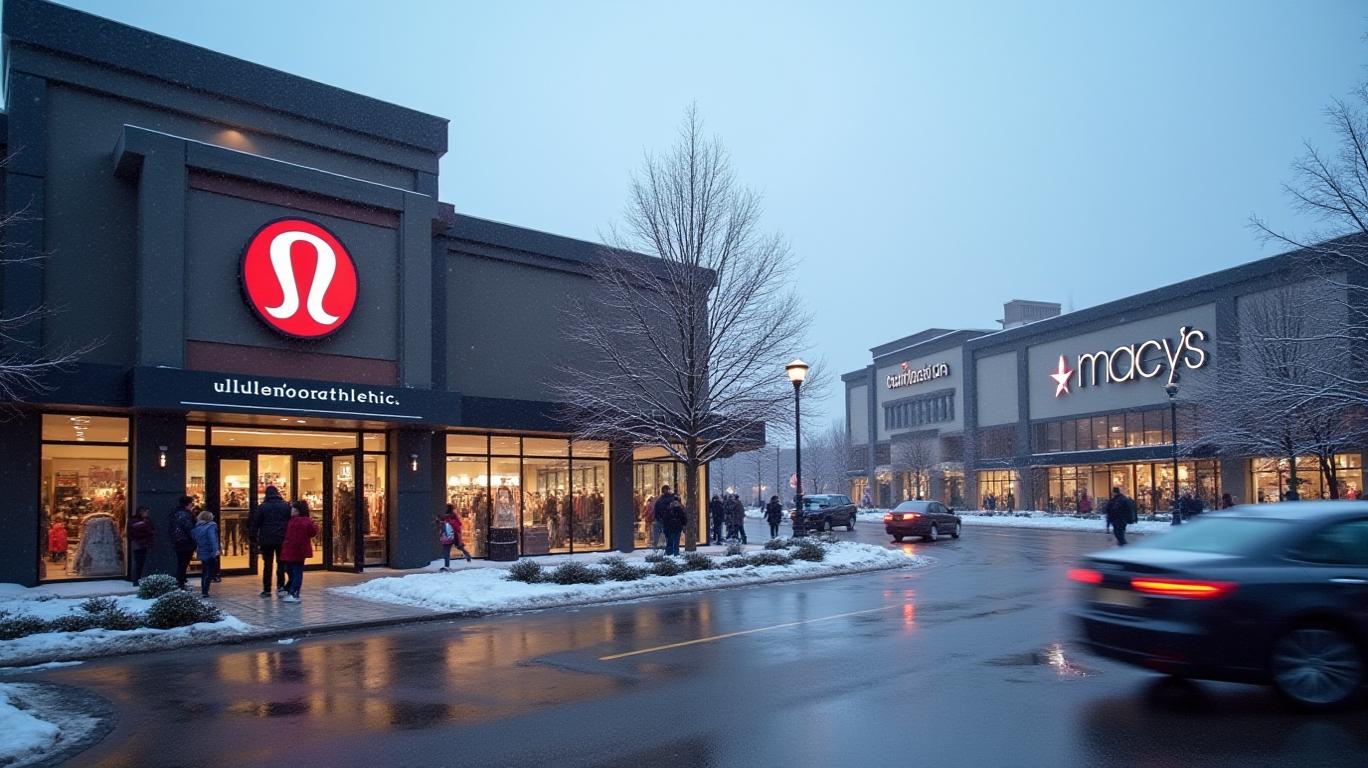
Lululemon Athletica: Premium Athleisure and Strong Product Offering
Lululemon Athletica raised its Q4 revenue guidance to $3.56-3.58 billion, representing 11-12% growth compared to Q4 fiscal 2023, or 6-7% excluding the 53rd week of 2024. The company also increased its diluted EPS guidance to $5.81-5.85, up from $5.56-5.64. Lululemon's CFO, Meghan Frank, attributed the improved outlook to strong customer response to their product offering during the holiday season.
Lululemon's strong Q4 sales performance can be attributed to several key drivers:
1. Strong Customer Response to Product Offering: Lululemon's innovative and high-quality products resonate with consumers, driving demand and sales growth.
2. Gross Margin Expansion: The company's ability to sell more products at full price, effectively maintaining its premium brand position, contributes to its strong financial performance.
3. Operational Efficiency: Lululemon's improved SG&A expense deleverage outlook indicates better operational efficiency, pricing power, and operational excellence in a challenging retail environment.
These trends appear sustainable, as they are rooted in Lululemon's strong brand, innovative product offerings, and effective customer engagement strategies. However, the company must continue to adapt to changing consumer preferences and market dynamics to maintain its competitive edge.
Macy's, Inc.: Bold New Chapter Strategy and Store Fleet Optimization
Macy's expects its go-forward business achieved quarter-to-date (QTD) comparable sales growth in the fiscal fourth quarter, with Macy's First 50 locations and luxury nameplates Bloomingdale's and Bluemercury all continuing their trend of positive comparable sales. Macy's digital channel also achieved comparable sales growth for the period. However, total comparable sales for Macy's, Inc. were flat quarter-to-date, with non-First 50 locations, including non-go-forward stores, performing below expectations and generating negative comparable sales.
Macy's plans to expand its Bold New Chapter initiatives to an additional 75 Macy's locations in Fiscal 2025, further building momentum with a stronger Macy's store fleet. The company is well-positioned to build momentum with a stronger Macy's store fleet and teams focused on the successful execution of the three pillars of its Bold New Chapter strategy.
However, Macy's still faces challenges that may impact its sales and overall performance:
1. Non-First 50 locations: Macy's non-First 50 locations, including non-go-forward stores, have performed below expectations and generated negative comparable sales. The company must address these underperforming stores to maintain growth.
2. Net sales outlook: Macy's expects net sales to be at or slightly below the low-end of the previously issued range of $7.8 billion to $8.0 billion. This suggests that while the company is making progress, it may still fall short of its initial expectations for the quarter.
3. Economic uncertainties: The broader economic environment, including inflation, labor shortages, and geopolitical tensions, may continue to impact consumer spending and Macy's sales. The company must navigate these challenges and adapt its strategies accordingly to maintain growth.
In conclusion, Lululemon's and Macy's Q4 sales updates reflect their respective brand positioning and market strategies. Lululemon's strong performance is driven by its premium athleisure positioning and successful product offering, while Macy's progress is a result of its Bold New Chapter strategy, focusing on store fleet optimization and digital channel growth. Both companies face challenges that they must address to maintain their momentum in the competitive retail landscape.
M--
As the holiday season comes to a close, two prominent retailers, Lululemon Athletica (LULU) and Macy's, Inc. (M), have provided updates on their fourth-quarter sales performance. While both companies have reported positive trends, their strategies and market positioning differ significantly, offering valuable insights into the evolving retail landscape.
Lululemon Athletica: Premium Athleisure and Strong Product Offering
Lululemon Athletica raised its Q4 revenue guidance to $3.56-3.58 billion, representing 11-12% growth compared to Q4 fiscal 2023, or 6-7% excluding the 53rd week of 2024. The company also increased its diluted EPS guidance to $5.81-5.85, up from $5.56-5.64. Lululemon's CFO, Meghan Frank, attributed the improved outlook to strong customer response to their product offering during the holiday season.
Lululemon's strong Q4 sales performance can be attributed to several key drivers:
1. Strong Customer Response to Product Offering: Lululemon's innovative and high-quality products resonate with consumers, driving demand and sales growth.
2. Gross Margin Expansion: The company's ability to sell more products at full price, effectively maintaining its premium brand position, contributes to its strong financial performance.
3. Operational Efficiency: Lululemon's improved SG&A expense deleverage outlook indicates better operational efficiency, pricing power, and operational excellence in a challenging retail environment.
These trends appear sustainable, as they are rooted in Lululemon's strong brand, innovative product offerings, and effective customer engagement strategies. However, the company must continue to adapt to changing consumer preferences and market dynamics to maintain its competitive edge.
Macy's, Inc.: Bold New Chapter Strategy and Store Fleet Optimization
Macy's expects its go-forward business achieved quarter-to-date (QTD) comparable sales growth in the fiscal fourth quarter, with Macy's First 50 locations and luxury nameplates Bloomingdale's and Bluemercury all continuing their trend of positive comparable sales. Macy's digital channel also achieved comparable sales growth for the period. However, total comparable sales for Macy's, Inc. were flat quarter-to-date, with non-First 50 locations, including non-go-forward stores, performing below expectations and generating negative comparable sales.
Macy's plans to expand its Bold New Chapter initiatives to an additional 75 Macy's locations in Fiscal 2025, further building momentum with a stronger Macy's store fleet. The company is well-positioned to build momentum with a stronger Macy's store fleet and teams focused on the successful execution of the three pillars of its Bold New Chapter strategy.
However, Macy's still faces challenges that may impact its sales and overall performance:
1. Non-First 50 locations: Macy's non-First 50 locations, including non-go-forward stores, have performed below expectations and generated negative comparable sales. The company must address these underperforming stores to maintain growth.
2. Net sales outlook: Macy's expects net sales to be at or slightly below the low-end of the previously issued range of $7.8 billion to $8.0 billion. This suggests that while the company is making progress, it may still fall short of its initial expectations for the quarter.
3. Economic uncertainties: The broader economic environment, including inflation, labor shortages, and geopolitical tensions, may continue to impact consumer spending and Macy's sales. The company must navigate these challenges and adapt its strategies accordingly to maintain growth.
In conclusion, Lululemon's and Macy's Q4 sales updates reflect their respective brand positioning and market strategies. Lululemon's strong performance is driven by its premium athleisure positioning and successful product offering, while Macy's progress is a result of its Bold New Chapter strategy, focusing on store fleet optimization and digital channel growth. Both companies face challenges that they must address to maintain their momentum in the competitive retail landscape.

Divulgación editorial y transparencia de la IA: Ainvest News utiliza tecnología avanzada de Modelos de Lenguaje Largo (LLM) para sintetizar y analizar datos de mercado en tiempo real. Para garantizar los más altos estándares de integridad, cada artículo se somete a un riguroso proceso de verificación con participación humana.
Mientras la IA asiste en el procesamiento de datos y la redacción inicial, un miembro editorial profesional de Ainvest revisa, verifica y aprueba de forma independiente todo el contenido para garantizar su precisión y cumplimiento con los estándares editoriales de Ainvest Fintech Inc. Esta supervisión humana está diseñada para mitigar las alucinaciones de la IA y garantizar el contexto financiero.
Advertencia sobre inversiones: Este contenido se proporciona únicamente con fines informativos y no constituye asesoramiento profesional de inversión, legal o financiero. Los mercados conllevan riesgos inherentes. Se recomienda a los usuarios que realicen una investigación independiente o consulten a un asesor financiero certificado antes de tomar cualquier decisión. Ainvest Fintech Inc. se exime de toda responsabilidad por las acciones tomadas con base en esta información. ¿Encontró un error? Reportar un problema


SOBRE NOSOTROS
Nuestra historiaAutores de noticiasBase de conocimientosPolítica de privacidadTérmino de usoDescargo de responsabilidad de corretaje de tercerosTérminos de uso de AIMEDivulgaciones de riesgos de AInvest AICarrerasCONTÁCTENOS
Email: support@ainvest.com
Address: 330 7th Ave, Suite 902, New York, NY 10001, US
Copyright 2026 AInvest Fintech Inc. All rights reserved.


Comentarios
Aún no hay comentarios