
LTC's Strategic SHOP Expansion and 2026 Growth Outlook
In a REIT market marked by capital constraints and shifting demographic dynamics, LTC PropertiesLTC-- has positioned itself as a standout performer by aggressively expanding its Senior Housing Operating Portfolio (SHOP). With a focus on acquiring newer, stabilized assets and leveraging strategic partnerships, LTCLTC-- is capitalizing on a sector poised for long-term demand while navigating broader industry challenges. As the first wave of baby boomers turns 80 in 2026, LTC's disciplined approach to high-yield seniors housing investments offers a compelling case for value creation and outperformance.
A Shift to High-Yield, Newer-Vintage Assets
LTC's strategic pivot to seniors housing has accelerated in 2025, with the SHOP segment now accounting for approximately 20% of its total investment portfolio. This expansion is underpinned by a disciplined acquisition strategy, including $290 million in SHOP purchases in 2025 and an additional $70 million expected by year-end, with an additional $110 million projected for January 2026. These acquisitions, such as a $63 million deal for two properties in Tennessee and Wisconsin, are funded through a mix of the company's revolving credit line, ATM sales, and proceeds from property sales.
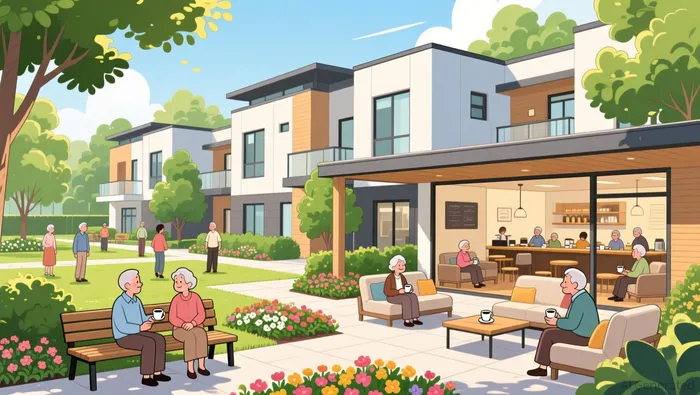
The focus on newer, stabilized assets is central to LTC's long-term value proposition. By acquiring properties with strong operational performance and avoiding older, obsolescent skilled nursing facilities, LTC has driven improvements in key metrics like Core FFO and Core FAD, even amid a third-quarter 2025 net loss reported in the company's Q3 results. This strategy aligns with industry trends: as construction cycles for new senior housing stretch to 29 months and average development costs hit $300K–$400K per unit, REITs like LTC are securing existing properties at $200K–$250K per unit, offering a significant cost advantage.
The broader REIT market faces headwinds in 2026, including limited new supply and rising development costs. NIC MAP data reveals that senior housing inventory grew by just 0.7% annually in Q3 2025, with new completions unlikely before 2028. In this environment, LTC's emphasis on external growth and RIDEA (Regulatory Incentive for Enhanced Performance) structures provides a distinct edge. RIDEA agreements align operator and investor incentives by tying compensation to performance metrics, a model LTC has prioritized in its $300 million acquisition pipeline, with 80% allocated to such high-performing deals.
Geographic diversification further strengthens LTC's position. Markets like Texas and Dallas-Fort Worth, where the 80+ population is projected to grow by nearly 29% over five years, are becoming critical growth areas. With occupancy rates in senior housing reaching 88.7% in Q3 2025, LTC's focus on these high-demand regions-combined with its ability to access both equity and debt markets-positions it to outperform peers struggling with capital constraints according to market analysis.
2026 Growth Outlook: Momentum and Portfolio Transformation
Looking ahead, LTC's 2026 growth trajectory appears robust. The company plans to accelerate SHOP expansion, with the segment projected to reach nearly 20% of its portfolio by year-end. This growth is supported by a pipeline of $300 million in acquisitions, including a $23 million property in Georgia that underscores LTC's commitment to quality assets as reported in recent earnings. By divesting older skilled nursing facilities and reinvesting proceeds into stabilized seniors housing, LTC is transforming its portfolio to better align with demographic-driven demand as detailed in the company's latest update.
Analysts highlight LTC's operational expertise and long-term partnerships as key differentiators. As stated by industry observers, "REITs with access to disciplined acquisition strategies and RIDEA structures are best positioned to capitalize on the sector's structural tailwinds". With aging populations driving occupancy to record levels and new construction lagging, LTC's focus on high-yield seniors housing assets offers a clear path to long-term value creation.
Conclusion
LTC Properties' strategic SHOP expansion exemplifies how a REIT can navigate capital constraints and demographic shifts through disciplined acquisitions, RIDEA-aligned partnerships, and geographic foresight. As the senior housing market enters 2026 with strong demand and limited supply, LTC's emphasis on newer, stabilized assets positions it to outperform peers and deliver sustainable returns. For investors seeking exposure to a sector with structural growth drivers, LTC's approach offers a compelling blueprint.





Comentarios
Aún no hay comentarios