
LSD Liquidity and DEX Front-End Volatility on Solana: A Cautionary Tale for Liquidity Providers and Token Investors
Solana's ascent as a high-throughput blockchain has positioned it as a cornerstone of decentralized finance (DeFi), with liquid staking derivatives (LSDs) and decentralized exchanges (DEXs) driving much of its growth. However, recent developments highlight a critical tension between Solana's technical capabilities and the fragility of its liquidity infrastructure. This article examines the interplay of LSD liquidity dynamics, DEX front-end volatility, and systemic risks in high-throughput blockchains, offering insights for liquidity providers (LPs) and token investors navigating this evolving landscape.
Liquidity Dynamics: A "Full Reset" and Structural Pressures
Solana's LSD ecosystem has faced mounting liquidity challenges, marked by a "full liquidity reset" since mid-November 2025. Data from Yahoo Finance indicates that the 30-day average profit-to-loss ratio has remained below 1, signaling that traders are realizing more losses than profits. This trend reflects thinning on-chain liquidity and elevated leverage, exacerbated by exchange outflows and speculative trading activity. While DEX volume remains robust-$6.7 billion in decentralized exchange volume in late 2025- liquidity providers face heightened risks as market conditions shift.
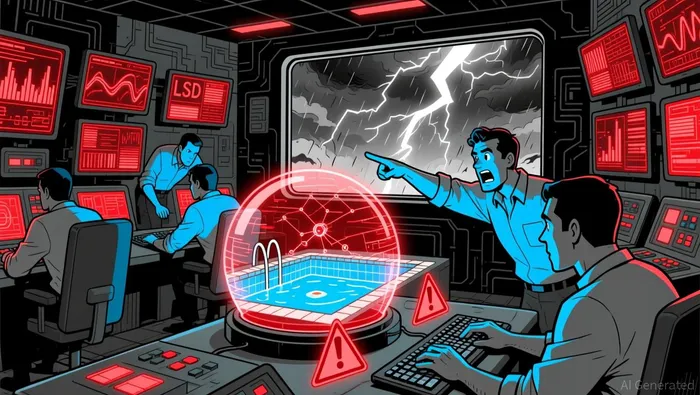
The "liquidity reset" mirrors historical patterns observed at the onset of new liquidity cycles, with analysts projecting potential recovery by early 2026. However, the current environment underscores structural vulnerabilities: LSD liquidity pools remain stable on-chain, but execution issues during peak transaction periods-such as routing and front-end availability problems- highlight localized disruptions. These challenges are not systemic but expose the fragility of execution-layer infrastructure in high-velocity trading environments.
Infrastructure Fragility: Case Studies of Systemic Risk
Solana's DEX infrastructure has been tested by a series of high-profile incidents between 2023 and 2025, revealing persistent vulnerabilities. The Wormhole Bridge Hack in February 2022, which drained $320 million in cross-chain liquidity, and the Mango Markets exploit in October 2022, which siphoned $110 million via price oracle manipulation, exemplify the risks of centralized dependencies and flawed validation protocols. Similarly, the OptiFi incident in July 2022- where a self-inflicted program closure locked $661,000 in USDC-demonstrates operational risks inherent in complex DeFi systems.
Beyond application-layer exploits, infrastructure fragility has emerged from supply chain compromises. For instance, tampered libraries like and breached wallets like Slope have introduced systemic risks. These incidents underscore a critical lesson: even the most efficient blockchains are vulnerable when third-party dependencies are compromised.
Front-End Volatility: Centralized Dependencies and Smart Contract Risks
The November 2025 Cloudflare outage exposed a critical weakness in Solana's DeFi ecosystem: reliance on centralized infrastructure for front-end services. The outage, triggered by a database permissions change, disrupted major protocols like Jupiter and RaydiumRAY--, rendering LSD liquidity pools inaccessible for hours. While the SolanaSOL-- blockchain itself remained functional, users were unable to interact with DEX interfaces, highlighting how centralized execution layers can create single points of failure.
Smart contract vulnerabilities further amplify front-end risks. The BunniDEX exploit in September 2025, which exploited a rounding error in withdrawal logic to drain liquidity pools, illustrates how even well-audited protocols can fail under high-stress conditions. These incidents reinforce the need for decentralized RPC endpoints, formal verification of smart contracts, and multi-provider execution frameworks.
Implications for Investors and Liquidity Providers
For token investors and LPs, Solana's LSD and DEX ecosystem presents both opportunities and risks. Institutional adoption-evidenced by partnerships with J.P. Morgan, State Street, and Paxos-signals long-term potential. However, liquidity concentration in a few dominant protocols (e.g., JupiterJUP--, Kamino Finance) and speculative markets (e.g., creator coins) heighten exposure to volatility and systemic shocks.
Investors should prioritize protocols with robust risk management frameworks, such as Kamino Finance's programmatic liquidity automation, and avoid overexposure to LSDs with thin order books. LPs, meanwhile, must balance yield opportunities with the risks of liquidity resets and front-end outages. Diversifying across LSDs and leveraging institutional-grade tools for real-time monitoring can mitigate these risks.
Conclusion
Solana's high-throughput architecture and institutional adoption position it as a leader in DeFi, but the recent liquidity reset and infrastructure fragility underscore the need for caution. As the ecosystem matures, stakeholders must address centralized dependencies, enhance smart contract security, and adopt resilient execution frameworks. For investors, the key lies in balancing innovation with risk management-a lesson that will define Solana's trajectory in the coming years.






Comentarios
Aún no hay comentarios