
LQD vs VCLT: Navigating Risk, Yield, and Diversification in Corporate Bond ETFs
In the evolving landscape of fixed-income investing, corporate bond ETFs have emerged as critical tools for balancing income generation with risk management. Two of the most prominent options-iShares iBoxx Investment Grade Corporate Bond ETF (LQD) and Vanguard Long-Term Corporate Bond ETF (VCLT)-offer distinct approaches to achieving these goals. As of November 2025, investors face a pivotal choice: prioritize cost-conscious income with VCLTVCLT-- or opt for broad-based risk mitigation with LQDLQD--. This analysis delves into the nuances of their expense ratios, yield profiles, diversification strategies, and risk metrics to guide capital allocation decisions.
Cost Efficiency and Yield: The VCLT Advantage
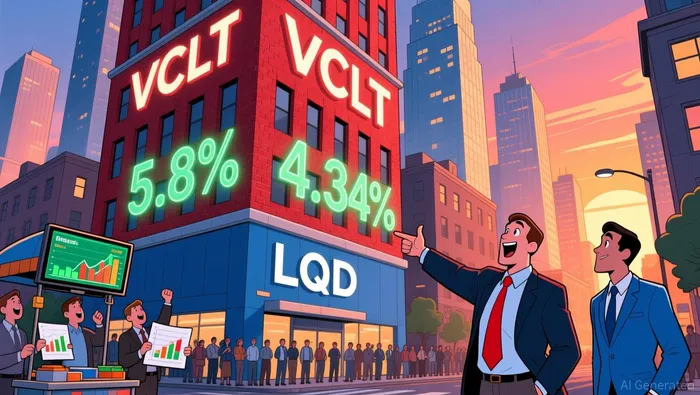
VCLT, with an expense ratio of 0.03%, stands out as a cost-efficient option for income-focused investors, significantly undercutting LQD's 0.14% fee structure. This 0.11% differential may seem modest but compounds meaningfully over time, particularly in a high-yield environment. According to data from Vanguard, VCLT's 30-day SEC yield of 5.8% as of November 2025 further amplifies its appeal for those seeking to maximize returns. By contrast, LQD offers a more modest 4.34% yield according to the report, reflecting its broader exposure to a mix of maturities and sectors.
However, VCLT's higher yield comes with caveats. Its focus on long-term corporate bonds (maturities exceeding 10 years) exposes it to greater interest rate risk. In a rising rate environment, the fund's duration-currently among the longest in its category-could lead to sharper price declines. For investors prioritizing income, this trade-off between yield and rate sensitivity demands careful consideration.
Diversification: LQD's Broad-Based Stability
LQD's strategy of holding over 3,000 investment-grade corporate bonds provides a level of diversification that VCLT, with its narrower focus on long-term debt, cannot match. This breadth reduces idiosyncratic risk, as no single issuer or sector dominates the portfolio. As noted in a 2025 analysis by Portfolioslab, LQD's structure offers "moderate volatility and liquidity," making it a core holding for risk-averse investors.
VCLT, while still diversified, concentrates on longer-dated bonds, which inherently carry higher duration risk. Its beta of 2.06-compared to LQD's 1.42-underscores its heightened sensitivity to market movements. For investors seeking stability, LQD's balanced maturity profile and sector exposure provide a buffer against the sharp price swings that characterize VCLT.
Risk Metrics: The Drawdown Dilemma
The divergent risk profiles of LQD and VCLT become starkly apparent when examining historical drawdowns. Over the past five years, VCLT has experienced a maximum drawdown of -34.31%, compared to LQD's -24.95%. This 9.36 percentage point gap highlights VCLT's vulnerability to rate hikes and credit stress, particularly in its long-end holdings.
Such volatility is a function of duration, not credit quality. Both funds maintain similar exposure to investment-grade bonds, but VCLT's longer maturities amplify its interest rate risk. For investors with shorter time horizons or lower risk tolerance, LQD's more moderate drawdowns and liquidity make it a compelling alternative.
Strategic Implications for 2025 and Beyond
The choice between LQD and VCLT hinges on an investor's priorities. VCLT excels for cost-conscious income seekers willing to tolerate higher volatility in exchange for a 5.38% yield and minimal fees. Its performance, however, remains contingent on a stable or declining rate environment. Conversely, LQD's broader diversification and moderate risk profile make it ideal for those prioritizing capital preservation and consistent returns, even if it means accepting lower yields and higher expenses.
In a macroeconomic climate marked by persistent inflation and central bank uncertainty, the latter strategy may prove more resilient. As noted by Bloomberg analysts, "the trade-off between yield and duration risk has never been more critical for fixed-income allocators." Investors must weigh these factors against their liquidity needs and risk appetite.
Conclusion
Corporate bond ETFs like LQD and VCLT offer distinct pathways to achieving income and risk management objectives. VCLT's low-cost, high-yield model appeals to those prioritizing returns, while LQD's diversified, moderate-risk approach suits investors seeking stability. As 2025 unfolds, the interplay between interest rates and credit markets will likely dictate which strategy outperforms. For now, a nuanced understanding of these funds' structural differences remains essential for informed decision-making.







Comentarios
Aún no hay comentarios