
Lotus Creek Exploration: A Catalyst-Driven Play on Oil's Next Growth Phase
The energy sector’s next breakout story is unfolding in Alberta, where Lotus Creek Exploration Inc. has positioned itself as a high-potential, low-debt exploration and production (E&P) player. The company’s Q1 2025 results, anchored by the transformative Gear Energy acquisition and progress in its Tucker LakeLAKE-- and Belly River projects, reveal a clear path to outsized returns. With production ramp-up underway and a capital-efficient strategy to exploit high-margin light oil and natural gas liquids (NGLs), Lotus Creek is primed to capitalize on stabilizing oil markets—and investors should act now to secure a stake in this growth story.
The Gear Energy Acquisition: A Game-Changer in Asset Quality and Scale
The February 2025 acquisition of Gear Energy’s producing and exploratory assets marked a strategic inflection point for Lotus Creek. The deal injected $76 million in proved developed producing (PDP) reserves (post-tax NPV-10) and a robust 6.5-year reserve life index (RLI) into the company’s portfolio, establishing a foundation of high-quality, cash-generative assets.
Key highlights of the acquisition:
- Light oil dominance: 945 bbl/d of light oil production in Q1, which commands premium pricing and narrow differentials.
- NGL upside: 252 bbl/d of NGLs, a valuable byproduct in a world hungry for petrochemical feedstocks.
- Working capital boost: $21.5 million in liquidity at close, complementing Lotus Creek’s existing $12.2 million working capital surplus and undrawn $35 million credit facility.
The acquisition also secured 55,000 net acres in Tucker Lake, Alberta—a region with multi-stage drilling potential across six prospective oil zones. This acreage, paired with the Gear Energy assets in Central Alberta and Southeast Saskatchewan, positions Lotus Creek as an oil-weighted, growth-oriented E&P company with a clear path to scale.
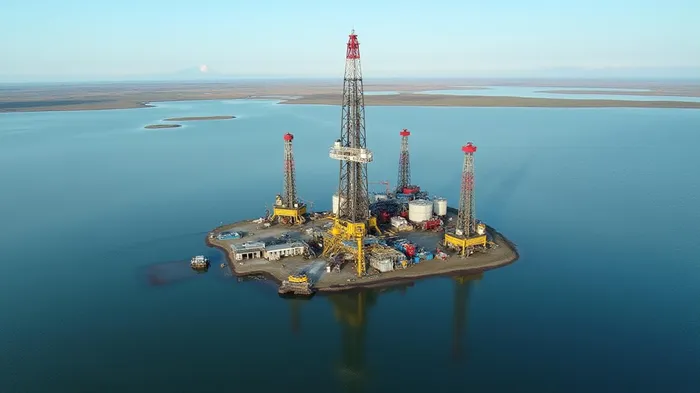
Tucker Lake: The Next Frontier for Organic Growth
Tucker Lake is the crown jewel of Lotus Creek’s exploration portfolio. In Q1, the company:
- Drilled its first heavy oil well in Tucker Lake’s exploratory acreage.
- Restarted two acquired heavy oil wells to recover load fluid, with plans to re-enter full production after securing Alberta Energy Regulator (AER) approval for a facility license—expected by Q2 2025.
The region’s Mannville formation hosts multi-lateral drilling opportunities, with six stacked oil zones capable of supporting 30+ future development locations. Once operational, Tucker Lake could add 2,000–2,400 boe/d to Lotus Creek’s production base by year-end—a critical driver for 88% annualized production growth.
Belly River Drilling Program: A Near-Term Catalyst for Production Surge
While Tucker Lake represents long-term potential, the Belly River drilling program in Central Alberta is a 2025 growth engine. Plans include:
- Drilling four Belly River horizontal light oil wells in Q3, targeting first production by late 2025.
- Leveraging six prospective zones to build a 30-location inventory with multi-stage completions.
Light oil from Belly River commands $27.41/boe in operating netbacks, and the program’s success could push Q4 2025 production to 3,000–3,400 boe/d—a 100% increase from Q1 levels.
Financial Fortitude: Liquidity and Capital Allocation Precision
Lotus Creek’s financial strength is its moat in volatile markets. The company enters 2025 with:
- A $12.2 million working capital surplus and $35 million undrawn credit facility.
- A $43 million capital budget focused on high-return projects:
- $23M: Drilling in Belly River and Tucker Lake.
- $15M: Seismic programs and facility upgrades.
- $3M: Abandonment and reclamation (meeting regulatory obligations while preserving future drilling rights).
With no debt and a capital budget fully funded by cash and credit, Lotus Creek is insulated from the financing challenges plaguing many peers. Its adjusted funds from operations (FFO) of $1.6M in Q1—despite a 55-day operating period—signals the resilience of its asset base.
Risks and Mitigation: Navigating Volatility with Flexibility
No energy investment is risk-free, but Lotus Creek’s strategy mitigates key concerns:
- Commodity price volatility: Light oil and NGLs offer premium pricing, reducing reliance on crude oil benchmarks.
- Regulatory delays: The AER’s Q2 Tucker Lake approval is a near-term binary event—once secured, production can ramp immediately.
- Execution risk: The company’s 44-square-mile 3D seismic survey in Central Alberta provides data to de-risk drilling decisions.
Why Act Now?
The catalyst timeline is clear:
- Q2 2025: AER approval unlocks Tucker Lake’s multi-zone potential.
- Q3 2025: Belly River drilling begins, with production expected by late 2025.
- Q4 2025: Production targets of 3,000–3,400 boe/d will redefine Lotus Creek’s valuation.
Investors who act now gain exposure to a capital-light, high-margin E&P company with:
- A $76 million PDP reserve base to underpin cash flow.
- Scalable light oil/NGL assets in one of North America’s most prolific basins.
- A management team executing a 100% organic growth strategy with no distracting acquisitions.
Conclusion: A Rare Combination of Catalysts and Value
Lotus Creek Exploration is a rare find in today’s energy landscape: a low-debt, high-margin producer with near-term catalysts (AER approval, Belly River drilling) and long-term exploration upside (Tucker Lake’s 30+ locations). With production set to surge in the second half of 2025 and a balance sheet that can weather commodity swings, this is a buy-the-dip opportunity in a sector poised for recovery.
The time to act is now—before the market catches on to this under-the-radar growth story.
Risk Disclosure: Energy investments carry risks, including commodity price volatility and regulatory changes. Investors should conduct their own due diligence.







Comentarios
Aún no hay comentarios