
The Looming Impact of Q3 GDP Data on 2026 Fed Rate Cut Expectations
The U.S. economy's third-quarter performance, delayed by a historic 43-day federal government shutdown, will be released on December 23, 2025, as an "initial estimate" from the Bureau of Economic Analysis (BEA) according to the BEA. This data, long anticipated to confirm a 3.2% annualized growth rate driven by resilient consumer spending and trade dynamics according to market analysis, will serve as a pivotal barometer for the Federal Reserve's policy trajectory in early 2026. With the Fed having already cut rates by 25 basis points in October 2025, the Q3 GDP report will determine whether the central bank adopts a cautious pause or accelerates its easing cycle. For investors, this moment also intersects with the Santa Claus rally-a seasonal phenomenon historically tied to rate-cut expectations and sector-specific momentum.
The Q3 GDP: A Policy Crossroads
The delayed release of Q3 GDP data has created a vacuum in market intelligence, forcing analysts to rely on nowcasting models like the Atlanta Fed's GDPNow, which projects growth between 3.1% and 3.5%. A reading above 3.0% would reinforce the argument that the "neutral rate" of interest is higher than previously estimated, potentially solidifying the Fed's decision to hold rates steady in early 2026. Conversely, a weaker print-particularly if driven by trade distortions or a slowdown in consumer spending-could reignite fears of a "hard landing" and prompt more aggressive rate cuts.
The quality of growth, not just its magnitude, will matter. 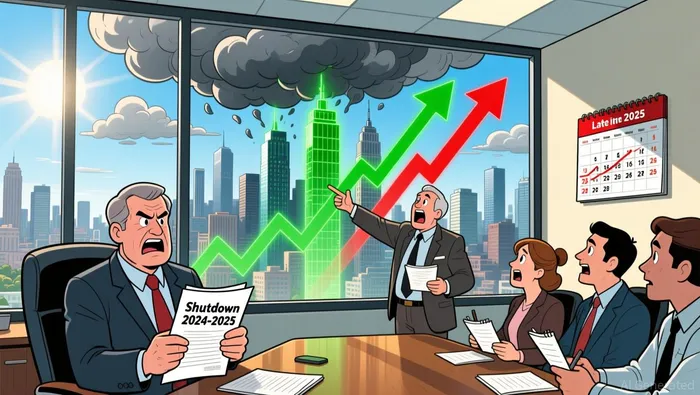 If consumer spending, which accounts for roughly two-thirds of U.S. GDP, continues to outperform expectations despite rising unemployment, it would signal durable domestic demand. This would likely justify the Fed's current target rate range of 3.5% to 3.75% and support a gradual approach to easing according to economic forecasts. However, if the data reveals a reliance on temporary factors-such as reduced imports during the shutdown-investors may question the sustainability of the expansion, complicating the Fed's policy calculus.
The Santa Claus Rally: A Seasonal Barometer of Sentiment
The Santa Claus rally, typically observed in late December and early January, has already begun to manifest in 2025, with U.S. stock indices posting gains during the Thanksgiving trading week. This early optimism is fueled by evolving expectations for Fed policy. While concerns about delayed rate cuts initially caused volatility, recent signals-including the Fed's December 2025 rate cut and the CME FedWatch Tool's 26% probability of a January 2026 cut-have shifted investor sentiment toward risk-on positioning.
Historically, the Santa rally has averaged a 1.3% gain for the S&P 500 during the last five trading days of December and the first two of January. However, its strength is closely tied to broader economic conditions. For instance, in 2025, the rally's momentum has been bolstered by tame inflation, soft labor market data, and AI-driven productivity gains, which have underpinned corporate earnings. Sectors like consumer discretionary and retail-historically strong performers during the holiday period-have already seen gains of 1.9-2.1% according to market analysis, while banking and industrials have benefited from improved risk appetite.
Strategic Positioning: Balancing Growth and Diversification
For investors, the interplay between Q3 GDP data and Fed policy offers a framework for strategic positioning. If the December 23 GDP report confirms robust growth, the Fed's pause in rate cuts could extend into early 2026, favoring equities-particularly large-cap tech stocks and AI-driven industries. These sectors have already outperformed due to their exposure to productivity gains and passive investment flows. Conversely, a weaker GDP print might accelerate rate cuts, benefiting small-cap stocks and economically sensitive sectors like transportation, which have shown resilience in past easing cycles.
Asset allocation strategies should also account for macroeconomic uncertainty. Intermediate-maturity U.S. Treasurys and gold remain attractive for hedging against inflationary surprises or geopolitical risks according to investment analysis. Meanwhile, international developed markets-especially Europe-offer compelling valuations and fiscal stimulus-driven growth, making them a strategic complement to U.S. equities. Investors should also consider tactical shifts toward small-cap value and emerging markets if the Fed adopts a more aggressive easing stance, as these segments historically benefit from liquidity-driven rallies.
Conclusion
The Q3 GDP report, set to be released on December 23, will not only clarify the state of the U.S. economy but also shape the Fed's policy path for 2026. For investors, this data will serve as a critical signal for adjusting exposure to equities, fixed income, and international markets. A strong GDP print could cement the Fed's cautious stance, reinforcing the Santa Claus rally's momentum and favoring growth-oriented sectors. A weaker reading, however, might trigger a more aggressive easing cycle, creating opportunities in small-cap and cyclical stocks. In either scenario, a balanced, diversified approach-rooted in macroeconomic signals and sector-specific dynamics-will be essential for navigating the evolving landscape.







Comentarios
Aún no hay comentarios