
The Long-Term Value of Resilient Leadership in Business
In an era of market volatility, where global supply chains, geopolitical tensions, and technological disruptions create constant uncertainty, the value of resilient leadership has never been more critical. Investors seeking to navigate these challenges often look for companies with strong operational discipline, cultural cohesion, and visionary leadership. The story of Hyundai's founder, Chung Ju-Yung, offers a compelling blueprint. His principles of relentless execution, frugality, and trust in people not only transformed a postwar repair shop into a global industrial empire but also provide timeless lessons for modern investors.
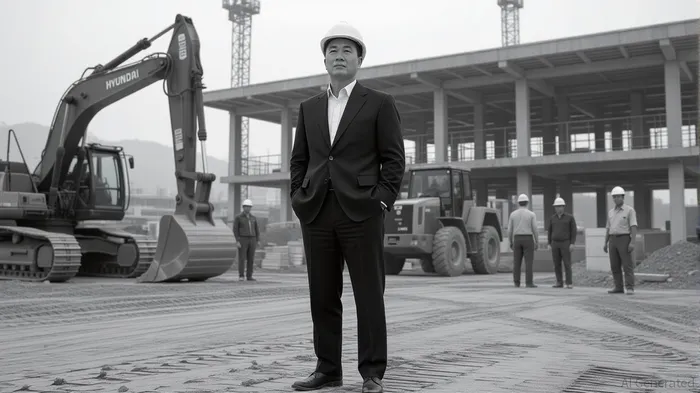
The Chung Ju-Yung Legacy: Building Resilience from Adversity
Chung Ju-Yung's journey began in 1915, in a rural Korean village where poverty and war were constants. By the time he founded Hyundai in 1947, he had already demonstrated a knack for turning hardship into opportunity. During the Korean War, he pivoted from rice trading to auto repair; during the 1997 Asian Financial Crisis, he prioritized cost discipline and innovation to keep the company afloat. His leadership philosophy was rooted in three pillars:
- Frugality as a Strategic Imperative: Chung enforced a culture of minimal waste. Employees reused paper, avoided unnecessary spending, and focused on maximizing output from every resource. This ethos became a lifeline during crises, enabling Hyundai to maintain profitability even as competitors faltered.
- Relentless Execution: Chung's mantra—“shortening the time”—emphasized speed and precision. He invested heavily in heavy machinery and standardized processes, allowing Hyundai to outpace rivals in construction and manufacturing. This operational rigor became a competitive edge during economic downturns.
- Trust in People: Chung treated employees as partners, not costs. He shared hardships with workers, provided free meals, and fostered a sense of collective purpose. This trust translated into loyalty and productivity, critical during periods of uncertainty.
Hyundai's resilience during the 1997 crisis is a case study in these principles. By cutting costs, accelerating projects, and retaining skilled workers, the company not only survived but emerged stronger, setting the stage for global expansion.
Modern Parallels: Frugality, Execution, and Trust in Action
The same principles that guided Hyundai can inform today's investment strategies. Consider Tesla (TSLA), which has mirrored Chung's emphasis on relentless execution. By vertically integrating production and leveraging software-driven efficiency, TeslaTSLA-- has scaled manufacturing while maintaining profitability. shows its meteoric rise, driven by operational discipline and innovation.
Toyota (TM), another company rooted in lean manufacturing, exemplifies frugality. Its “Toyota Production System” minimizes waste and maximizes efficiency, a philosophy that has allowed it to thrive in volatile markets. Similarly, Amazon (AMZN) has prioritized long-term R&D and customer trust, enabling it to dominate e-commerce and cloud computing.
The Investment Thesis: Culture as a Competitive Moat
For investors, the key is identifying companies where corporate culture—shaped by resilient leadership—acts as a competitive moat. Founders who have overcome adversity often instill operational discipline and a long-term mindset. Consider Verra Mobility Corporation (VRRM), a leader in smart mobility solutions. CEO Todd Pedersen's frugal background and focus on innovation have driven the company to outperform peers despite high debt. highlight its potential as a resilient play in the transportation sector.
Pfizer (PFE), too, demonstrates the power of trust and execution. CEO Albert Bourla's $43 billion acquisition of Seagen, a biotech firm, reflects a bold, long-term strategy to combat patent expirations. With a forward P/E of 8.7 and a pipeline of blockbuster drugs, Pfizer's resilience is a testament to leadership that balances risk and reward.
Lessons for Investors in Volatile Markets
- Prioritize Frugality: Look for companies with disciplined capital allocation and a focus on innovation over short-term cost-cutting.
- Value Relentless Execution: Favor firms that streamline operations, invest in technology, and deliver projects efficiently.
- Trust in Leadership: Seek out companies with founder-driven cultures that prioritize employee empowerment and long-term vision.
Hyundai's global expansion into hydrogen fuel cells and urban air mobility (UAM) underscores the importance of long-term bets. reveals a strategic alignment with future mobility trends.
Conclusion: Resilience as a Long-Term Edge
Chung Ju-Yung's legacy is a reminder that resilience is not just about surviving crises but about building institutions that thrive in them. For investors, this means looking beyond quarterly earnings to the cultural and operational DNA of a company. In volatile markets, the firms that endure—and outperform—are those led by leaders who embody frugality, execution, and trust. By investing in such companies, we don't just bet on profits; we bet on the enduring value of resilient leadership.







Comentarios
Aún no hay comentarios