
The Long-Term Impact of Demographic Shifts on Labor Market Dynamics and Investment Strategy: Unlocking Opportunities in Aging and Education-Driven Sectors
The Aging Population: A Catalyst for Labor Market Restructuring
The U.S. labor force is projected to shrink over the next decade due to population aging and declining net immigration, a trend that has already begun to constrain breakeven employment growth-the number of new jobs needed to maintain a stable unemployment rate. This demographic contraction is particularly pronounced among the U.S.-born workforce, which faces a dual challenge of aging and reduced workforce participation. By 2030, the ratio of nonworkers to workers is expected to rise significantly, placing upward pressure on healthcare and pension systems while creating a vacuum in sectors requiring physical labor.
However, this crisis also presents opportunities. The aging population is driving demand for innovations in musculoskeletal health, mobility solutions, and senior care. For instance, the Alliance for Innovation in Movement (AIM), a partnership between Hospital for Special Surgery and Deerfield Management, is developing AI-powered tools and novel medical devices to address mobility challenges-a market that could expand as 50% of American adults experience musculoskeletal conditions in their lifetimes. Similarly, the construction sector in the UAE is booming to accommodate aging populations, with government-led urbanization projects creating a pipeline of investment opportunities.
Education Trends: Reshaping Workforce Readiness and Sector Demand
Parallel to demographic shifts, education trends are redefining the skills required in the labor market. Higher education institutions are pivoting toward cost-effective, job-aligned credentials such as microdegrees and competency-based programs, reflecting a broader societal shift toward lifelong learning. States like Indiana and Utah have pioneered three-year degree models to accelerate workforce readiness, while AI-driven platforms are personalizing education to bridge skill gaps.
These changes are particularly relevant for an aging workforce. Platforms like GetSetUp are addressing the digital literacy needs of older adults, offering training in software tools, cybersecurity, and career development to facilitate re-entry into the labor market. Meanwhile, healthcare education is evolving to meet the demands of an aging population, with simulation-based learning and telemedicine training becoming standard in medical curricula.
Undervalued Sectors: Where Aging and Education Converge
The intersection of aging and education trends is unlocking investment opportunities in three key areas:
Healthcare Workforce Development: Entry-level and specialized training programs are addressing shortages in elder care, digital health, and behavioral health. Japan and South Korea's strategic frameworks for senior health investment highlight the potential for scalable models that combine government support with technological innovation.
Senior Housing and Aging-in-Place Technologies: As life expectancy rises, demand for assisted living facilities and smart home solutions is surging. Technologies such as telemedicine, home monitoring systems, and AI-driven health analytics are not only improving quality of life but also reducing healthcare costs for employers and insurers according to Morgan Stanley.
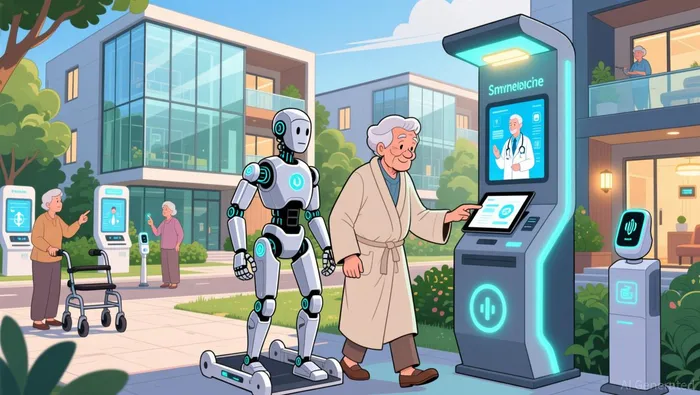
Robotics and AI in Elder Care: Emerging robotics firms in Asia, such as Shuanghuan (gears and reducers) and Hesai (laser sensors), are supplying foundational technologies for elder care applications. These companies, though not yet focused on senior assistance, represent untapped potential as their innovations are adapted for mobility aids and health monitoring according to Bernstein.
Strategic Implications for Investors
The aging population and education-driven labor trends are not transient phenomena but long-term structural shifts. Investors should prioritize sectors that address both the supply and demand sides of this equation:
- Healthcare Education Platforms: Companies offering AI-enhanced training for elder care professionals or digital literacy programs for older workers.
- Senior Housing Developers: Firms building mixed-use communities with integrated healthcare services.
- Robotics and AI Foundational Tech: Suppliers of components for elder care robotics, such as sensors and actuators.
While these sectors may appear undervalued today, their alignment with demographic inevitabilities suggests strong growth potential. As the OECD notes, the key to success lies in balancing technological innovation with equitable access-a challenge that will define the next decade of labor market evolution.
Conclusion
Demographic shifts are rewriting the rules of labor market dynamics, creating both challenges and opportunities. For investors, the path forward lies in sectors that address the needs of an aging population while leveraging education trends to enhance workforce readiness. By focusing on healthcare innovation, senior housing, and robotics, investors can position themselves to capitalize on the structural forces reshaping the global economy.







Comentarios
Aún no hay comentarios