
Long-Term Crypto Investment: XRP vs. World Liberty Financial – Assessing Sustainability, Regulatory Resilience, and Market Adoption
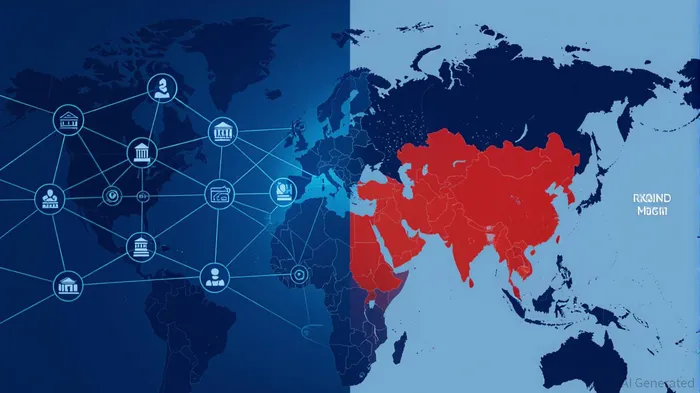
The Case for XRP: A Blockchain-Driven Cross-Border Solution
XRP, the native token of Ripple's Consensus Ledger (RCL), has positioned itself as a critical infrastructure for global financial institutionsFISI--. Its core utility lies in facilitating near-instant, low-cost cross-border payments, replacing the outdated Nostro system with a more efficient model. Ripple's “razor and blades” strategy—offering a free communication platform for banks while incentivizing XRPXRP-- usage for liquidity—has driven real-world adoption. By 2025, Ripple's partnerships with over 300 financial institutions and market makers suggest a maturing ecosystem, where XRP's role in arbitrage and liquidity provision reduces price volatility.
However, XRP's regulatory journey has been turbulent. The U.S. Securities and Exchange Commission's (SEC) ongoing legal battle with Ripple has cast uncertainty over its classification as a security. While Ripple has defended XRP's utility as a payment tool, the outcome of these proceedings will remain a critical factor in its long-term viability.
World Liberty Financial: Navigating a Geopolitical Minefield
World Liberty Financial's 2025 project, though less defined in public discourse, appears to leverage blockchain for cross-border transactions and asset management[3]. Its real-world utility, however, is constrained by the volatile geopolitical landscape. The U.S.-China trade war, with tariffs escalating to 104% on Chinese goods[3], has disrupted global supply chains and created regulatory ambiguity for digital asset initiatives. Similarly, conflicts in the Middle East and Europe have heightened economic instability, delaying the adoption of decentralized financial solutions.
Unlike XRP, which has a clear technological framework and institutional backing, World Liberty Financial's project fundamentals remain speculative. Its success hinges on navigating regulatory frameworks in a climate where trade policies are rapidly shifting. For instance, China's retaliatory 34% tariffs on U.S. goods[3] could deter cross-border collaborations, while European economic concerns may slow investment in blockchain infrastructure.
Comparative Analysis: Sustainability, Regulatory Resilience, and Market Adoption
Sustainability: XRP's sustainability is underpinned by its embedded utility in financial transactions. Ripple's focus on transaction volume over mere network growth ensures a steady demand for XRP. In contrast, World Liberty Financial's sustainability is contingent on resolving geopolitical tensions—a factor beyond its control.
Regulatory Resilience: XRP's regulatory challenges are well-documented, with the SEC's stance creating a binary outcome: either a favorable resolution that legitimizes XRP as a utility token or a restrictive framework that stifles adoption. World Liberty Financial, meanwhile, operates in a regulatory gray area, where trade policies and geopolitical conflicts act as unpredictable variables[3].
Market Adoption: Ripple's partnerships with banks and market makers have already driven XRP into mainstream financial systems. World Liberty Financial, by contrast, lacks comparable institutional traction, relying instead on hypothetical use cases that may struggle to gain momentum amid global uncertainty[3].
Conclusion: A Calculated Bet on XRP
For long-term investors, XRP's established utility and institutional partnerships present a more predictable trajectory despite regulatory headwinds. Its role in cross-border payments aligns with a growing demand for efficiency in global finance. World Liberty Financial, while ambitious, remains a high-risk proposition, dependent on resolving geopolitical tensions and securing regulatory clarity. As the crypto market matures, projects with tangible, real-world applications—like XRP—are likely to outperform those constrained by macroeconomic volatility.






Comentarios
Aún no hay comentarios