
Go Long on Japanese Rubber Futures: A Structural Bull Market is Brewing
The global rubber market is on the cusp of a historic shortage, driven by China's EV revolution, Thailand's supply chain fragility, and yen depreciation. For investors, this convergence creates a rare opportunity to establish long positions in Japanese rubber futures (OSE:RSS3) at critical price thresholds. Let's dissect the structural forces at play and why now is the time to act.
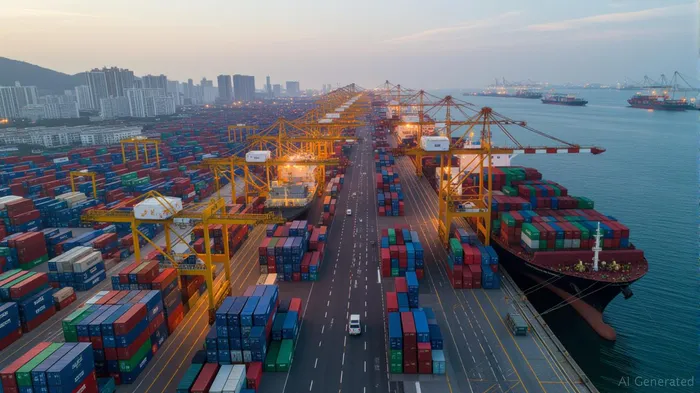
China's EV Boom: Tire Demand is Exploding
China's electric vehicle (EV) exports surged to 1.54 million units in Q1 2025, a 16% year-over-year jump, with EVs alone contributing +25% growth. This boom is directly fueling tire demand, as EVs require specialized low-rolling-resistance tires to maximize battery range.
Take BYD (002594.SZ), which exported 470,000 units in H1 2025, up 229.8% YoY. Each BYD EV requires 4–6 specialized tires, and manufacturers like Sailun Group are racing to meet this demand. Sailun's EV-specific tires now account for 6%–8% of global passenger tire sales, a segment they project to grow to 25%+ by 2030.
The math is clear: EVs consume 10–15% more natural rubber per tire than traditional vehicles due to thicker sidewalls and reinforced treads. With China's EV sales expected to hit 14 million units in 2025 (60% of domestic car sales), the rubber-intensive nature of this transition is undeniable.
Thailand's Supply Crisis: Aging Plantations and Weather Volatility
Thailand, the world's largest natural rubber producer (40% of global output), faces a perfect storm. Output has plummeted from 4.8 million tons in 2020 to 4.2 million tons in 2023, and 2025 production is projected to fall further due to:
1. Aging plantations: 50% of Thai rubber trees are over 25 years old, past peak productivity.
2. Labor shortages: Urban migration has reduced tapping labor by 30% since 2020.
3. Monsoon disruptions: Late May's monsoon rains delayed harvests, exacerbating supply bottlenecks.
The result? A projected global supply deficit of 1.5 million tons by end-2025, with China accounting for 40% of global demand. Thailand's inability to meet this demand will keep pressure on prices.
Qingdao Inventories at Multi-Year Lows: The Canary in the Coal Mine
Qingdao's bonded rubber inventories—a key gauge of Chinese supply health—have plummeted 28% since early 2025, dropping to 614,200 tons in May, the lowest level in five years. Even as global production edges higher (1.1% growth in 2024), seasonal demand spikes and export restrictions by Thailand are draining stockpiles.
The European Commission's investigation into Chinese tire anti-dumping measures adds another layer of uncertainty. If tariffs rise, manufacturers may stockpile rubber preemptively, further squeezing inventories.
Yen Depreciation: A Double-Edged Bullish Catalyst
Japanese rubber futures (OSE:RSS3) are priced in yen, which has weakened 15% against the dollar since early 2023 due to Bank of Japan's loose monetary policy. This creates a two-pronged tailwind:
1. Lower cost for foreign buyers: A weaker yen makes Japanese rubber cheaper in USD terms, attracting global buyers.
2. Higher import costs for Japan: Japanese tire makers (e.g., Bridgestone, Yokohama) face rising raw material costs, forcing price hikes that reinforce upward price momentum.
Investment Thesis: Time to Go Long on OSE:RSS3
Entry Point: Buy OSE:RSS3 contracts at ¥200/kg, with a target of ¥300/kg by year-end.
- Support Level: ¥180/kg (May 2023 low). A break below this signals overcorrection—reinforce positions.
- Resistance: ¥250/kg (May 2022 high). Breakouts here could trigger a rally to ¥300+/kg.
Hedging Strategy:
1. Leverage call options with strike prices at ¥220/kg to limit downside risk.
2. Short USD/JPY positions to profit from yen depreciation's compounding effect on futures prices.
Risks to the Thesis
- Global recession: Reduced EV demand could ease rubber prices.
- Synthetic rubber substitution: Advances in petrochemical alternatives might undercut natural rubber's dominance.
Mitigation: Diversify into CNOOC (00883.HK) or Sinopec (SHI) for exposure to synthetic rubber feedstocks.
Conclusion: The Rubber Band is About to Snap
The structural imbalance between EV-driven demand and Thailand's supply constraints, amplified by yen depreciation and Qingdao's inventory lows, is a recipe for a multi-year rubber bull market. Investors who establish long positions in OSE:RSS3 now will capture the upside of this critical commodity shortage. Act swiftly—this is a once-in-a-decade opportunity.







Comentarios
Aún no hay comentarios