
Logitech and McLaren: How a Motorsport Alliance is Paving the Future of Luxury Tech
The marriage of Logitech's gaming expertise and McLaren's racing pedigree is more than a marketing stunt—it's a strategic masterstroke in a world where luxury and tech are increasingly intertwined. As the partnership enters its next phase, investors should take note: this could be Logitech's ticket to dominating high-margin niches while shielding itself from price wars in commoditized markets.
The Synergy Play: Luxury Meets Performance
McLaren's brand equity—synonymous with Formula 1 precision, carbon-fiber craftsmanship, and $2 million supercars—provides LogitechLOGI-- with instant credibility in premium tech accessories. The RS Racing Line, engineered to McLaren's “rigorous standards,” targets not just gamers but enthusiasts willing to pay a premium for authenticity. Consider the RS Formula Wheel: priced at $700+, it's positioned as a tool for “sharpening real-world racing skills,” backed by McLaren driver Lando Norris' endorsement. This isn't just a peripheral; it's a gateway to the world of professional motorsport.
The reveals Logitech's relative stagnation in a crowded gaming hardware market. But with McLaren's halo effect, the company can now command premium margins previously elusive in its core business.
Why Luxury-Tech Fusion is the Next Gold Mine
The convergence of luxury and tech is no fad. Apple's $1,500 MacBooks, Porsche's Taycan tech suite, and even Gucci's AR shopping apps prove that affluent consumers crave exclusivity fused with cutting-edge functionality. Logitech's move mirrors this trend: McLaren's racing DNA transforms Logitech from a “gaming gear” brand into a purveyor of “performance technology.”
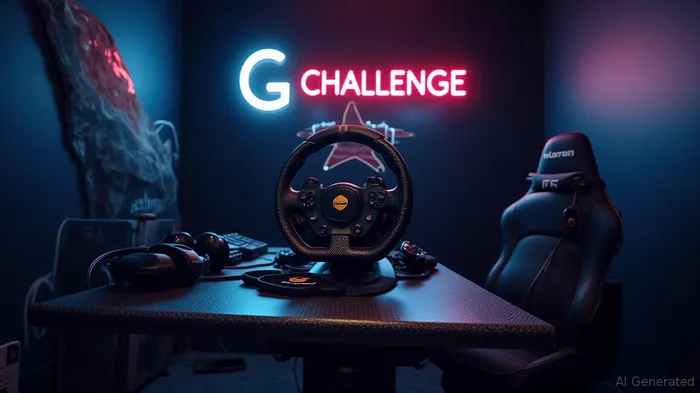
Take the partnership's focus on sim racing. While traditional gaming gear margins hover around 20-30%, products marketed as “telemetry-informed” or “F1-grade” could push this to 40%+—especially as the sim racing market balloons. The Logitech McLaren G Challenge, with its $100k+ annual prize pool and access to McLaren's Woking headquarters, isn't just a contest; it's a loyalty engine turning participants into lifelong brand advocates.
Risks? Yes. But the Upside Outweighs Them
Skeptics will cite risks: sim racing's niche appeal, brand dilution from associating with a luxury marque, or competition from automotive giants like Dallara (which partnered with AK Informatica to build sim rigs). Yet Logitech's strategy mitigates these:
- Niche ≠ Small: The global sim racing audience grew 28% in 2023 to 12 million users (Statista), and Logitech's G Challenge alone engages 200k+ annually.
- Brand Reinforcement, Not Dilution: McLaren's association elevates Logitech's image without compromising its core identity—the “G” brand remains intact, while McLaren's name acts as a seal of quality.
- Defensible IP: McLaren's engineering insights (e.g., force feedback mimicking track conditions) create barriers against copycats.
The shows Logitech's margins have flatlined, but its R&D investments in gaming peripherals (now 6% of revenue vs. 4% in 2019) suggest this is intentional preparation for premium launches.
A Compelling Mid-Term Investment Case
Logitech's valuation—trading at 14x forward earnings versus Razer's 23x—reflects skepticism about its ability to innovate. But this partnership could be the catalyst to re-rate the stock. Key near-term catalysts:
- 2024 G Challenge Launch: Expected to attract record participation, boosting brand visibility.
- RS Racing Line Rollout: 2025 product launches (e.g., force feedback advancements) could drive holiday sales.
- McLaren's Cross-Sport Reach: Tapping into Formula E and IndyCar fanbases opens new revenue streams.
For investors, this is a “play on convergence” trade. Buy Logitech at current levels, target a 12-18 month horizon, and set a price target based on a 17x P/E (aligning with luxury tech peers like Bose's historical multiples).
Final Verdict: A Winner's Circle Play
In a crowded tech space, Logitech's McLaren alliance isn't just about selling wheels—it's about owning the intersection of performance, exclusivity, and innovation. The risks are manageable, and the upside for high-margin growth is compelling. This isn't just a partnership; it's a blueprint for tech companies to tap into luxury markets without diluting their core identity. For investors, the checkered flag is in sight.





Comentarios
Aún no hay comentarios