
Logistic Properties of the Americas' Strategic Expansion via Acquisition: A Strategic Play in the U.S. Industrial Real Estate Boom
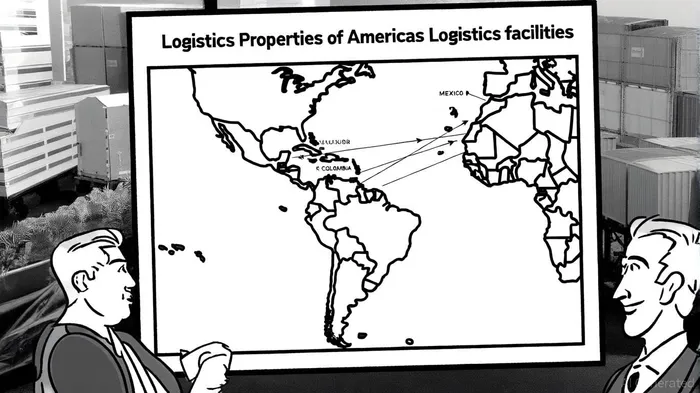
The industrial real estate market in the United States is undergoing a profound transformation, driven by nearshoring, supply chain resiliency, and the rise of third-party logistics (3PL) providers. Amid this shift, Logistic PropertiesLPA-- of the Americas (LPA) has positioned itself as a strategic player by expanding its footprint in Latin America—specifically in Mexico and Peru—through targeted acquisitions. These moves not only diversify LPA's portfolio but also align with the U.S. market's evolving demand for logistics infrastructure that supports cross-border trade and regional manufacturing.
Strategic Acquisitions in Mexico and Peru: A Nearshoring Catalyst
LPA's recent acquisition of a 257,700-square-foot logistics facility in Puebla, Mexico, marks its first foray into the Mexican market and underscores its commitment to capitalizing on nearshoring trends. The property, located near Volkswagen's largest manufacturing plant outside Germany, is leased to DHL and projected to generate $1.6 million in annual net operating income [1]. This acquisition is emblematic of LPA's focus on mission-critical assets in high-growth corridors. Mexico's role as the U.S.'s top trading partner—surpassing China—has intensified demand for logistics infrastructure near the border and along key highways like I-35, where companies seek to mitigate risks from tariffs and geopolitical uncertainties [2].
Similarly, LPA's development of a 215,300-square-foot facility in Peru's Parque Logístico Callao highlights its strategy to tap into Latin America's growing e-commerce and manufacturing sectors. Peru's port, a critical gateway for U.S. and Asian trade, is experiencing increased cargo volumes as companies diversify supply chains away from traditional Asian hubs [3]. By securing assets in such strategic locations, LPA is not only enhancing its regional presence but also creating a bridge between Latin American production and U.S. consumption.
Aligning with U.S. Market Dynamics: 3PL Growth and Supply Chain Redundancy
The U.S. industrial real estate market in 2025 is characterized by a “flight to quality,” with occupiers prioritizing modern facilities equipped for automation and advanced logistics. According to CBRE, 3PL providers now account for 35% of industrial leasing activity, driven by their ability to offer flexible, scalable solutions in an era of trade volatility [4]. LPA's assets, particularly those with long-term leases to global logistics leaders like DHL, are well-positioned to benefit from this trend.
Moreover, the U.S. market's current cooldown—marked by rising vacancy rates (7.4% as of Q2 2025) and slowing rent growth—has created opportunities for firms with high-quality, mission-critical assets. While speculative construction has outpaced demand, LPA's focus on logistics hubs near manufacturing centers (e.g., Puebla) and trade corridors (e.g., Callao) insulates it from the broader market softness. These assets cater to industries like automotive and electronics, which require reliable infrastructure to support just-in-time production and cross-border distribution [5].
Financial and Market Implications: Stability and Long-Term Value
LPA's strategic acquisitions are not just geographically prudent but also financially robust. The Puebla facility, for instance, is expected to generate stable cash flows through its anchor tenant, DHL, while its location near Volkswagen's plant ensures alignment with Mexico's $300 billion automotive export industry [1]. Meanwhile, LPA's inclusion in the Russell 3000 and Russell Microcap Indexes in June 2025 has enhanced its visibility among institutional investors, potentially unlocking new capital for further expansion [6].
However, challenges persist. The U.S. industrial market's oversupply of speculative space has led to weaker rent growth (1.6% year-over-year), and trade uncertainties—such as U.S.-China tariff disputes—could dampen demand in certain sectors [7]. Yet, LPA's emphasis on nearshoring-aligned assets and its partnerships with local developers (e.g., Alas in Mexico) provide a buffer against these headwinds.
Conclusion: A Long-Term Play in a Resilient Sector
Logistic Properties of the Americas is leveraging Latin America's strategic role in the U.S. supply chain to build a portfolio of assets that align with enduring trends: nearshoring, supply chain redundancy, and the rise of 3PLs. While the U.S. industrial market faces short-term headwinds, LPA's focus on high-demand corridors and mission-critical infrastructure positions it to outperform in a landscape where quality and location trump quantity. For investors, this represents a compelling opportunity to capitalize on the next phase of the industrial real estate boom—one that is as much about global connectivity as it is about bricks and mortar.





Comentarios
Aún no hay comentarios