
Why Locking in High CD Rates Now Could Outperform Future Alternatives in 2026
The Federal Reserve's ongoing rate-cutting cycle has created a pivotal moment for savers and investors. With Certificate of Deposit (CD) rates peaking in 2025 and projected to decline in 2026, the strategic case for locking in high rates now is compelling. This analysis examines the interplay of macroeconomic trends, institutional behavior, and risk management to argue that securing current CD rates offers a superior risk-adjusted return compared to waiting for potentially softer conditions next year.
A Declining Rate Environment: The Fed's Shadow
The trajectory of CD rates is inextricably linked to the Federal Reserve's policy decisions. As of early 2026, the highest one-year CD rates have already dipped to 3.5% annual percentage yield (APY), down from 2025's peaks according to Bankrate. Five-year CDs, meanwhile, face a steeper decline, with projections of 3.8% APY in 2026-a half-percentage-point drop from 2025 levels according to Bankrate. These trends align with the Fed's expected rate-cutting path, which has already begun to erode the high yields that characterized the previous year.
The urgency to act is further underscored by the sheer volume of maturing CDs. In 2026, an estimated $1.6 trillion in CDs will roll over, with the first quarter alone expected to see a peak in redemptions as older, higher-rate instruments expire. This creates a window where savers can lock in current rates before the broader market adjusts to a lower-yield environment.
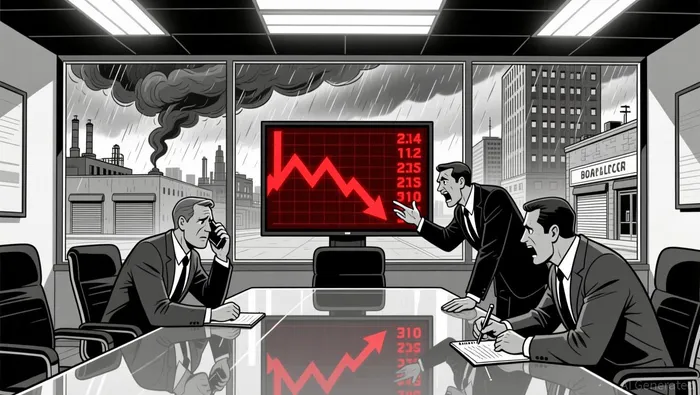
Expert Projections: A Cautious Outlook
While some experts caution against over-optimism, the consensus leans toward a softening rate landscape. Bankrate's Ted Rossman notes that 2026's best one-year CD rates are likely to hover around 3.5% APY, a figure that reflects the Fed's influence according to Bankrate. Derik Farrar of U.S. Bank adds nuance, emphasizing that rates could remain stable if the next Fed Chair signals a lack of urgency for cuts according to CBS News. However, this scenario hinges on assumptions about inflation and economic growth-variables that remain volatile.
Conversely, Neil Stanley of The CorePoint highlights a counterpoint: if inflation persists or growth accelerates, the Fed might delay cuts, allowing banks to offer more competitive rates according to CBS News. Yet, such outcomes are speculative. Miron Lulic of SuperMoney offers a middle-ground view, predicting "mostly flat to slightly lower" rates in 2026 unless inflation intensifies according to CBS News. Given this uncertainty, the risk of waiting is asymmetric-rates could fall further, but the upside of waiting is limited by the Fed's current trajectory.
Strategic Timing: The Case for Locking In
The decision to lock in rates now hinges on strategic timing. Current CD rates, particularly for longer terms, remain elevated by historical standards. For instance, in January 2026, some institutions offered one-year CDs at 4.20% APY according to Bankrate, a level that could become rare as the year progresses. By securing these rates, investors hedge against the Fed's expected cuts and avoid the risk of reinvesting in a lower-yield environment.
This strategy is particularly potent for risk-averse investors. CDs are FDIC-insured up to $250,000, making them a low-risk vehicle for capital preservation. In contrast, high-yield savings accounts-often cited as alternatives-offer liquidity but expose savers to rate volatility. If rates decline, the returns on these accounts will lag behind locked-in CDs.
Risk Mitigation in a Softening Environment
The broader economic context reinforces the case for locking in rates. A softening rate environment typically reduces the bargaining power of savers, as banks face less pressure to compete for deposits. While mid-sized and online banks may offer targeted promotions to attract liquidity according to CBS News, these efforts are unlikely to offset the Fed's downward pressure on rates.
Moreover, the psychological bias toward waiting-rooted in the hope of securing even higher rates-can be costly. Historical data shows that rate peaks are often followed by rapid declines, leaving savers with suboptimal returns if they delay. For example, the 2025 CD rate peaks may soon become relics, as 2026's projections suggest a clear downward trend.
Counterarguments and Considerations
Critics might argue that liquidity needs justify holding cash in more flexible accounts. However, for investors with a multi-year time horizon and no immediate need for funds, CDs offer a superior risk-return profile. Additionally, laddering strategies-spreading investments across CDs with staggered maturities-can balance flexibility with the benefits of locking in rates.
Another consideration is the potential for rate surprises. If inflation or economic growth surprises to the upside, the Fed could pause cuts, creating opportunities for higher rates later. Yet, this scenario requires assuming the Fed will reverse course-a gamble that may not align with current market expectations.
Conclusion
In a rate environment poised for decline, the strategic imperative to lock in high CD rates now is clear. The Fed's projected cuts, combined with the maturation of high-yield CDs, create a window of opportunity that may not persist into 2026. While uncertainty remains, the asymmetry of risk-lower rates are more certain than higher ones-favors decisive action. For savers prioritizing capital preservation and predictable returns, the case for locking in current rates is both logical and well-supported by expert analysis.







Comentarios
Aún no hay comentarios