
Lockheed Martin Unveils Vectis: Next-Generation CCA Drone for Enhanced Air Superiority
PorAinvest
lunes, 22 de septiembre de 2025, 3:38 pm ET2 min de lectura
LMT--
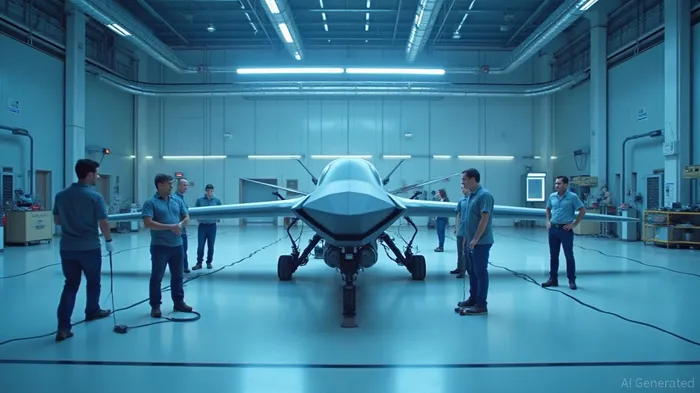
Vectis, a Group 5 uncrewed aerial system, is designed to operate alongside fifth-generation and next-generation aircraft, supporting the Pentagon's "Family of Systems" vision for future air dominance. The drone is capable of performing precision strike, intelligence, surveillance, and reconnaissance (ISR), electronic warfare, and counter-air missions, either independently or in conjunction with crewed aircraft such as the F-35.
The Vectis drone features stealth characteristics, extended range, and open mission architectures to meet requirements across various theaters, including the Indo-Pacific, European, and Central Command regions. Lockheed Martin has emphasized the use of advanced digital engineering and manufacturing techniques to produce the system at a cost point aligned with the CCA program.
Development of Vectis is well underway, with parts already ordered and assembly and testing teams executing their tasks. The company aims to design, build, and fly the drone within two years, aligning with the goal of delivering a competitive and affordable solution to military forces.
Vectis is designed to be highly adaptable to various operator requirements, whether in the United States or elsewhere around the world. The drone follows the Agile Drone Framework, prioritizing modularity and open mission systems, as well as interoperability in command and control architectures. The name "Vectis" is derived from Latin, meaning "lever or pole," reflecting the platform's ability to offer strategic leverage to military forces.
The Vectis drone is expected to provide U.S. and allied warfighters with range, endurance, and multi-mission flexibility, including air-to-air, air-to-surface, and ISR capabilities. While specific dimensions and performance details have not been disclosed, it is known that Vectis is smaller than a Lockheed Martin F-16 fighter but larger than one of the company's Common Multi-Mission Truck (CMMT) drones.
Lockheed Martin's Skunk Works division has a history of developing advanced uncrewed platforms, including the stealthy RQ 170 system. The development of Vectis is part of a broader effort to advance the capabilities of uncrewed aerial systems, leveraging the company's extensive experience in crewed-uncrewed teaming capabilities.
The Vectis drone is intended to be configurable for various missions, including air-to-ground and general ISR operations. It is designed to be rapidly upgradable and customizable to align with shifting threat environment priorities. The drone's signature and communications are compatible with fifth and next-generation aircraft, and it has been subjected to classified crewed-uncrewed teaming operations analysis, pairing it with F-22 and F-35 aircraft.
Lockheed Martin is already known for its work on the Multi Domain Combat System (MDCX), a software-based package being integrated into new drone control centers on American aircraft carriers. The company aims to leverage this experience to deliver a high level of autonomy and interoperability in the Vectis drone.
The introduction of Vectis represents a significant advancement in the field of uncrewed aerial systems, offering a highly adaptable, cost-effective, and stealthy solution to military forces worldwide. As development progresses, investors and financial professionals will be closely watching the company's ability to deliver on its promises of affordability and operational flexibility.
Lockheed Martin has unveiled Vectis, a next-generation CCA drone designed to enhance US and allied air superiority. Vectis is an agile, customizable, and affordable platform that incorporates stealth, autonomous systems, and open architectures. The system can perform various missions, including precision strikes, ISR, electronic warfare, and counter-air operations, with endurance suitable for multiple theaters. Development is underway, with a goal of design, production, and first flight within two years at a competitive cost.
Lockheed Martin has introduced Vectis, a next-generation Collaborative Combat Aircraft (CCA) designed to enhance U.S. and allied air superiority. The Vectis drone is a product of Lockheed Martin's Skunk Works division, aimed at delivering survivability, affordability, and mission flexibility to military forces worldwide.Vectis, a Group 5 uncrewed aerial system, is designed to operate alongside fifth-generation and next-generation aircraft, supporting the Pentagon's "Family of Systems" vision for future air dominance. The drone is capable of performing precision strike, intelligence, surveillance, and reconnaissance (ISR), electronic warfare, and counter-air missions, either independently or in conjunction with crewed aircraft such as the F-35.
The Vectis drone features stealth characteristics, extended range, and open mission architectures to meet requirements across various theaters, including the Indo-Pacific, European, and Central Command regions. Lockheed Martin has emphasized the use of advanced digital engineering and manufacturing techniques to produce the system at a cost point aligned with the CCA program.
Development of Vectis is well underway, with parts already ordered and assembly and testing teams executing their tasks. The company aims to design, build, and fly the drone within two years, aligning with the goal of delivering a competitive and affordable solution to military forces.
Vectis is designed to be highly adaptable to various operator requirements, whether in the United States or elsewhere around the world. The drone follows the Agile Drone Framework, prioritizing modularity and open mission systems, as well as interoperability in command and control architectures. The name "Vectis" is derived from Latin, meaning "lever or pole," reflecting the platform's ability to offer strategic leverage to military forces.
The Vectis drone is expected to provide U.S. and allied warfighters with range, endurance, and multi-mission flexibility, including air-to-air, air-to-surface, and ISR capabilities. While specific dimensions and performance details have not been disclosed, it is known that Vectis is smaller than a Lockheed Martin F-16 fighter but larger than one of the company's Common Multi-Mission Truck (CMMT) drones.
Lockheed Martin's Skunk Works division has a history of developing advanced uncrewed platforms, including the stealthy RQ 170 system. The development of Vectis is part of a broader effort to advance the capabilities of uncrewed aerial systems, leveraging the company's extensive experience in crewed-uncrewed teaming capabilities.
The Vectis drone is intended to be configurable for various missions, including air-to-ground and general ISR operations. It is designed to be rapidly upgradable and customizable to align with shifting threat environment priorities. The drone's signature and communications are compatible with fifth and next-generation aircraft, and it has been subjected to classified crewed-uncrewed teaming operations analysis, pairing it with F-22 and F-35 aircraft.
Lockheed Martin is already known for its work on the Multi Domain Combat System (MDCX), a software-based package being integrated into new drone control centers on American aircraft carriers. The company aims to leverage this experience to deliver a high level of autonomy and interoperability in the Vectis drone.
The introduction of Vectis represents a significant advancement in the field of uncrewed aerial systems, offering a highly adaptable, cost-effective, and stealthy solution to military forces worldwide. As development progresses, investors and financial professionals will be closely watching the company's ability to deliver on its promises of affordability and operational flexibility.


Divulgación editorial y transparencia de la IA: Ainvest News utiliza tecnología avanzada de Modelos de Lenguaje Largo (LLM) para sintetizar y analizar datos de mercado en tiempo real. Para garantizar los más altos estándares de integridad, cada artículo se somete a un riguroso proceso de verificación con participación humana.
Mientras la IA asiste en el procesamiento de datos y la redacción inicial, un miembro editorial profesional de Ainvest revisa, verifica y aprueba de forma independiente todo el contenido para garantizar su precisión y cumplimiento con los estándares editoriales de Ainvest Fintech Inc. Esta supervisión humana está diseñada para mitigar las alucinaciones de la IA y garantizar el contexto financiero.
Advertencia sobre inversiones: Este contenido se proporciona únicamente con fines informativos y no constituye asesoramiento profesional de inversión, legal o financiero. Los mercados conllevan riesgos inherentes. Se recomienda a los usuarios que realicen una investigación independiente o consulten a un asesor financiero certificado antes de tomar cualquier decisión. Ainvest Fintech Inc. se exime de toda responsabilidad por las acciones tomadas con base en esta información. ¿Encontró un error? Reportar un problema


SOBRE NOSOTROS
Nuestra historiaAutores de noticiasBase de conocimientosPolítica de privacidadTérmino de usoDescargo de responsabilidad de corretaje de tercerosTérminos de uso de AIMEDivulgaciones de riesgos de AInvest AICarrerasCONTÁCTENOS
Email: support@ainvest.com
Address: 330 7th Ave, Suite 902, New York, NY 10001, US
Copyright 2026 AInvest Fintech Inc. All rights reserved.


Comentarios
Aún no hay comentarios