
Localized Convenience Retail Chains: A Strategic Play in Emerging Markets
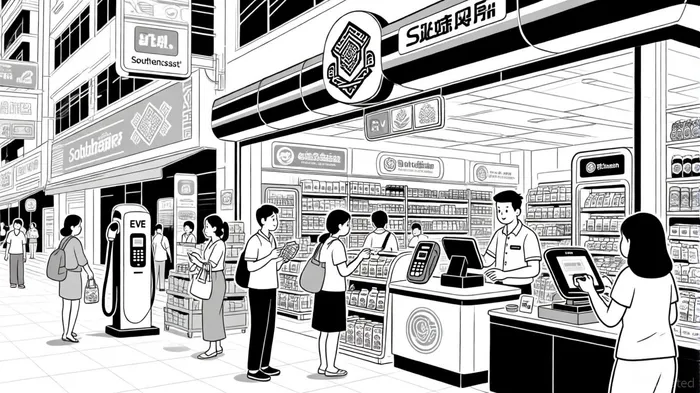
The global convenience retail sector is undergoing a seismic shift, with emerging markets emerging as both a battleground and a beacon for investors. As urbanization accelerates and consumer behaviors evolve, localized convenience chains are proving their mettle by adapting to hyper-specific cultural, economic, and technological landscapes. This article examines how these chains are scaling through strategic localization, financial resilience, and innovation—offering a compelling case for their inclusion in emerging market investment portfolios.
Localization as a Competitive Edge
The success of localized convenience chains hinges on their ability to mirror the rhythms of the communities they serve. For instance, CP All's 7-Eleven franchise in Thailand has expanded into Malaysia, Vietnam, and Cambodia by integrating e-commerce platforms and tailoring product assortments to regional diets[1]. Similarly, FEMSA's Oxxo in Latin America has diversified beyond snacks and beverages to include neighborhood pantries and convenience-plus-petrol stores in the U.S., leveraging fintech to offer banking services[1]. These strategies underscore a critical insight: convenience retail in emerging markets is not about generic solutions but about embedding oneself into the local ecosystem.
McDonald's and StarbucksSBUX-- provide instructive parallels. McDonald'sMCD-- offers grilled chicken burgers in China and vegetarian options in India, while Starbucks has introduced matcha-infused beverages in Japan and masala chai lattes in India[3]. These adaptations are not superficial; they reflect deep market research and a willingness to cede control of brand uniformity for long-term relevance. As NRF's 2024 report notes, such strategies are increasingly replicated by convenience chains, which face even steeper competition from informal retailers and hyperlocal brands[1].
Financial Resilience Amid Macroeconomic Headwinds
Emerging markets are no stranger to volatility, yet localized convenience chains have demonstrated remarkable financial resilience. CP All's Q2 2025 results highlight this: despite a decline in same-store sales, the company reported a 3.4% year-over-year revenue increase to 256,574 million baht, driven by cost optimization and digital initiatives[2]. Meanwhile, the global convenience store market is projected to grow from $883.39 billion in 2024 to $957.16 billion in 2025, with emerging markets accounting for a disproportionate share of this growth[3].
Profit margins in Southeast Asia, a key growth corridor, reveal a nuanced picture. Single-location convenience stores typically operate with 3-5% net profit margins, but high-traffic locations can push this to 10%[5]. Chains benefit further from economies of scale, with multi-unit operators improving margins by 2-4 percentage points through bulk purchasing and operational efficiencies[5]. This scalability is critical in markets where urban populations are expanding rapidly but disposable incomes remain fragmented.
Innovation as a Growth Multiplier
Technology is the linchpin of modern convenience retail. In China, unmanned stores like BingoBox use RFID tags and mobile apps to automate transactions, reducing labor costs while maintaining accessibility[2]. Meanwhile, the integration of EV charging stations is transforming convenience stores into energy hubs, a trend gaining traction in Germany and the Netherlands[1]. These innovations are not just cost-saving measures—they are revenue diversifiers in markets where consumer spending is increasingly tied to sustainability and digital convenience.
The 2024 State of Convenience report underscores another trend: prepared foods now account for 12.2% year-over-year sales growth, becoming the largest category in many stores[2]. This shift reflects a broader consumer demand for “ready-to-eat” solutions, particularly in urban areas where time poverty is acute. Chains that invest in in-store bakeries, coffee bars, or partnerships with food delivery platforms (e.g., 7-Eleven's 1,130 planned in-store restaurants by 2025) are capturing this demand[4].
Challenges and the Path Forward
Despite these successes, challenges persist. Trade tensions, inflation, and supply chain disruptions have forced chains to rethink sourcing strategies. For example, Alimentation Couche-Tard's acquisition of 1,600 TotalEnergies stores in Germany and the Netherlands was partly motivated by the need to secure stable supply chains amid geopolitical uncertainty[1]. Similarly, localized chains in India and Latin America are leveraging AI-driven inventory management to mitigate the impact of fluctuating input costs[3].
Investors must also weigh the risks of over-reliance on digital infrastructure. While mobile payments and loyalty programs drive engagement, they also expose chains to cybersecurity threats and regulatory scrutiny. However, the sector's adaptability—evidenced by the rapid adoption of contactless payments and blockchain-based supply chain tracking—suggests a capacity to navigate these challenges[3].
Conclusion: A High-Conviction Investment Thesis
Localized convenience retail chains in emerging markets represent a unique intersection of cultural agility, financial resilience, and technological innovation. With the Asia-Pacific convenience market projected to grow at a 7.85% CAGR to $531.72 billion by 2034[3], and Southeast Asia's e-commerce sector leaning heavily on convenience-driven fulfillment models[2], the sector offers both scale and specificity.
For investors, the key is to prioritize chains that:
1. Deeply localize their product and service offerings (e.g., CP All, Oxxo).
2. Leverage technology to enhance margins and customer retention (e.g., EV charging, AI inventory systems).
3. Diversify revenue streams through prepared foods, fintech, and energy services.
As the MSCI EM Index's 12% Q2 2025 return demonstrates[2], emerging markets are no longer a high-risk bet—they are a high-reward opportunity for those who understand the nuances of localization.





Comentarios
Aún no hay comentarios