
Localization as a Strategic Imperative in Asia's Tourism-Driven Hospitality Sector
Asia's hospitality sector is undergoing a transformative shift, driven by the region's rapid tourism recovery and the growing demand for culturally resonant experiences. For investors, the key to unlocking value lies in understanding how integrated localization strategies-spanning marketing, booking, payment, and guest experience-are redefining operational differentiation and revenue growth. According to Agoda's 2025 report, Tailored to Win: How Hotels Are Using Localization to Capture Asia's Tourism Boom, hotels that embed localization across all touchpoints achieve up to a 59% higher revenue per available room (RevPAR) compared to peers with less mature strategies. This performance gap underscores localization as a critical lever for pricing power, guest loyalty, and long-term competitiveness in Asia's dynamic market.
Operational Differentiation Through Integrated Localization
Localization in Asia's hospitality sector extends far beyond language translation. It encompasses a holistic adaptation of services to align with the cultural, behavioral, and linguistic expectations of key source markets such as China, Japan, and South Korea. For instance, hotels in Japan emphasize tranquility and design simplicity, offering tailored experiences like tea ceremonies and multilingual concierge services. In contrast, properties targeting Chinese travelers prioritize premium amenities and luxury services, while Thai hotels leverage traditional wellness and culinary programs to deepen cultural immersion according to Agoda's insights.
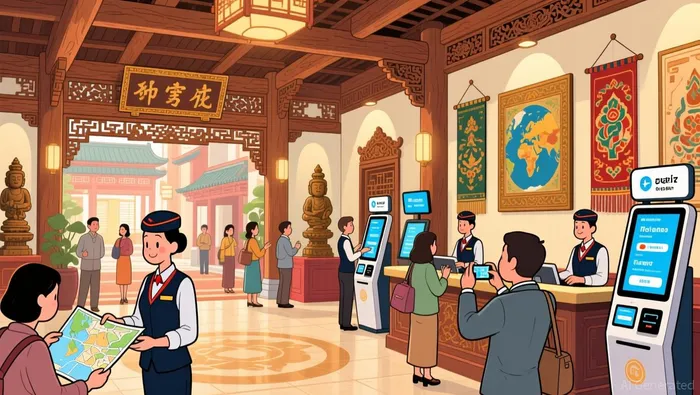 These strategies are amplified by partnerships with platforms like Agoda, which provide data-driven tools to optimize localization. By tailoring marketing content, booking interfaces, and payment systems to local preferences-such as displaying prices in native currencies and integrating region-specific payment methods-hotels create seamless, trust-building interactions according to a report. According to Agoda's insights, 60% of advanced hotels use local media channels and digital platforms to engage guests, ensuring messaging resonates with regional audiences. This operational agility not only differentiates brands but also fosters a sense of exclusivity that drives repeat bookings and word-of-mouth referrals.
Revenue Growth: RevPAR, Loyalty, and Pricing Power
The financial impact of localization is measurable and compelling. , , and 91% higher guest willingness to pay more per room according to a report. These metrics directly translate to stronger RevPAR and pricing power. For example, , a figure attributed to their ability to command premium rates for personalized services according to an analysis.
The correlation between localization maturity and financial performance is further validated by data from Asia's leading hospitality markets. In Japan, where precision personalization is a hallmark, , driven by guests' willingness to pay for immersive, culturally relevant experiences according to a report. Similarly, in Thailand, traditional wellness programs and locally curated dining options have become differentiators, enabling hotels to maintain high occupancy rates even during peak demand periods according to a report.
Investment Implications: Targeting Localization-Driven Assets
For investors, the case for targeting hotels and platforms that prioritize localization is clear. The data demonstrates that these assets are not only capturing market share but also building defensible moats through guest loyalty and pricing resilience. According to Agoda's Senior Vice President of Supply, Andrew Smith, "Localization is not a one-size-fits-all approach-it requires a holistic view of language, design, and marketing as interconnected elements of the guest journey." This insight positions hotels that invest in integrated localization as high-conviction opportunities, particularly in markets like Japan, Singapore, and Vietnam, where tourism growth is outpacing regional averages.
Moreover, platforms like Agoda, which enable data-driven localization through tools for multilingual content, regional payment integration, and market-specific analytics, are emerging as critical enablers of this trend. Their role in amplifying hotels' ability to adapt to diverse traveler preferences makes them attractive partners for investors seeking exposure to Asia's hospitality renaissance.
Conclusion
As Asia's tourism sector continues to expand, localization is evolving from a competitive advantage to a strategic imperative. Hotels that embed cultural tailoring into every stage of the guest journey-marketing, booking, payment, and on-site experiences-are outperforming peers by significant margins, with measurable gains in RevPAR, loyalty, and pricing power. For investors, the lesson is clear: prioritizing assets that leverage deep localization will be key to capitalizing on the region's hospitality boom. In a market where guest expectations are increasingly shaped by cultural relevance, the hotels and platforms that master this art will define the next era of growth.







Comentarios
Aún no hay comentarios