
LNG Traders: Opportunities Amidst China's Tariffs on US Exports
Generado por agente de IAWesley Park
martes, 4 de febrero de 2025, 5:53 pm ET2 min de lectura
LNG--
As the trade tensions between the United States and China escalate, the global Liquefied Natural Gas (LNG) market is experiencing significant disruptions. China's retaliatory tariffs on U.S. LNG exports, including a 15% levy on coal and liquefied natural gas products, have created a scramble to decouple the world's biggest buyer and seller of LNG. This article explores the opportunities that arise for LNG traders amidst these market dynamics.
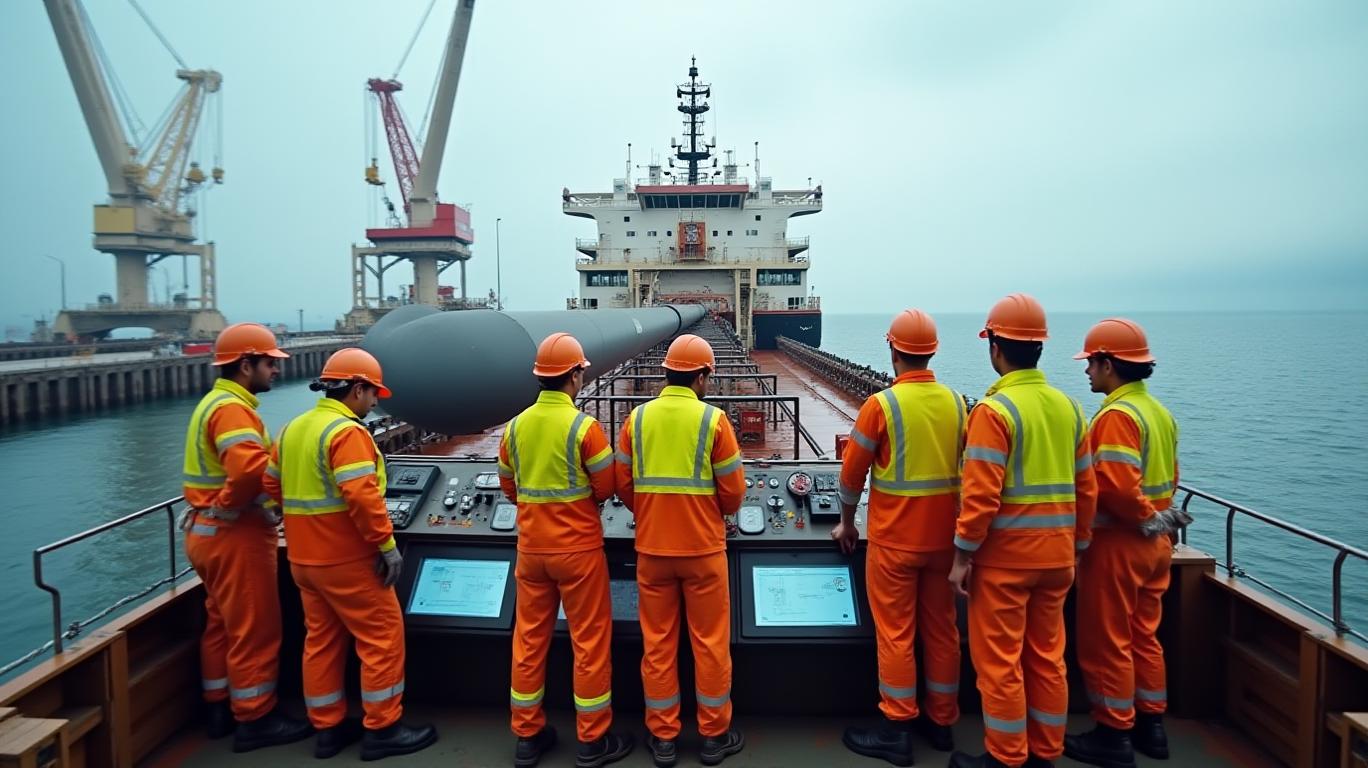
The 15% tariff on U.S. LNG exports to China, imposed by China in retaliation to U.S. tariffs on Chinese goods, will significantly impact the global LNG market dynamics. Here's how:
1. Disruption in Trade Flows: The tariff will likely push Chinese buyers holding long-term contracts with U.S. projects to resell their shipments to importers elsewhere, such as Europe or Asia. This disruption in trade flows may push prices higher everywhere on the margin (Kavonic, 2025).
2. Reduced Chinese Demand for U.S. LNG: The tariff will make U.S. LNG less competitive in the Chinese market, leading to a decrease in demand for U.S. LNG exports. This could result in a surplus of U.S. LNG supply, putting downward pressure on global LNG prices.
3. Opportunities for Traders: The tariff-induced market disruption creates opportunities for traders to profit from arbitrage opportunities. Traders can buy U.S. LNG at lower prices and sell it in other markets where prices are higher. For instance, traders can buy U.S. LNG and sell it to Europe, where prices are more attractive (CNN, 2025).
To capitalize on these disruptions and mitigate risks, LNG traders can employ the following strategies:
1. Arbitrage Opportunities: By taking advantage of price discrepancies between different markets, traders can buy LNG at lower prices in one market and sell it at higher prices in another, generating profits.
2. Long-term Contract Negotiations: Traders can negotiate new long-term contracts with proposed U.S. projects, locking in buyers before securing necessary financing to begin construction. This strategy can help mitigate risks associated with volatile short-term prices and supply disruptions.
3. Diversification of Supply: Traders can diversify their supply sources to reduce dependence on a single market or region. By sourcing LNG from multiple countries, traders can minimize the impact of trade tensions and tariffs on their business.
4. Portfolio Optimization: Traders can optimize their LNG portfolios by focusing on capital efficiency, supply-chain optimization, downstream market development, decarbonization, and digital and advanced analytics. This approach can help them become more resilient to market disruptions and find opportunities for faster growth.
5. Risk Management: Traders can employ advanced risk management techniques, such as hedging and derivatives, to protect their positions against price volatility and supply disruptions. By using financial instruments like swaps, options, and futures, traders can lock in prices and mitigate risks associated with market fluctuations.
In conclusion, the 15% tariff on U.S. LNG exports to China will disrupt trade flows, reduce Chinese demand for U.S. LNG, and create opportunities for traders to profit from arbitrage opportunities. By implementing the strategies outlined above, LNG traders can capitalize on the disruptions caused by U.S.-China trade tensions and mitigate risks associated with volatile markets and geopolitical uncertainties.
As the trade tensions between the United States and China escalate, the global Liquefied Natural Gas (LNG) market is experiencing significant disruptions. China's retaliatory tariffs on U.S. LNG exports, including a 15% levy on coal and liquefied natural gas products, have created a scramble to decouple the world's biggest buyer and seller of LNG. This article explores the opportunities that arise for LNG traders amidst these market dynamics.
The 15% tariff on U.S. LNG exports to China, imposed by China in retaliation to U.S. tariffs on Chinese goods, will significantly impact the global LNG market dynamics. Here's how:
1. Disruption in Trade Flows: The tariff will likely push Chinese buyers holding long-term contracts with U.S. projects to resell their shipments to importers elsewhere, such as Europe or Asia. This disruption in trade flows may push prices higher everywhere on the margin (Kavonic, 2025).
2. Reduced Chinese Demand for U.S. LNG: The tariff will make U.S. LNG less competitive in the Chinese market, leading to a decrease in demand for U.S. LNG exports. This could result in a surplus of U.S. LNG supply, putting downward pressure on global LNG prices.
3. Opportunities for Traders: The tariff-induced market disruption creates opportunities for traders to profit from arbitrage opportunities. Traders can buy U.S. LNG at lower prices and sell it in other markets where prices are higher. For instance, traders can buy U.S. LNG and sell it to Europe, where prices are more attractive (CNN, 2025).
To capitalize on these disruptions and mitigate risks, LNG traders can employ the following strategies:
1. Arbitrage Opportunities: By taking advantage of price discrepancies between different markets, traders can buy LNG at lower prices in one market and sell it at higher prices in another, generating profits.
2. Long-term Contract Negotiations: Traders can negotiate new long-term contracts with proposed U.S. projects, locking in buyers before securing necessary financing to begin construction. This strategy can help mitigate risks associated with volatile short-term prices and supply disruptions.
3. Diversification of Supply: Traders can diversify their supply sources to reduce dependence on a single market or region. By sourcing LNG from multiple countries, traders can minimize the impact of trade tensions and tariffs on their business.
4. Portfolio Optimization: Traders can optimize their LNG portfolios by focusing on capital efficiency, supply-chain optimization, downstream market development, decarbonization, and digital and advanced analytics. This approach can help them become more resilient to market disruptions and find opportunities for faster growth.
5. Risk Management: Traders can employ advanced risk management techniques, such as hedging and derivatives, to protect their positions against price volatility and supply disruptions. By using financial instruments like swaps, options, and futures, traders can lock in prices and mitigate risks associated with market fluctuations.
In conclusion, the 15% tariff on U.S. LNG exports to China will disrupt trade flows, reduce Chinese demand for U.S. LNG, and create opportunities for traders to profit from arbitrage opportunities. By implementing the strategies outlined above, LNG traders can capitalize on the disruptions caused by U.S.-China trade tensions and mitigate risks associated with volatile markets and geopolitical uncertainties.

Divulgación editorial y transparencia de la IA: Ainvest News utiliza tecnología avanzada de Modelos de Lenguaje Largo (LLM) para sintetizar y analizar datos de mercado en tiempo real. Para garantizar los más altos estándares de integridad, cada artículo se somete a un riguroso proceso de verificación con participación humana.
Mientras la IA asiste en el procesamiento de datos y la redacción inicial, un miembro editorial profesional de Ainvest revisa, verifica y aprueba de forma independiente todo el contenido para garantizar su precisión y cumplimiento con los estándares editoriales de Ainvest Fintech Inc. Esta supervisión humana está diseñada para mitigar las alucinaciones de la IA y garantizar el contexto financiero.
Advertencia sobre inversiones: Este contenido se proporciona únicamente con fines informativos y no constituye asesoramiento profesional de inversión, legal o financiero. Los mercados conllevan riesgos inherentes. Se recomienda a los usuarios que realicen una investigación independiente o consulten a un asesor financiero certificado antes de tomar cualquier decisión. Ainvest Fintech Inc. se exime de toda responsabilidad por las acciones tomadas con base en esta información. ¿Encontró un error? Reportar un problema




Comentarios
Aún no hay comentarios