
LLBS Completes Battery Precursor Plant in South Korea: Strategic Positioning in the Global EV Supply Chain
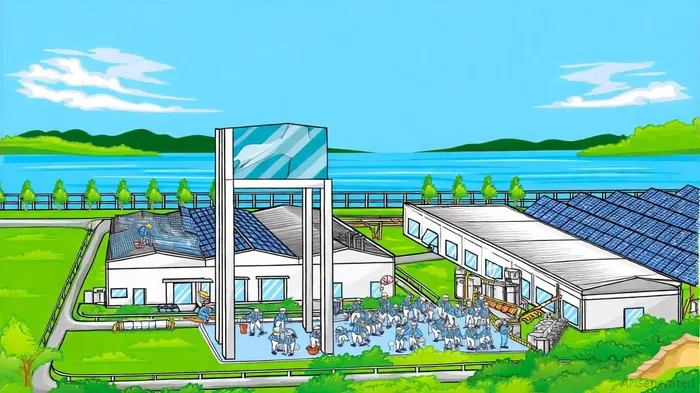
The global electric vehicle (EV) industry is undergoing a seismic shift, driven by decarbonization mandates and surging demand for clean energy solutions. At the heart of this transformation lies the battery precursor market, a critical link in the EV supply chain. LLBS (LS-L&F Battery Solution), a joint venture between South Korean conglomerates LS Corporation and L&F Co., has recently completed a $708 million plant in the Saemangeum industrial complex, marking a pivotal step in its strategy to disrupt the global supply chain dominated by China. This move not only underscores South Korea's ambition to localize its battery materials production but also positions LLBS to capitalize on a rapidly expanding market.
Strategic Expansion: From Capacity to Commercialization
The Saemangeum plant, with an initial production capacity of 20,000 tons of battery precursor materials annually, is designed to scale to 120,000 tons by 2029-a volume sufficient to support the production of 1.3 million EVs, as previously reported. Trial production is slated for late 2025, with commercial operations expected to commence in early 2026, contingent on the completion of a nickel sulfate plant by LS MnM, a sister company, according to LS MnM. This vertically integrated approach ensures a stable supply of raw materials, reducing bottlenecks in the production process.
The strategic significance of this expansion cannot be overstated. China currently controls 80% of the global battery precursor market, creating vulnerabilities for automakers and battery manufacturers seeking to diversify their supply chains. By anchoring its operations in South Korea, LLBS aligns with the broader "K-battery materials" strategy to achieve self-sufficiency and counterbalance Chinese dominance, according to a Saemangeum report. This is particularly relevant as the U.S. Inflation Reduction Act incentivizes sourcing materials from allied nations, creating a tailwind for LLBS's localization efforts.
Market Positioning: Competing in a $12B Industry
The lithium-ion battery ternary precursor market, valued at $4.82 billion in 2025, is projected to grow at a compound annual rate of 10.54%, reaching $11.88 billion by 2034. LLBS's entry into this arena is timely, as the Asia-Pacific region-led by China-accounts for 74% of global demand. However, the company's vertically integrated model, spanning nickel sulfate production, precursor manufacturing, and cathode material development, differentiates it from competitors such as Umicore, TANAKA Chemical Corporation, and Ecopro.
While Umicore and Ecopro are expanding their capacities (with Umicore targeting over 100,000 tons annually by 2025), LLBS's partnerships with Indonesian nickel smelters and mines provide a critical advantage. Indonesia, the world's largest nickel producer, offers a secure and cost-effective source of raw materials. This strategic alignment with resource-rich nations mitigates supply risks and supports LLBS's goal of achieving cost parity with Chinese producers.
Sustainability and Ethical Sourcing: A Growing Imperative
The battery industry's shift toward sustainability is reshaping competitive dynamics. LLBS's integration with LS MnM's nickel sulfate plant not only enhances efficiency but also reduces the environmental footprint of precursor production. Meanwhile, competitors like Ecopro are pioneering closed-loop systems, such as recycling NCM hydroxide from spent batteries, as highlighted by Cirba and Ecopro. While LLBS has not yet announced similar initiatives, its partnerships with Indonesian suppliers emphasize ethical sourcing, a key requirement for compliance with the EU's Battery Passport and U.S. supply chain transparency laws.
Investment Implications: Balancing Growth and Risk
LLBS's strategic positioning in the global EV supply chain offers compelling investment potential. The company's ability to scale production to 120,000 tons by 2029 aligns with the projected demand for EVs, which are expected to account for 30% of global vehicle sales by 2030. However, risks remain. Intense competition from established players, volatility in nickel prices, and the need for continuous R&D investment could pressure margins. Additionally, geopolitical tensions in Southeast Asia-where LLBS sources its nickel-pose supply chain risks.
For investors, LLBS represents a high-conviction play on South Korea's K-battery materials strategy. Its vertically integrated model, geographic diversification, and alignment with global decarbonization goals position it to capture a significant share of the $12 billion precursor market. Yet, success will depend on its ability to innovate in recycling and maintain cost efficiency amid rising raw material costs.
Conclusion
LLBS's completion of its Saemangeum plant is more than a corporate milestone-it is a strategic countermove in the global race to dominate the EV supply chain. By reducing reliance on China, securing raw material access, and scaling production to meet surging demand, the company is well-positioned to thrive in a market poised for exponential growth. For investors, the challenge lies in balancing the promise of long-term gains with the inherent risks of a rapidly evolving industry.







Comentarios
Aún no hay comentarios